Call Us

(404) 695-0673

Email Us

inspection@safeairtesting.com

Business Hours

Mon - Fri, 8am - 5pm

Independent Mold Inspection in Atlanta: What to Ask Before Booking

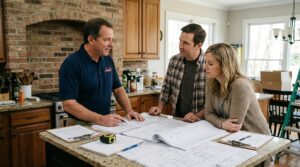
Inspector_reviewing_photographs

An independent mold inspection should help you understand a property’s condition and the next decision—not simply produce a number without context. Before booking, explain what prompted the concern and ask what the proposed inspection will cover. A visible area after a leak, a persistent odor and a request to evaluate completed remediation may call for different scopes.

SafeAir provides independent mold inspection and testing rather than mold remediation. Keeping assessment separate from the cleanup work helps property owners ask for findings that describe what was observed, what was sampled if appropriate and what remains uncertain.

Start with the question you need answered

Tell the inspector why you are calling. If there was a water incident, include its date, the known source and any repairs already completed. If someone noticed an odor, identify the room and whether the observation is persistent or intermittent. If the purpose is a property transaction or a remediation handoff, say so at the start.

A useful request is specific: “We need to understand the area around this repaired leak and whether further assessment is needed.” A request to certify every part of a building as permanently free of mold is not a realistic description of an inspection.

Keep health questions separate from building questions. An inspector evaluates the property; a healthcare professional should address symptoms, exposure concerns and medical decisions. Neither a photograph nor a laboratory result diagnoses an occupant.

Clarify what independent means for the service

Ask which work the provider performs and whether they also sell the remediation being evaluated. With SafeAir, the role is inspection and testing, not carrying out the mold removal. If corrective work is recommended, confirm how the findings will be communicated to the separate provider you select.

Independence does not eliminate the need to review scope, limitations and the report itself. A useful assessment still needs a defined purpose, clear observations and an explanation of what the results can support. Avoid treating a company label as a substitute for those details.

Inspection and sampling are not interchangeable

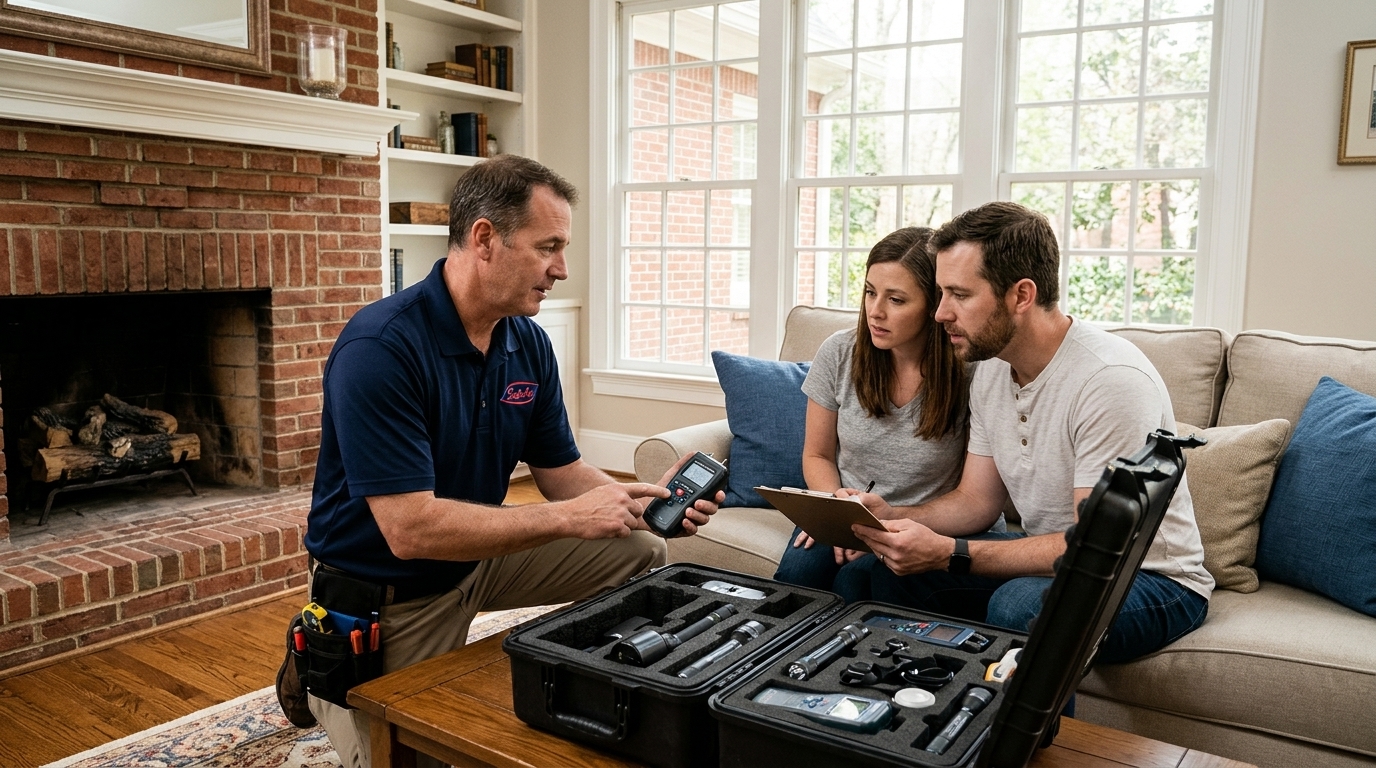
An inspection considers the property and the concern. Sampling, when appropriate, addresses a specific question using a defined method. A laboratory sheet alone does not explain every building condition or every inaccessible area.

The EPA’s guidance on mold testing notes that visible mold does not always require sampling and that no federal airborne mold limits have been established. Ask why a proposed sample is useful for your decision rather than assuming more samples automatically mean a better inspection.

Our guide to mold testing versus inspection explains the distinction. If sampling is proposed, ask which locations are included and how the findings will be interpreted alongside the observations.
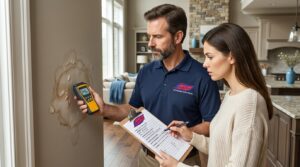
Inspector_reviewing_moisture

What to provide before the visit

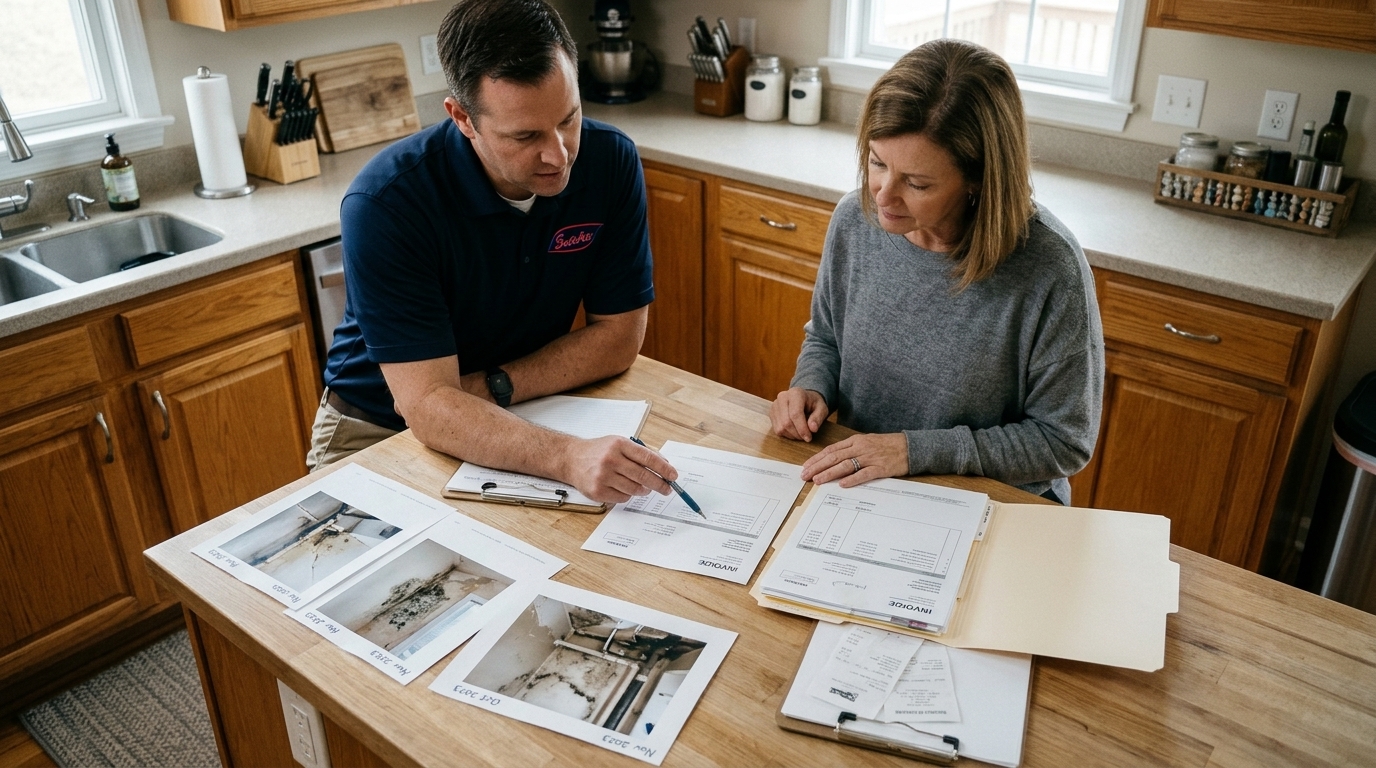
Send existing records that are relevant to the question: water-damage photographs, source-repair invoices, earlier assessment reports and any remediation scope. A short timeline helps the inspector distinguish the original incident from work completed later.

Do not prepare the area by disturbing suspected mold, opening walls or changing conditions to influence a sample. Ask the inspector for preparation instructions appropriate to the planned assessment. Explain any recent cleaning, ventilation changes or work already carried out so the report can reflect that history.

If a room, ceiling space or another area cannot be accessed, tell the provider in advance. Arrange authorized access rather than assuming an inspection can reach every concealed component.

What should the report make clear?

Before booking, ask what documents you will receive and how questions about them will be handled. The report should be understandable in relation to the agreed scope. Look for distinctions between direct observations, laboratory findings, interpretation and recommendations.

Useful questions include:

  • Which rooms and areas were evaluated?
  • What could not be inspected or accessed?
  • What moisture history was provided?
  • Were samples collected, and for what purpose?
  • How do the findings relate to the concern that prompted the visit?
  • What next action is recommended, and what remains uncertain?

Do not reduce a report to a single “pass” or “fail” if its purpose was not a defined clearance evaluation. Likewise, a limited-area inspection should not become a whole-building assurance when shared with another party.

If remediation has already occurred

Tell SafeAir that the appointment concerns completed remediation. Share the original findings and the remediation scope so the evaluation can be planned around the relevant area and objectives. A general inspection booking should not be assumed to include every requirement of a post-remediation review.

Clearance testing and the planning guide provide a starting point for that conversation. Coordinate the timing before reconstruction or other work makes the relevant area inaccessible.

Compare proposed scopes before comparing prices

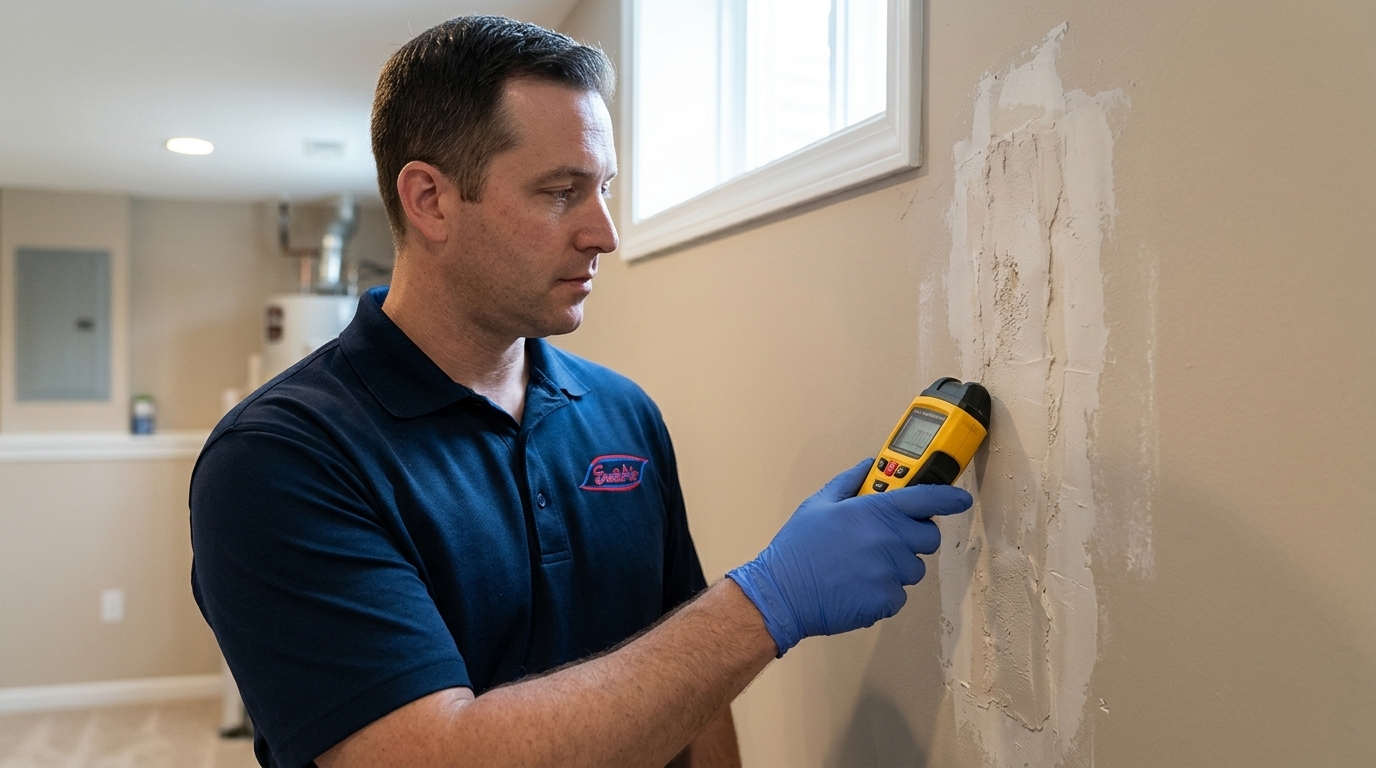
Two inspection proposals may differ in the areas covered, the time allowed for investigation, whether sampling is included and what reporting is provided. Ask each provider to explain those elements before treating the totals as equivalent. A lower quote may describe a narrower assignment rather than the same work at a lower cost.

Check whether the proposal concerns the entire accessible property or only a named area. Ask how inaccessible spaces will be documented and whether further access would require a separate authorization. If a sample is optional, ask what additional question it would address and whether its laboratory analysis and interpretation are included.

Keep timing questions separate from guarantees. Ask about current scheduling and how results will be communicated, but do not assume a website article establishes an appointment or laboratory turnaround for your project. Confirm the actual arrangements with the provider.

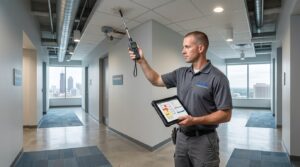
Inspector_checking_drywall

Questions that make the booking clearer

Can I send photographs first?

Photographs can help describe the concern and plan the visit. They do not establish every concealed condition or replace the agreed assessment. Label the room and date where possible and avoid sending unrelated personal information.

Should I arrange remediation before the inspection?

Explain any immediate safety or water-control needs to the appropriate provider. For the mold assessment itself, ask what sequence fits the concern. Do not delay urgent source correction merely to preserve a scene; document what was changed and share that history.

Can the report be shared with another contractor?

Keep the complete report and its limitations together when sharing information. Ask about any document-use conditions, and avoid forwarding only a laboratory result that may be misunderstood without the observations and interpretation.

Keep the report connected to future decisions

Store the complete report, not only the laboratory page or an email summary. If another provider recommends work, ask them to identify which finding the recommendation addresses. Keep proposals separate from completed-work records so the project history remains clear.

If conditions change, such as a new leak or a new affected area, explain that change when requesting follow-up. An earlier report describes the scope and conditions at the time; it is not a permanent prediction about the building.

For an Atlanta property, contact SafeAir Mold Testing at 404-695-0673. Describe the building, the area of concern and the decision you need help making. A defined question and a clear scope make the inspection more useful than booking an unspecified test and hoping the result explains everything.

Safe Air Mold Testing
SafeAir Certified Mold Inspection specializes in mold testing in Atlanta, air quality testing, consultation, and analysis of residential and commercial properties. The mold testing and mold inspection services we provide are used by individuals who know or believe they may have a mold problem.
Address

Safe Air Mold Testing

2210 Defoor Hills Rd NW Atlanta, GA 30318

Working Hours

Mon: 8:00AM-5:00PM
Tue: 8:00AM-5:00PM
Wed: 8:00AM-5:00PM
Thu: 8:00AM-5:00PM
Fri: 8:00AM-5:00PM
Sat: Closed
Sun: Closed

Social Media
Copyright © 2025 Safe Air Mold Testing