Call Us

(404) 695-0673

Email Us

inspection@safeairtesting.com

Business Hours

Mon - Fri, 8am - 5pm

What to Do When a Mold Clearance Review Needs Follow-Up

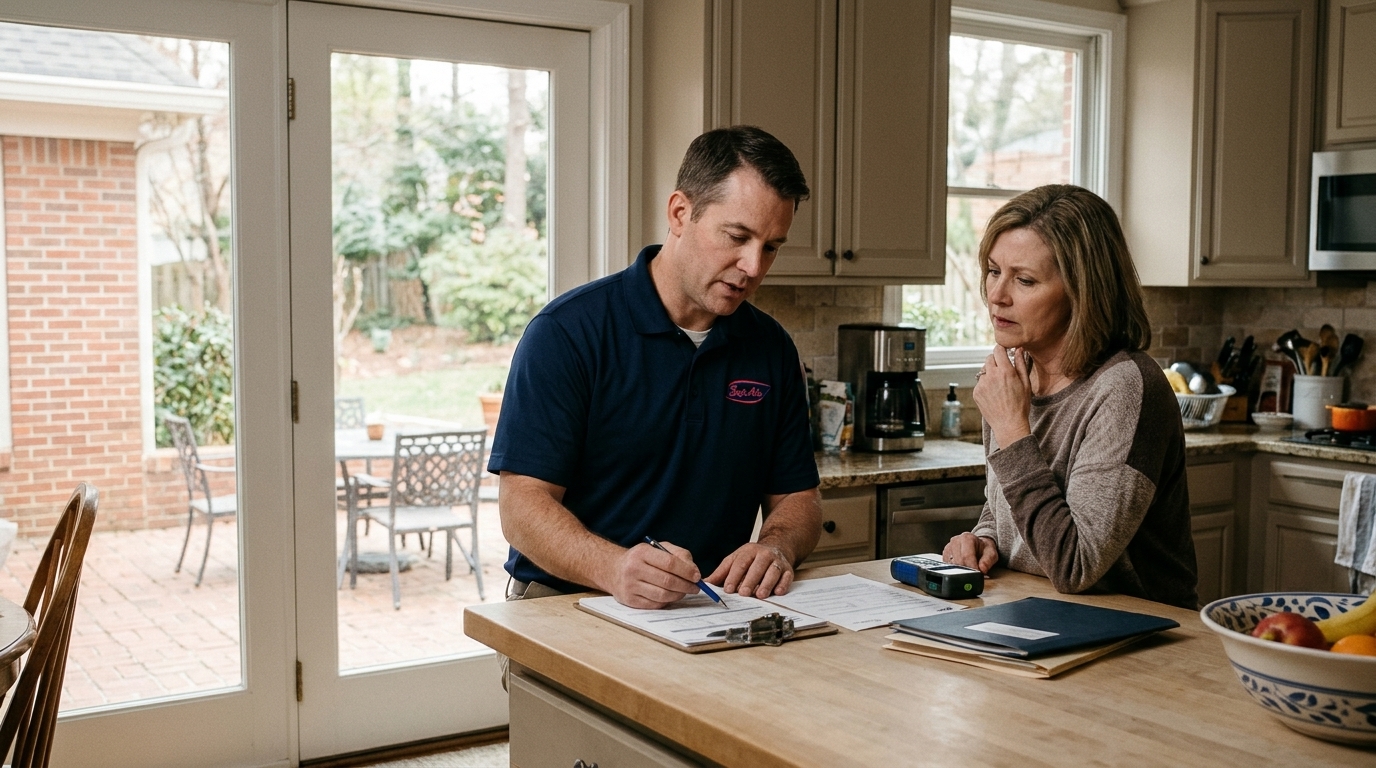
Inspector reviewing findings with a client

A post-remediation review that identifies an unresolved issue should lead to a clear next action, not an argument over a single number or an immediate repeat test with no explanation. Start by understanding what the report evaluated, which project criteria were not met and what information the assessor needs before the next review.

The words “failed clearance” can cover different findings. The report may identify a condition in the work area, incomplete information, a limitation or a sampling result that needs interpretation. Do not assume every follow-up means the entire building was assessed or every part of the remediation was unsuccessful.

Read the complete report

Keep the observations, sample information if collected, interpretation and recommendations together. A forwarded laboratory page or a verbal summary may omit the scope and limitations that make the finding understandable.

Ask the assessor to explain:

  • Which area and work were evaluated?
  • Which finding requires attention?
  • What evidence supports that conclusion?
  • Is a condition confirmed, or does something remain uncertain?
  • What should happen before another evaluation?
  • What records should the responsible provider supply?

The purpose is to translate the report into an actionable discussion without rewriting its conclusions. If a statement is unclear, ask the author rather than having another party guess what was meant.

Connect the finding to the original scope

Review the original assessment and the remediation proposal. Was the issue inside the agreed work area? Did the scope change while work was underway? Was a moisture-source repair assigned to a separate provider?

These questions help identify responsibility, but they do not determine contractual or insurance liability. Keep the technical finding separate from any dispute about payment, coverage or obligations. Those matters may require the appropriate contractual, insurance or legal adviser.

SafeAir’s clearance planning guide explains why sharing the original scope before the visit matters. If those documents were missing, ask how that affects interpretation and what additional information is needed.

Ask for a documented corrective plan

The provider responsible for the relevant work should explain the proposed next step and how it relates to the finding. Record the affected area, the task, the responsible party and the evidence expected afterward.

Do not assume that repeating exactly the same sample collection will resolve an unresolved building condition. If further work is recommended, clarify what must occur before rescheduling. If the assessor requests additional information instead, identify who will provide it and in what form.

Keep changes in writing. A short dated record prevents a proposed action from being mistaken later for a completed one. Where different providers are involved, name their separate responsibilities rather than assigning the entire project to whoever attended most recently.
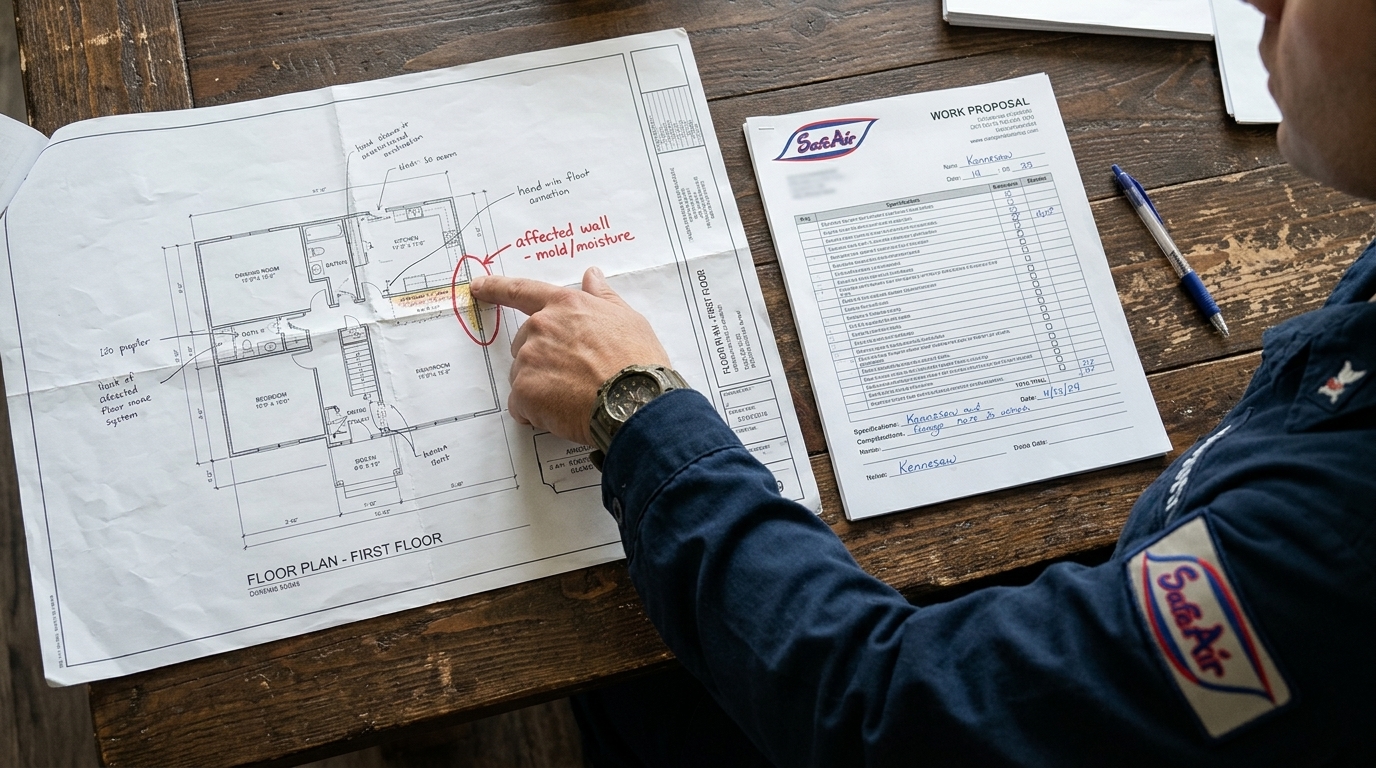
Inspector_pointing_to_floor_plan

Coordinate the next evaluation before closing the area

Ask about timing before reconstruction or other work makes the relevant surfaces inaccessible. Do not remove containment, reinstall finishes or return belongings solely because the first remediation visit has ended. Follow the project-specific instructions from the responsible professionals.

The next review should be tied to the issue being evaluated. Ask whether its scope is the same as the earlier visit or whether new findings require a change. Preserve both reports so the sequence remains understandable; do not discard the first report simply because a later evaluation reaches a different conclusion.

Avoid promises the evidence cannot support

A clearance review addresses a defined project and the conditions evaluated. It is not a permanent guarantee that no future leak or mold problem can occur. It also does not provide a medical diagnosis or decide whether an individual occupant’s symptoms are related to the property.

Similarly, a limited review should not be described as a whole-building certification. When sharing the result with another party, include the scope and limitations rather than a broad label detached from the report.
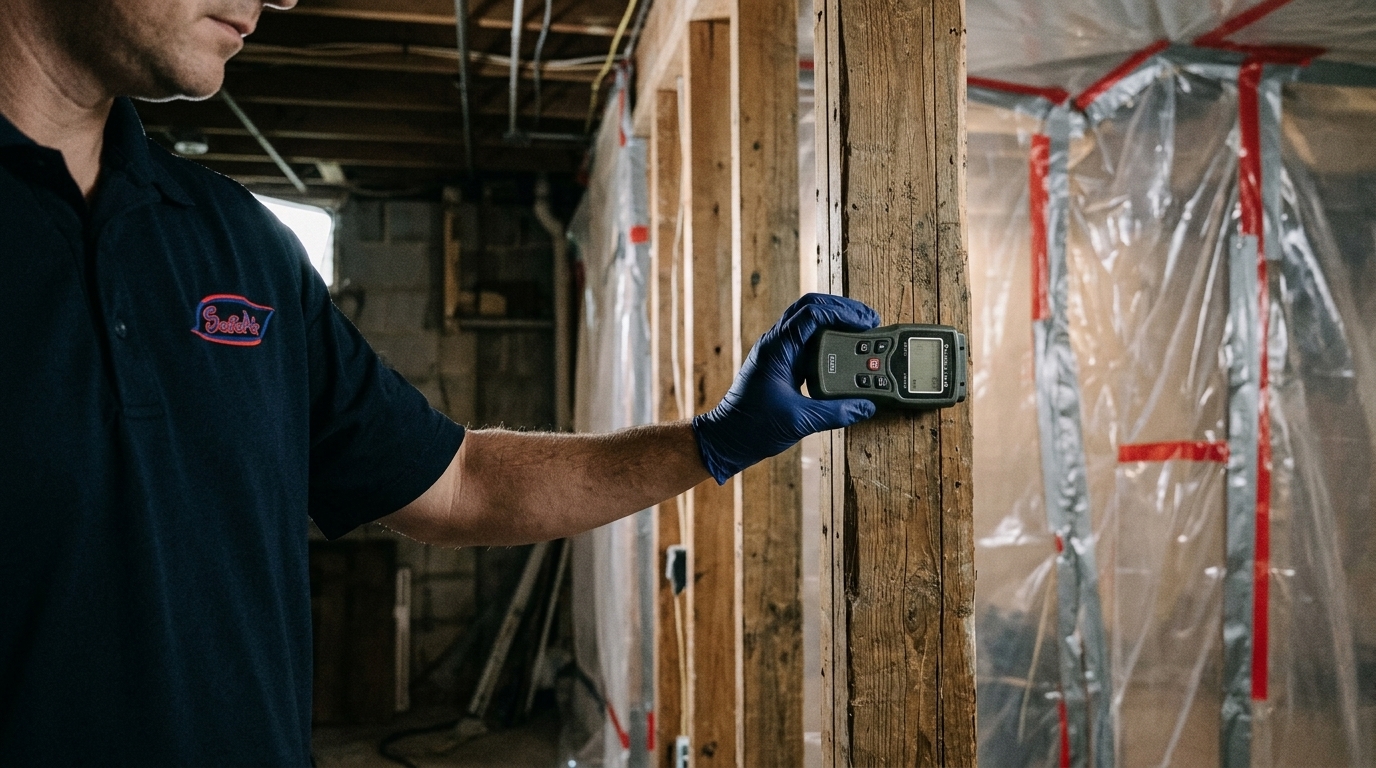

Inspector_testing_moisture

Keep the final handoff clear

Once the follow-up is addressed, retain the corrective-work records and the subsequent evaluation. Identify any remaining exclusion, separate repair or maintenance recommendation. A clear file shows what was done, what was evaluated and what remains outside the project.

SafeAir provides independent clearance testing rather than remediation. For an Atlanta property, call 404-695-0673 to discuss the original scope, the concern and the timing of an appropriate evaluation. Share existing reports when requesting the appointment so the next visit addresses the actual question rather than starting from an incomplete summary.

Safe Air Mold Testing
SafeAir Certified Mold Inspection specializes in mold testing in Atlanta, air quality testing, consultation, and analysis of residential and commercial properties. The mold testing and mold inspection services we provide are used by individuals who know or believe they may have a mold problem.
Address

Safe Air Mold Testing

2210 Defoor Hills Rd NW Atlanta, GA 30318

Working Hours

Mon: 8:00AM-5:00PM
Tue: 8:00AM-5:00PM
Wed: 8:00AM-5:00PM
Thu: 8:00AM-5:00PM
Fri: 8:00AM-5:00PM
Sat: Closed
Sun: Closed

Social Media
Copyright © 2025 Safe Air Mold Testing