Air mold tests can be useful tools for mold detection, but they are not all created equal and have important limitations. Accurate air mold tests work best when they are part of a comprehensive assessment that includes visual inspections, moisture measurements, and an understanding of a home’s air quality and history of water damage.
Introduction to Mold Detection
Mold testing helps identify mold growth and mold contamination that may be affecting indoor air quality, especially when homeowners suspect mold or notice a musty smell. Air mold tests are commonly used to measure airborne mold spores inside a property, while visible mold growth on building materials can signal an active mold problem even before testing begins.
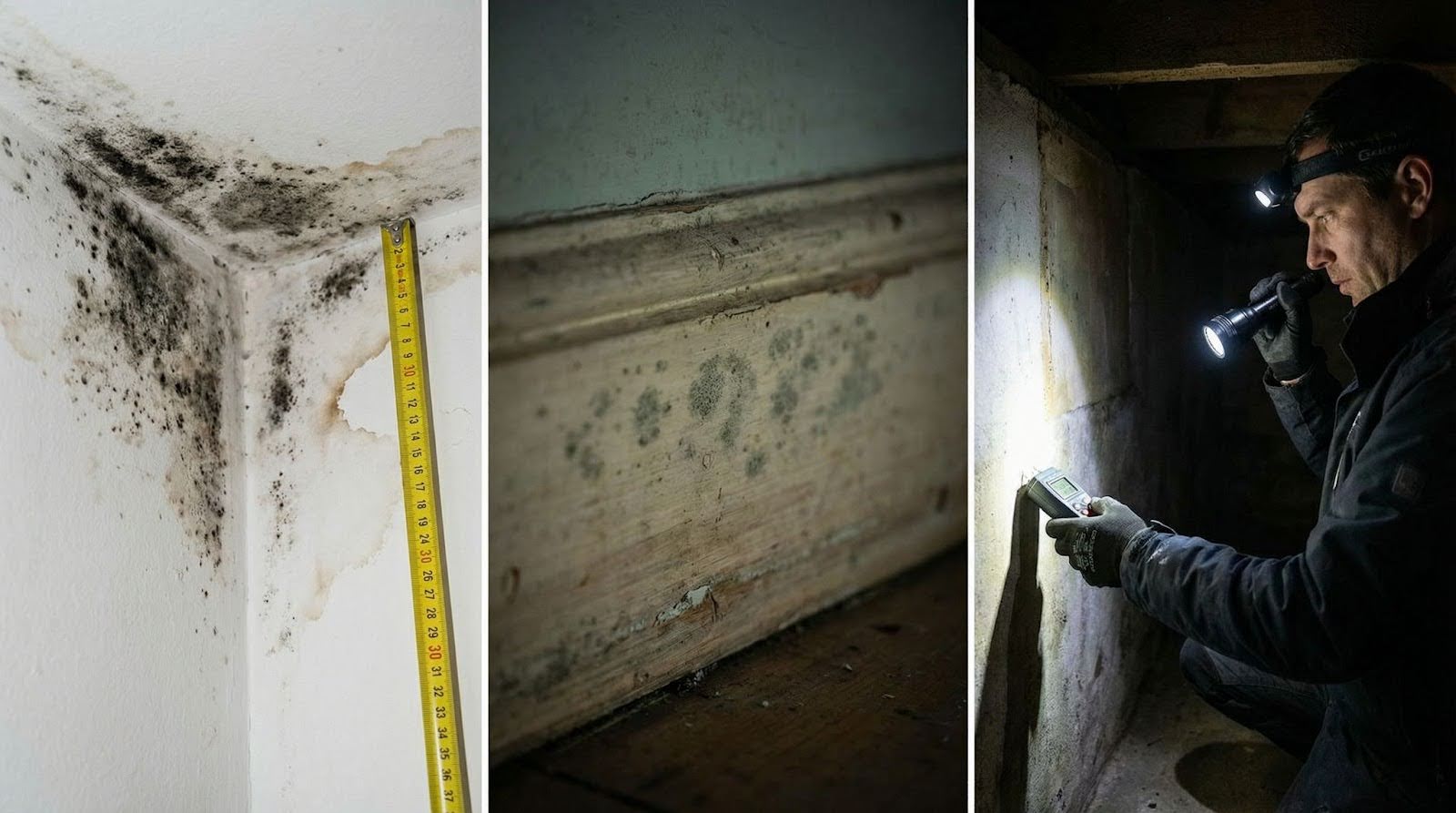
Professional air mold testing is most valuable when it is guided by a targeted mold inspection that looks at both indoor air and building materials to identify mold, rather than relying on a single test for mold alone. Because mold growth is driven by excess moisture, effective mold detection always involves finding where moisture is present and why it is not drying properly.
Air Sampling and Testing Methods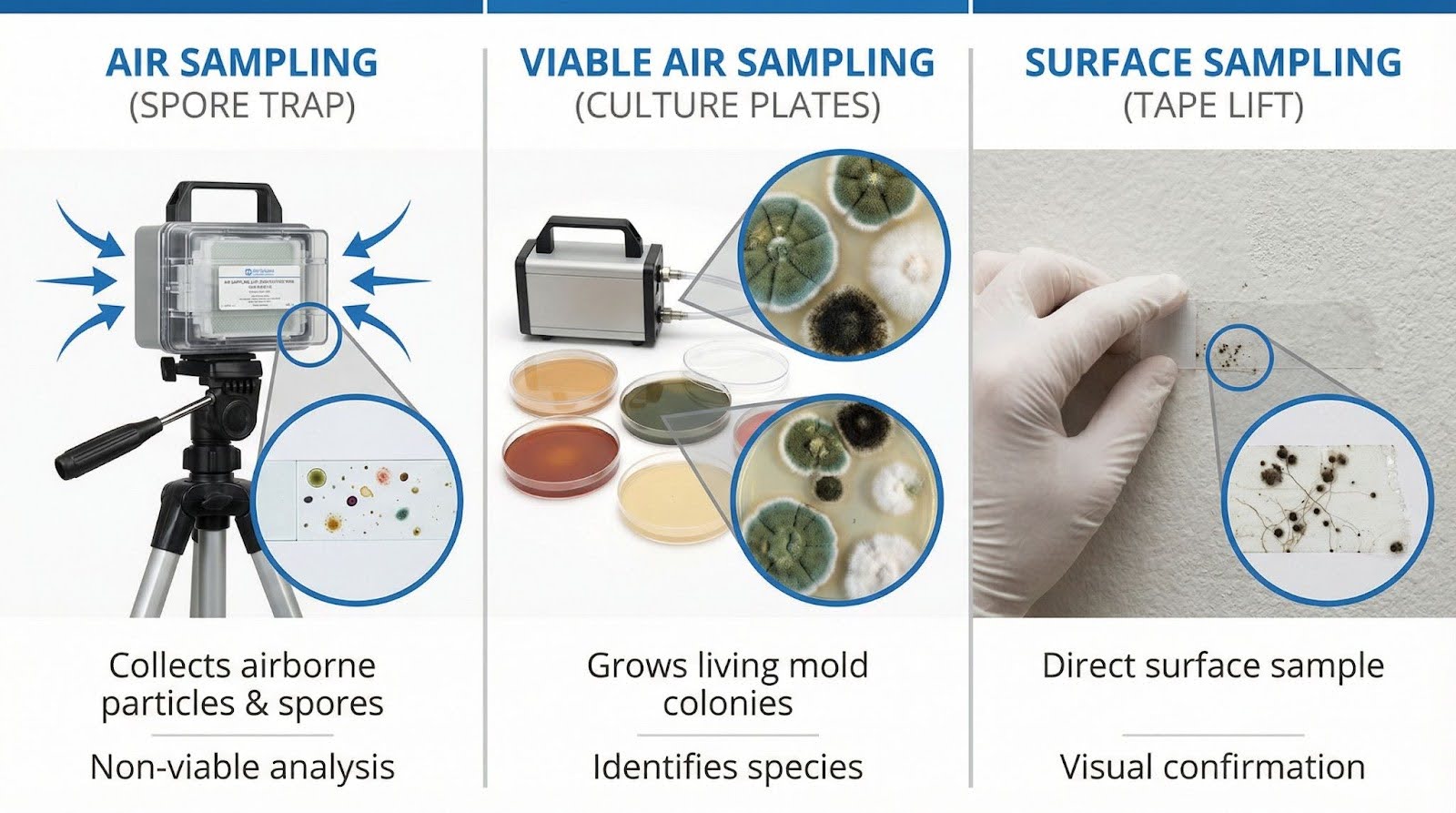
Air sampling is one part of mold testing and can be combined with bulk sampling, surface sampling, and other environmental sampling methods to better understand mold contamination. Common approaches include:
- Air sampling with spore traps. Non‑viable air sample testing captures particles on a slide so a lab can identify mold species and count spores, giving a picture of airborne concentrations at the time of sampling.
- Viable air sampling (cultures). Air is drawn onto culture media to see which molds grow, which helps identify living colonies but may miss dead spores or species that do not grow well in the lab.
- Surface sampling. Swabs or tape lifts are taken from visible mold or suspect areas to confirm what is growing on surfaces and building materials.
Professional mold inspection is essential to determine when air sampling, surface sampling, or both are needed, and to interpret results correctly. For example, air testing can be helpful for investigating hidden mold when there is a musty smell but no visible growth, while surface sampling is more appropriate when visible mold is present and the goal is to identify the specific mold species.
Limitations and Challenges
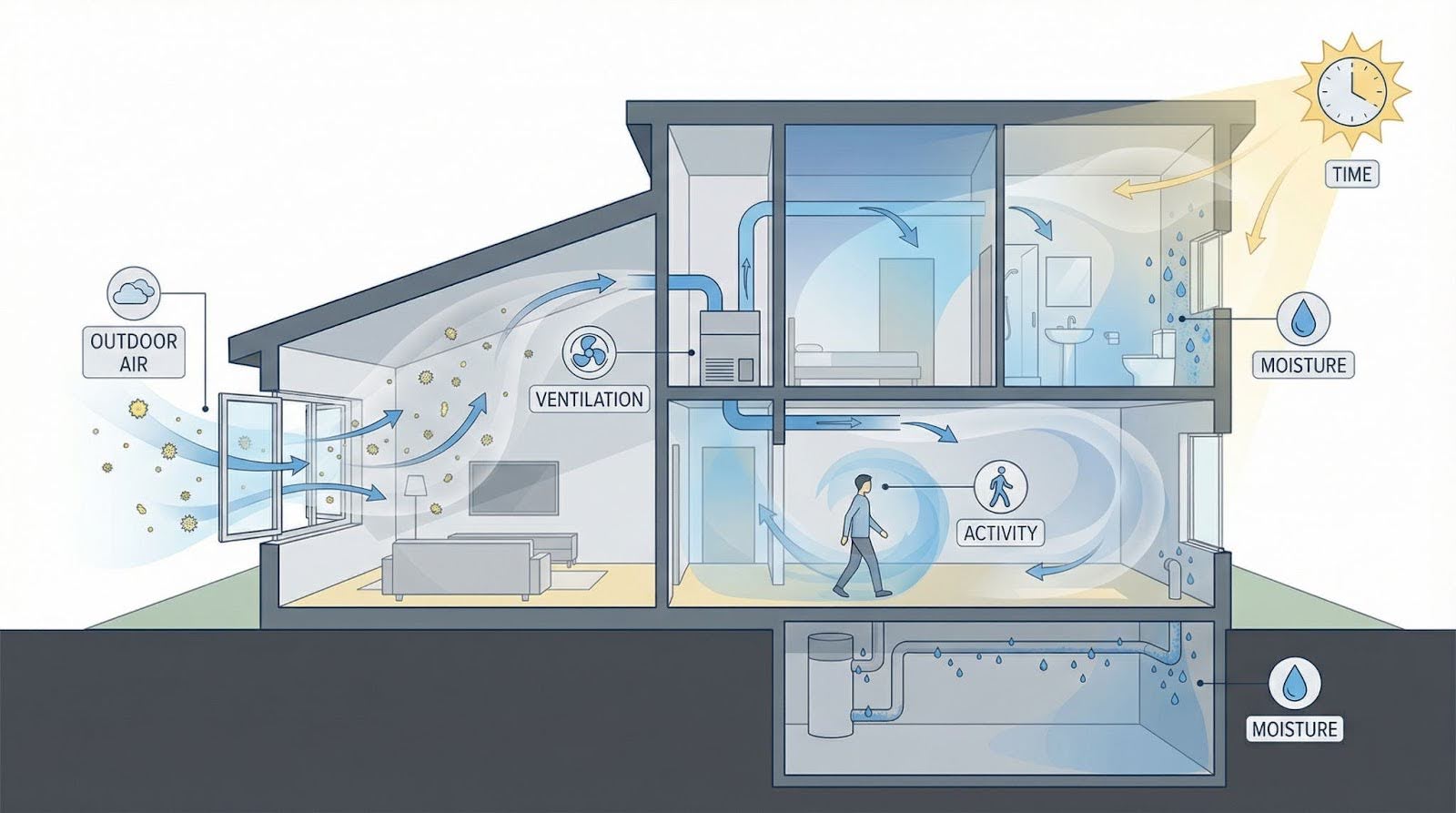
Air mold tests face several challenges that affect accuracy. Agencies such as CDC and OSHA note that routine air testing for mold is not recommended because short‑term samples may miss spores, and negative findings do not necessarily mean there is no mold problem. Spore counts in indoor air vary with outdoor air, ventilation, occupant activity, and even the time of day, so air sampling provides only a “snapshot” of airborne mold spores rather than a full range of conditions.
There are also no federal mold standards or health‑based threshold limit values for airborne concentrations of mold spores, which makes it difficult to define universally acceptable levels. Because of this, reliable results depend on comparing indoor air to outdoor air, considering visible growth, moisture patterns, and symptoms, rather than relying solely on numbers from one or two samples. False positives and false negatives can occur when sampling is done in the wrong place, at the wrong time, or without understanding how moisture and air movement influence spore counts.
Mold Inspection and Assessment
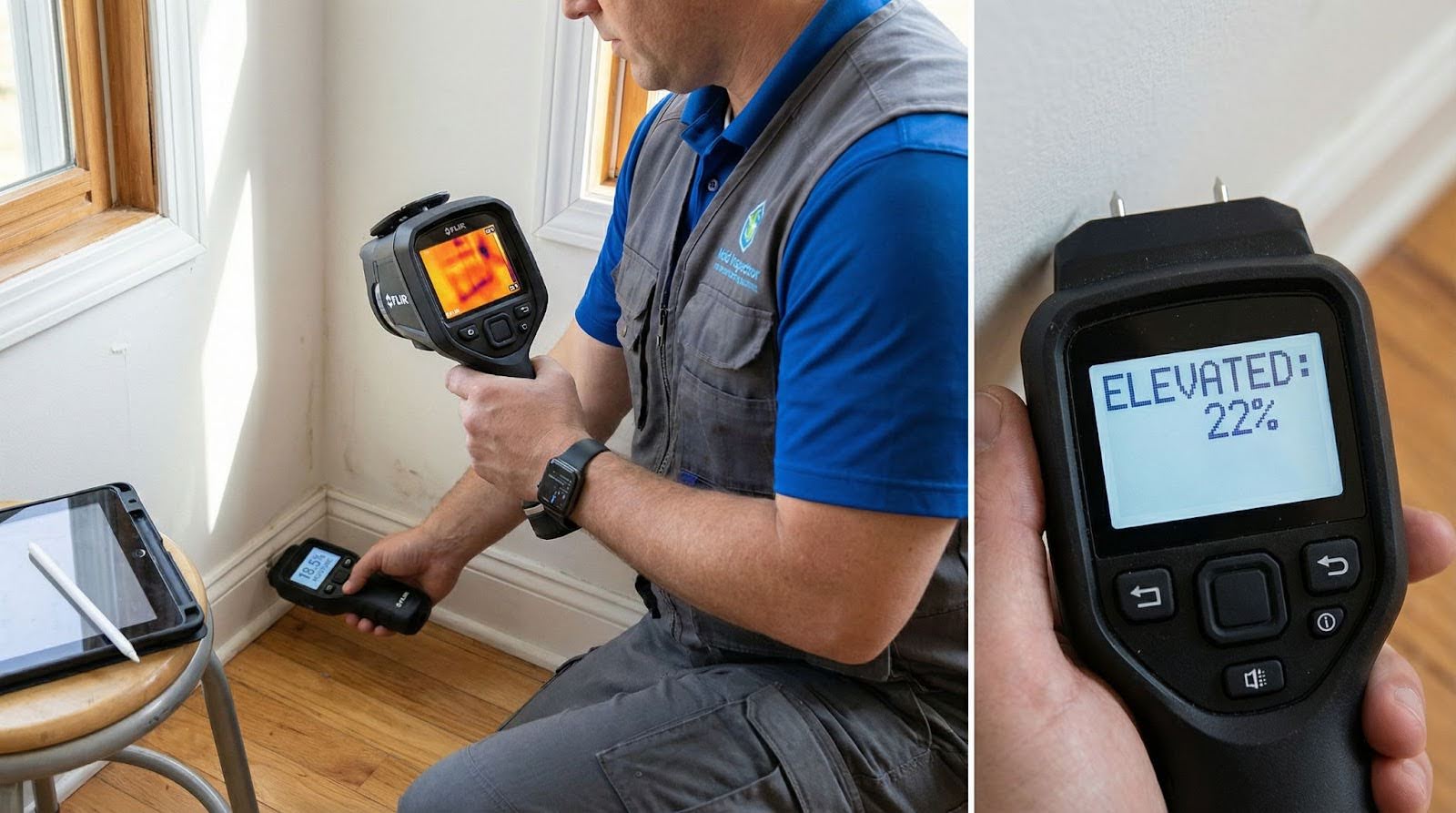
A comprehensive assessment is the backbone of accurate mold detection. In most guidance documents, if visible mold growth is present, sampling is considered optional because the mold problem is already confirmed. A high‑quality mold inspection typically includes:
- Visual inspections for visible mold, staining, and signs of damp or damaged building materials.
- Moisture meters and infrared cameras to locate damp surfaces, water vapor problems, and hidden leaks in other locations behind walls or ceilings.
- Discussion of symptoms and history of leaks, flooding, or recurring condensation.
The goal of this assessment is to determine the extent of mold contamination and identify the source of moisture that is supporting indoor mold growth. Air and surface tests are then used selectively to clarify uncertain areas, verify remediation, or document conditions for a home inspection or mold remediation protocol.
Air Quality and Indoor Air

Air quality in a home is influenced by mold, dust, outdoor air, ventilation, and other pollutants. Indoor air quality can be degraded when mold growth releases spores and fragments that settle on dust and organic matter, which are then re‑suspended into indoor air. Dust analysis can help identify historical mold contamination even when air testing shows normal results. Air testing can help evaluate whether indoor air has abnormal types or quantities of spores, but it is only one part of understanding overall air quality.
Because no single air test can fully represent long‑term exposure, experts recommend combining air testing with visual inspections, moisture detection, and ventilation assessment to determine whether a mold problem exists and what remediation is needed. A comprehensive assessment is especially important where occupants report respiratory or allergic health effects that may be linked to dampness and mold.
Hidden Mold and Detection

Hidden mold behind walls, under flooring, or inside HVAC systems can pose health risks even without extensive visible growth. Air mold tests can sometimes detect elevated spore counts that suggest hidden mold, but they cannot always pinpoint the exact location of the mold problem. In many cases, hidden mold is associated with chronic dampness, past water damage, or building assemblies that trap moisture.
To find hidden mold, inspectors combine air testing, surface sampling where accessible, moisture meters, and infrared cameras to identify damp areas and likely mold reservoirs. When air tests show negative findings but there is clear visible growth or musty odor, guidance from CDC and others emphasizes treating what can be seen and smelled rather than relying on test numbers alone.
Mold Remediation, Prevention, and Next Steps
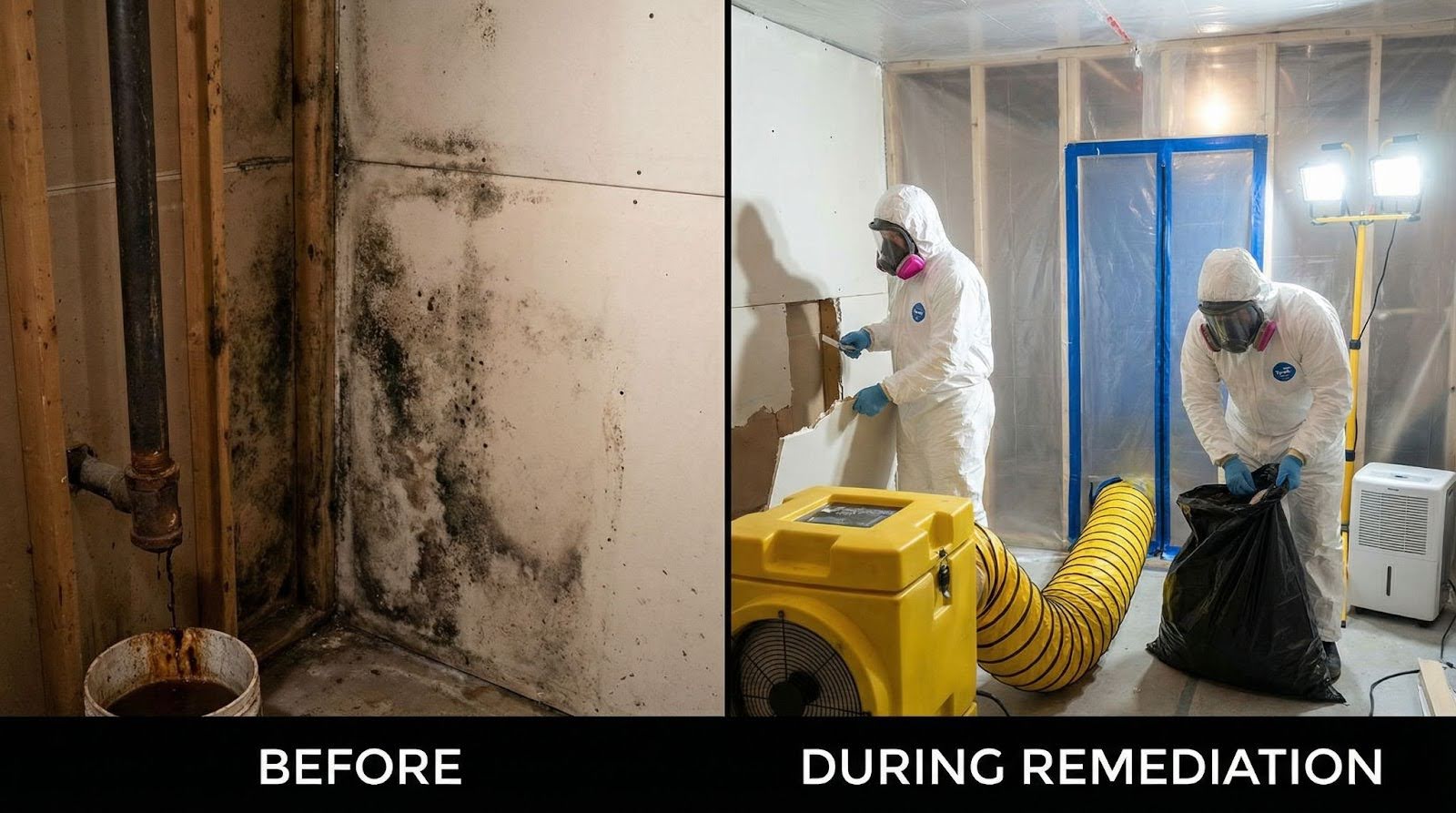
Air mold tests become truly valuable when they inform mold remediation and prevention strategies. Once finding mold and moisture sources, a mold remediation company will:
- Remove or clean contaminated materials according to size‑based guidelines.
- Control moisture by fixing leaks, improving drainage, and reducing indoor damp conditions.
- Use containment and filtration to limit the spread of spores during cleanup.
- Perform post‑remediation air testing or visual inspections to confirm successful results when appropriate.
Preventing future mold growth requires keeping moisture under control, maintaining ventilation, and quickly addressing any new water damage. While air testing can be part of ongoing monitoring in buildings with a history of mold issues, it is most powerful when paired with good building maintenance and regular inspections.
How SafeAir Can Help

For homeowners who suspect mold, visible mold growth, or musty odors, the key question is not just “How accurate are air mold tests?” but “Can a comprehensive assessment give reliable results and keep my family safe?” Reliable answers come from combining targeted air sampling with expert mold inspection, moisture diagnostics, and clear interpretation of results.
SafeAir Certified Mold Inspection Inc. specializes in professional air mold testing, surface sampling, and full‑scope mold inspection to identify mold species, locate hidden mold, and determine whether mold contamination is affecting your home’s air quality. We proudly serve communities throughout North Carolina, including Durham, Greensboro, Winston-Salem, and surrounding areas.
Get clear, science‑based answers about mold testing and your indoor air. Visit SafeAir Certified Mold Inspection Inc. or call 404‑695‑3610 to schedule a comprehensive mold inspection and testing today.