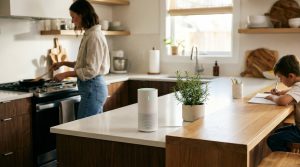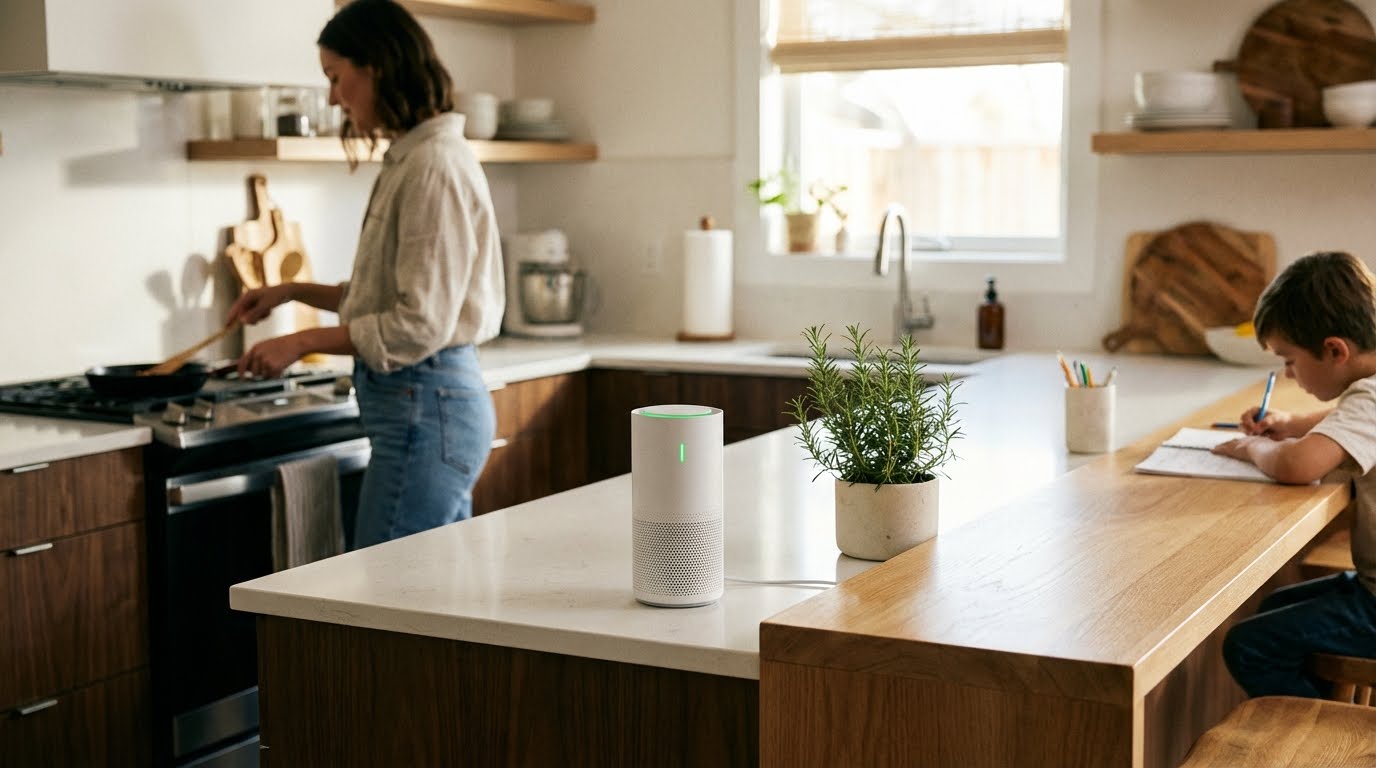
Indoor air quality monitoring has become one of the most talked-about topics in home health — and for good reason. The air inside your home can carry pollutants, allergens, and biological contaminants that affect your family’s wellbeing every single day. Understanding what monitoring your indoor air actually involves is the first step toward protecting the people you care about most.
What Is Indoor Air Quality Monitoring?
Monitoring indoor air quality means continuously or periodically measuring the levels of specific pollutants, gases, and particles present in your home’s air. From carbon dioxide concentrations to volatile organic compounds, IAQ monitoring gives homeowners real-time visibility into the invisible factors shaping their indoor environments.
The concept has grown significantly as smart home technology has advanced. Today, consumers have access to a wide variety of devices — from compact home indoor air quality monitors that sit on a countertop to sophisticated multi-sensor systems that integrate with HVAC automation platforms. Understanding what indoor air quality monitoring devices can detect, how accurately they perform, and where their limitations begin is essential knowledge before making any purchasing decision.
Quality monitoring is not one-size-fits-all. The pollutants present in a coastal North Carolina home differ meaningfully from those in an older Atlanta residence with a damp crawlspace. Understanding the full picture of your indoor air demands both the right monitoring tools and, in many situations, professional laboratory analysis that consumer devices simply cannot replicate.
How Indoor Air Quality Monitors Work
Home indoor air quality monitors use a combination of sensors to detect and measure different types of airborne substances. Most consumer-grade devices incorporate electrochemical sensors, photoionization detection, or laser particle counters — each designed to identify specific categories of pollutants. The variety of sensor technologies available means no two monitors measure exactly the same set of parameters, so understanding each type is essential before choosing a device for your home.
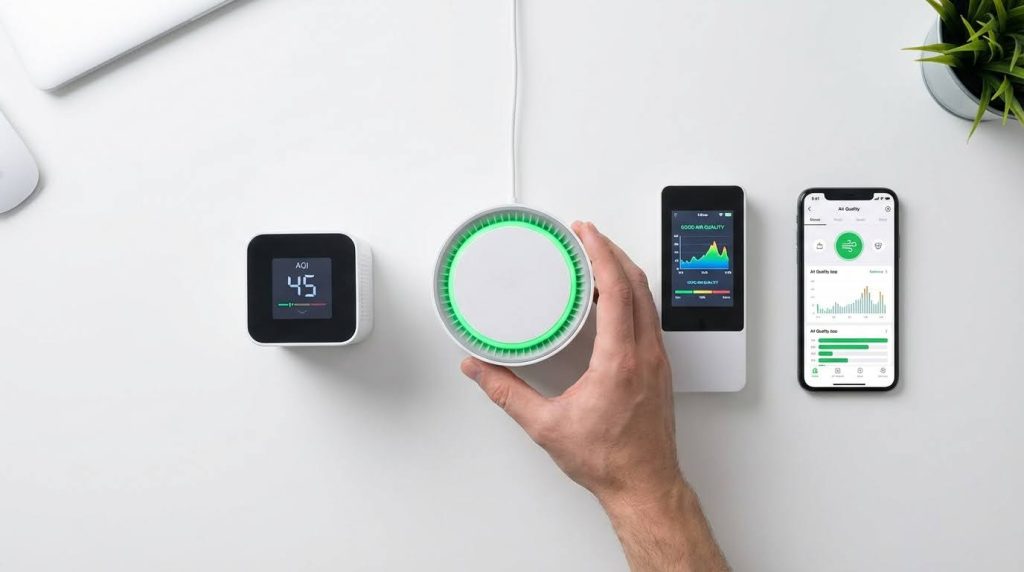
Each sensor type serves a distinct detection purpose. Understanding the technology behind your monitor helps you interpret readings accurately and make informed decisions about when data warrants further investigation. The following breakdown covers the primary sensor categories found in today’s leading IAQ monitoring devices.
Particulate Matter Sensors
Particulate matter sensors use light-scattering technology to count and size airborne particles. They measure concentrations of PM2.5 (fine particles under 2.5 micrometers) and PM10 (coarser particles under 10 micrometers). These are the particles most associated with respiratory irritation, cardiovascular stress, and long-term lung damage. Consumer air monitors with PM sensors provide a useful real-time snapshot of particle levels in your indoor environments, though their accuracy varies significantly by manufacturer and sensor quality.
Carbon Dioxide and Carbon Monoxide Detection
Carbon dioxide (CO₂) measurement is one of the most common features in IAQ monitoring devices. Elevated CO₂ levels — typically anything above 1,000 parts per million — indicate inadequate ventilation and correlate strongly with cognitive impairment, fatigue, and poor sleep quality. Carbon monoxide detection is a separate, life-safety function that monitors for this odorless, colorless combustion byproduct. Unlike CO₂, carbon monoxide at elevated levels is immediately dangerous and requires emergency response.
Volatile Organic Compound Sensors
VOC sensors detect a broad category of carbon-based chemical compounds that off-gas from building materials, cleaning products, paints, adhesives, and furniture. Common VOCs include formaldehyde, benzene, and toluene. The challenge with consumer VOC air sensors is that most report a total VOC reading rather than identifying individual compounds — meaning a high reading tells you something is present but not precisely what it is or where it originates.
Temperature and Humidity Measurement
Temperature and relative humidity are foundational IAQ parameters. High humidity above 60 percent creates conditions favorable for mold growth, dust mite proliferation, and chemical off-gassing from building materials. Low humidity below 30 percent can cause respiratory irritation and increase the concentration of airborne particles. Every serious quality monitoring program should include continuous temperature and humidity tracking as a baseline.
NOx and Combustion Byproduct Sensors
Some advanced monitors include sensors for nitrogen oxides (NOx) and other combustion byproducts. NOx compounds are produced by gas stoves, furnaces, and vehicles and have been linked to respiratory inflammation and airway irritation. These sensors are less common in entry-level devices but are increasingly included in premium IAQ monitoring platforms targeting health-conscious homeowners who want deeper visibility into their indoor air pollution levels.
The AQI and What It Means for Your Home
The Air Quality Index (AQI) is a standardized scale used to communicate air quality levels to the public — primarily for outdoor air. Some indoor air quality monitoring devices present readings using an AQI-style scale or color-coded system to simplify interpretation. Most pollutant monitors available to consumers are designed for general awareness rather than clinical precision, and aggregating complex multi-pollutant data into a single color or number reflects that design intent.
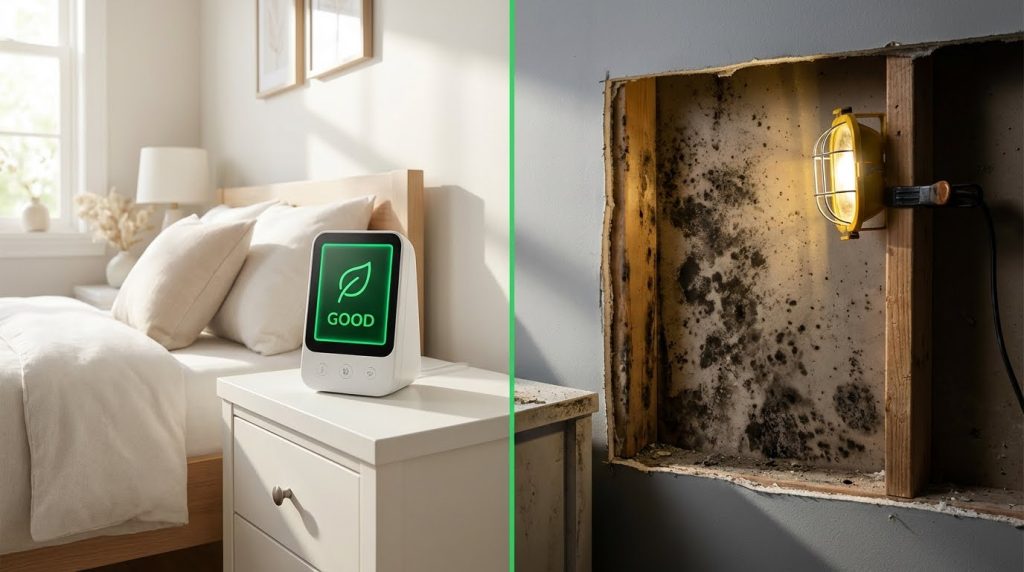
A device showing “good” overall AQI conditions may still have elevated formaldehyde levels from new flooring or elevated mold spore counts following a plumbing leak. Understanding the limitations of aggregated scores is essential for anyone making health decisions based on monitor data. IAQ is multidimensional, and no single number captures every relevant variable.
Popular Indoor Air Quality Monitoring Devices: What the Market Offers
The consumer market for home indoor air quality monitors has expanded considerably. A wide variety of configurations exist across different price points, sensor combinations, and smart home compatibility levels. Devices like the Airthings View Plus — one of the more comprehensive consumer options on the market — offer detection of radon, PM2.5, CO₂, VOCs, humidity, temperature, and pressure, all displayed through a connected app. Other options range from basic single-pollutant detectors to integrated systems designed to communicate with smart HVAC platforms.
When evaluating any monitor, the following factors determine its practical value for air monitoring in your home.
Sensor Accuracy and Calibration
Consumer-grade sensors vary widely in their accuracy compared to research or laboratory-grade instruments. Most require periodic calibration and have performance drift over time. Maintenance matters — a monitor that worked accurately at purchase may give misleading readings two years later without proper recalibration or sensor replacement. Factor in long-term maintenance requirements when choosing a device, not just upfront cost and feature count.
Detection Range and Sensitivity
Higher quality monitors offer lower detection thresholds, meaning they can identify pollutant concentrations at levels too small for basic sensors to register. For health-sensitive households, detection sensitivity is a critical specification that directly affects how useful the monitoring data will be in practice. Entry-level devices may only alert when air pollution has already been impacting health for some time before reaching a detectable threshold.
Data Logging and Integration
Modern IAQ monitoring devices increasingly offer continuous data logging and integration with smart home systems. The ability to review historical trends — not just current readings — is enormously valuable for diagnosis. A spike in VOC levels every morning correlates with a behavioral pattern. A humidity surge every time it rains points toward a structural issue. Data analysis over time reveals patterns that single-point readings miss entirely.
Ease of Use and Display
A monitor that produces accurate data but presents it in an inaccessible format provides limited value. Look for devices that offer clear, intuitive displays or well-designed companion apps that make air quality data easy to understand at a glance. The best home indoor air quality monitor is the one you actually use and interpret correctly — not the one with the longest spec sheet.
What Indoor Air Quality Monitoring Devices Cannot Detect
This is the most important section of this guide — and the information most often missing from manufacturer marketing materials. Consumer IAQ monitors are sophisticated for what they do. But there are entire categories of indoor air pollutants and contaminants that no consumer monitoring device can detect. Understanding these gaps is critical before assuming a clean reading means your air is safe.
Mold Spores and Biological Contaminants
Standard indoor air quality monitoring devices do not detect mold spores. Particulate matter sensors may register elevated particle counts in a heavily contaminated environment, but they cannot distinguish between mold spores, dust particles, pollen, and other biological material. Identifying mold contamination in indoor air requires air sampling with accredited laboratory analysis — the kind of professional testing SafeAir Mold Testing provides using calibrated spore trap and cultured sampling equipment.
Consumer monitors also cannot detect the chemical compounds responsible for musty odors — a common early signal of active mold growth behind walls or under flooring. A home that shows excellent readings on every IAQ monitor in every room can still have a serious active mold problem in the crawlspace or wall cavities. The biology is simply invisible to consumer sensors.
Specific VOC Identification
Consumer VOC sensors report total VOC levels, not individual compound concentrations. If your monitor shows elevated VOCs, you know something is present — but you don’t know if it’s benign off-gassing from a new piece of furniture or hazardous formaldehyde from building materials. Distinguishing between dozens of individual VOC compounds requires laboratory-grade analysis that consumer air monitors simply are not built to provide.
Radon Without Dedicated Sensors
Radon is a naturally occurring radioactive gas and the second leading cause of lung cancer in the United States. Most standard IAQ monitors do not test for radon. This is a critical gap given that North Carolina ranks among states with significant radon exposure risk, particularly in certain geological zones. Radon detection requires dedicated technology and specific testing protocols separate from standard IAQ monitoring equipment.
Hidden Moisture and Structural Issues
Elevated humidity readings can indicate an active moisture problem, but a monitor sitting in your living room cannot locate a slow leak behind a bathroom wall or assess moisture levels inside your crawlspace insulation. Thermal imaging and professional moisture assessment are required for that level of investigation — and untreated hidden moisture is one of the most common drivers of serious indoor air quality problems in southeastern homes. Dust analysis can reveal historical contamination from chronic moisture problems that current air readings miss entirely.
When Professional Indoor Air Quality Testing Is the Right Call
Continuous monitoring indoor air quality with consumer devices is a valuable first layer of awareness. But there are specific situations where professional testing is not just helpful — it is the appropriate response to protect your family’s health. Recognizing these trigger points early can prevent small problems from becoming expensive, health-impacting crises.
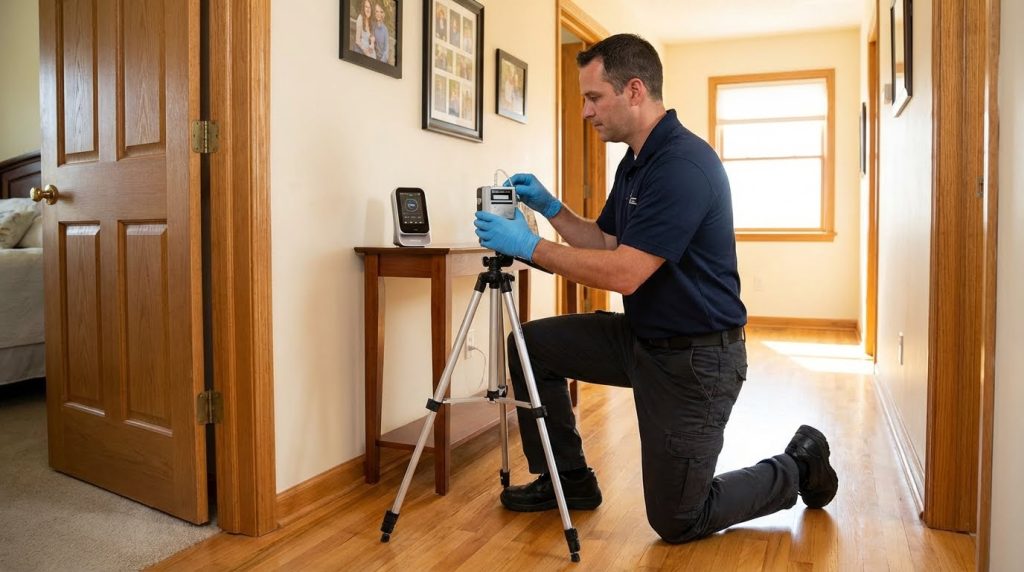
After Water Damage or Flooding
Water intrusion events create conditions for rapid mold growth within 24 to 48 hours. If your home has experienced water damage from a burst pipe, roof leak, flooding, or storm damage, professional air quality testing is essential to assess whether mold spores have become aerosolized in your indoor environments — regardless of what your IAQ monitor shows. The absence of a detection signal on a consumer device is not clearance after a water event.
When Symptoms Persist Without Explanation
If household members are experiencing chronic headaches, fatigue, respiratory irritation, or allergy-like symptoms that don’t resolve with standard treatment — and your IAQ monitors aren’t showing obvious causes — professional testing provides the comprehensive biological and chemical analysis needed to identify the source. Consumer devices may simply lack the sensitivity to detect what’s present at health-impacting concentrations. Recognizing the warning signs of mold toxicity can help you determine when it’s time to move beyond consumer devices.
Before Purchasing a Home
A standard home inspection doesn’t include air quality analysis. Pre-purchase IAQ testing provides an objective, laboratory-backed assessment of what you’re potentially moving into — particularly important in older homes, properties with known water history, or houses that have been vacant for extended periods. It’s a small investment compared to the cost of discovering a serious air quality problem after closing.
Following Mold Remediation
Professional clearance testing after mold remediation is the only way to objectively confirm that remediation was successful. An IAQ monitor in the room does not provide the accredited laboratory verification needed to establish that spore levels have returned to normal baseline conditions. Independent clearance testing by a company that has no financial stake in the outcome — like SafeAir Mold Testing — gives you results you can fully trust.
In Commercial and Institutional Buildings
Office environments, schools, and healthcare facilities have distinct IAQ challenges that consumer monitors are not designed to address. Sick building syndrome, inadequate ventilation, chemical off-gassing from commercial materials, and biological contamination in HVAC systems all require professional assessment tools and methodology. Commercial indoor air quality services provide the systematic evaluation that protects employees, students, and building occupants at a level consumer technology cannot reach.
The SafeAir Approach to Indoor Air Quality Assessment
SafeAir Mold Testing brings a fundamentally different methodology to indoor air quality assessment than any consumer monitoring device. Founded by Jeremy Shelton — who personally experienced the health impacts of toxic mold exposure — the company was built on a commitment to scientific rigor, independent analysis, and client education that has been earning five-star reviews since 2009.
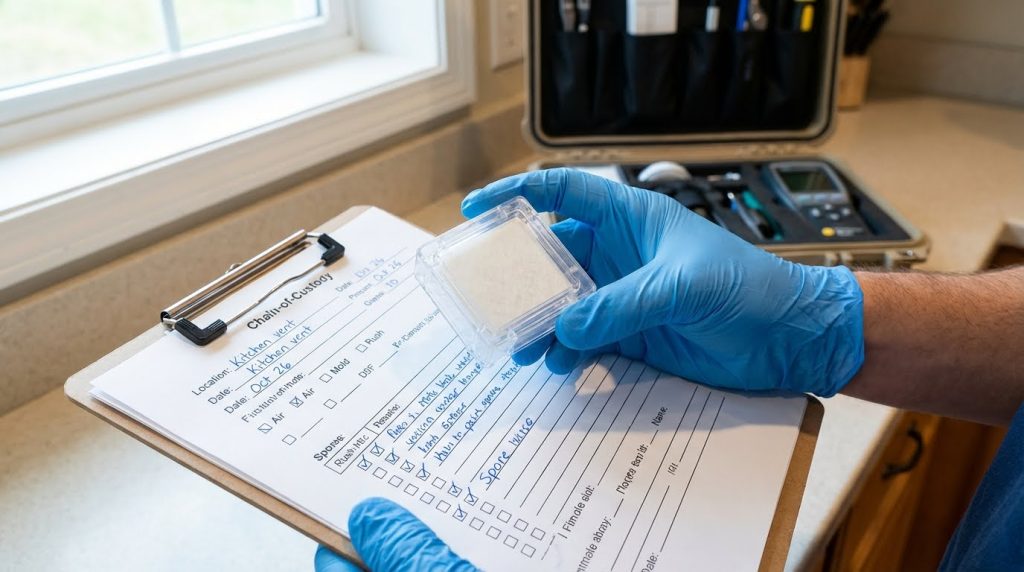
Where a consumer monitor gives you a number, SafeAir’s accredited laboratory partners give you identification. Spore trap air sampling and cultured air sampling methods capture what’s actually present in your indoor air and produce results you can act on with confidence. Every report includes detailed findings and specific recommendations — not generic guidance.
The company’s independence matters here. SafeAir does not perform remediation services. That means every assessment, every air sample, and every report is produced entirely in your interest — with no financial motivation to exaggerate findings or recommend unnecessary work.
With 164+ five-star reviews and more than 15 years serving clients across Atlanta, the Research Triangle, Charlotte, and throughout North Carolina, SafeAir Mold Testing has earned its reputation as the region’s most trusted independent IAQ testing resource.
Building a Smarter IAQ Strategy: Monitoring and Professional Testing Together
The most effective approach to indoor air quality isn’t choosing between a home monitor and professional testing — it’s using both strategically. Consumer IAQ monitoring devices serve as your ongoing environmental awareness layer. They alert you to real-time changes in CO₂, humidity, temperature, and VOC levels that reflect ventilation patterns, occupancy changes, and product off-gassing.
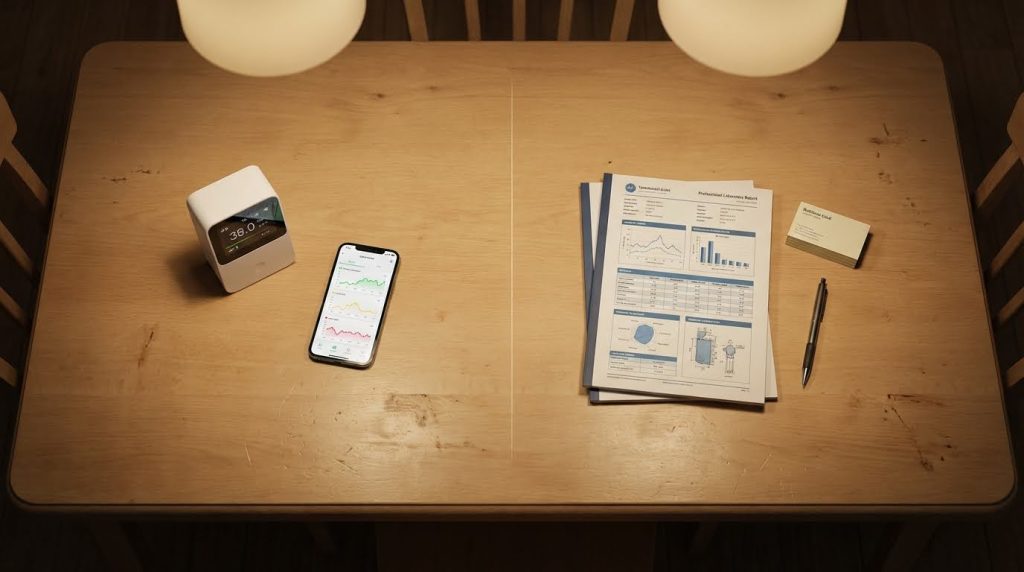
Regular monitoring indoor air quality builds a data history that makes anomalies visible and gives you confidence in your everyday indoor environment. When something unusual appears in your data, you have a baseline to compare against — which makes professional follow-up more targeted and efficient.
Professional testing fills the gaps that monitors cannot address. It provides the biological analysis, compound-level chemical identification, and accredited laboratory verification that transforms a concern into actionable knowledge. Scheduled professional assessments — particularly when moving into a new property, following any water event, or when symptoms suggest an unidentified source — ensure your monitoring data is interpreted against a solid factual baseline.
Together, these layers create a comprehensive picture of your indoor air that neither approach provides alone. Consumer air monitoring gives you awareness — professional testing gives you answers.
Frequently Asked Questions About Indoor Air Quality Monitoring
What do indoor air quality monitoring devices actually measure?
Most consumer IAQ monitors measure some combination of particulate matter (PM2.5 and PM10), carbon dioxide, carbon monoxide, VOCs, temperature, and humidity. Advanced models may include radon detection, NOx sensing, or formaldehyde detection. What indoor air quality monitoring devices can detect is determined entirely by their installed sensors — and what they cannot measure includes mold spore concentrations, specific individual VOC compounds, or the biological contaminants that professional air quality testing identifies through accredited laboratory analysis.
Is continuous monitoring indoor air quality worth the investment?
Yes — with appropriate expectations. A quality home indoor air quality monitor provides valuable real-time and historical data about the measurable pollutant categories it covers. The investment pays off when you use the data to identify ventilation issues, humidity problems, or VOC sources. It becomes less valuable when treated as a substitute for professional testing in situations where laboratory-grade analysis is genuinely needed.
How often should I have professional air quality testing done?
For most homeowners, professional testing at the time of purchase and following any significant water event is the baseline recommendation. Households with members experiencing unexplained respiratory symptoms, older homes with unknown material histories, or properties in humid climates like Georgia and North Carolina may benefit from periodic professional assessment even without a triggering event. A free phone consultation with SafeAir Mold Testing can help determine the right frequency for your specific situation.
What is the difference between IAQ monitoring and mold testing?
IAQ monitoring with consumer devices tracks measurable gas and particle parameters continuously. Mold testing through professional air sampling collects physical air samples that are analyzed under laboratory conditions to identify and quantify specific mold spore types. The two approaches address fundamentally different questions and work best together — which is exactly how SafeAir Mold Testing structures its professional indoor air quality assessments to give clients the most complete picture possible.
Take the Next Step for Your Family’s Indoor Air Health
Indoor air quality monitoring gives you awareness. Professional testing gives you answers. If your monitors are showing elevated readings, if your family is experiencing unexplained health symptoms, or if you simply want the confidence of knowing what’s actually in your indoor air, SafeAir Mold Testing is ready to help.

Our certified inspectors serve clients throughout Atlanta, Durham, Charlotte, Raleigh, Greensboro, Winston-Salem, and surrounding North Carolina and Georgia communities. With accredited laboratory analysis and a commitment to honest, independent guidance, we deliver the comprehensive indoor air quality assessment your family deserves.
Call (404) 695-0673 for a free consultation. Tell us what your monitors are showing or describe the symptoms your family is experiencing. We’ll recommend the right testing for your situation.
Next-day appointments available. Accredited laboratory results delivered in 2-3 business days. Your consumer monitor tells you something might be wrong — professional testing tells you exactly what it is and how to fix it.