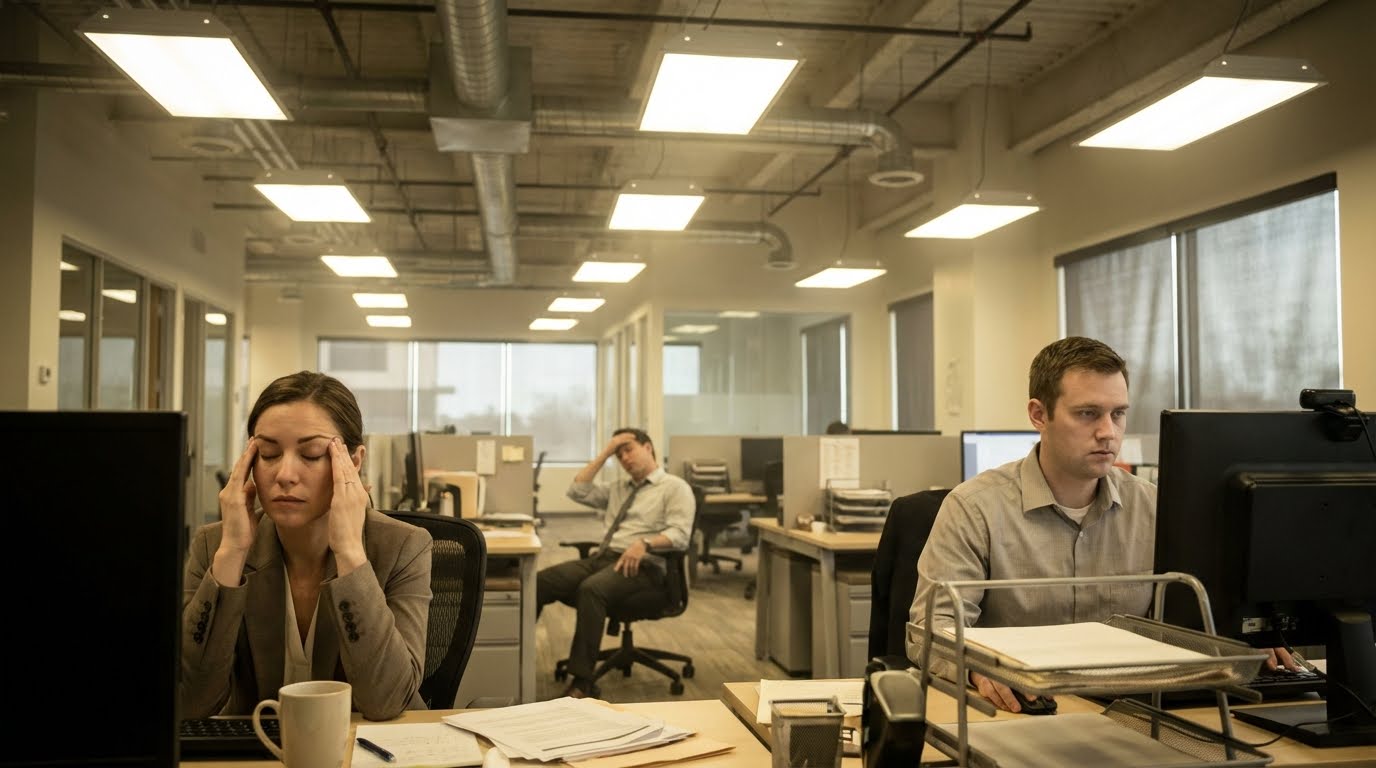
When employees experience headaches, fatigue, or respiratory issues that mysteriously improve after leaving the building, sick building syndrome may be to blame. This widespread condition affects millions of workers across Atlanta, Durham, Charlotte, and surrounding areas where poor indoor air quality creates health problems that impact productivity and wellbeing.
Understanding Sick Building Syndrome
Is your building making people sick? Sick building syndrome (SBS) represents a collection of non-specific symptoms people experience while occupying a particular building. The condition affects office workers, school employees, and building occupants across commercial properties throughout the Southeast.
Unlike specific illnesses with identifiable causes, SBS produces symptoms that improve or disappear when individuals leave the affected building. The pattern is unmistakable. Employees feel fine at home. They feel sick at work.
The World Health Organization first recognized this condition in the 1980s when researchers identified patterns of illness linked to specific buildings. Today, SBS remains prevalent in modern commercial structures where sealed environments and inadequate ventilation trap contaminants inside. Poor indoor air quality costs Atlanta businesses thousands annually in lost productivity.
What Defines Sick Building Syndrome
Medical professionals define SBS as acute health effects linked to time spent in a building. The symptoms lack obvious cause and occur in a significant percentage of occupants. When 20 percent or more of your employees report similar complaints, SBS becomes the likely diagnosis.
This threshold matters for building managers. One or two complaints might indicate individual health issues. Ten or fifteen employees experiencing identical symptoms points to an environmental problem.
The condition differs from building-related illness, which involves specific diagnosable diseases caused by building contaminants. SBS produces symptoms people can experience without identifiable medical conditions. That makes diagnosis more complex than traditional occupational health issues.
Sick Building Syndrome Symptoms
Recognizing SBS symptoms helps building managers identify problems before they escalate into serious health issues. The condition produces a characteristic pattern of complaints that appear during work hours. Symptoms diminish during evenings, weekends, and vacations. That timing reveals the connection.

Common Physical Symptoms
Building occupants with SBS report a predictable cluster of physical complaints. These symptoms intensify throughout the workday and resolve away from the building. Understanding these patterns enables early intervention.
Headaches and Dizziness
Persistent headaches represent one of the most frequently reported SBS symptoms. Occupants describe tension headaches or migraines that begin shortly after entering the building. The pain intensifies throughout the workday and vanishes during time off.
Dizziness and lightheadedness often accompany headaches. These symptoms create concentration difficulties that reduce work performance. They also increase accident risk in office environments where focus matters.
Respiratory Complaints
Respiratory symptoms dominate SBS cases across Atlanta and North Carolina commercial properties. These complaints often get misdiagnosed as allergies or chronic sinusitis. Building air quality represents the actual cause. If your employees report symptoms similar to mold exposure, contaminated indoor air may be to blame.
Affected individuals experience:
- Nasal congestion and irritation: Stuffy nose, sinus pressure, and nasal dryness that mimics seasonal allergies but persists year-round. Building occupants frequently mistake these symptoms for chronic sinusitis when contaminated indoor air represents the real culprit.
- Throat irritation and coughing: Dry, scratchy throat that triggers persistent coughing throughout the workday. The irritation worsens in buildings with low humidity or high concentrations of volatile organic compounds damaging throat tissues.
- Shortness of breath: Difficulty breathing during normal activities signals serious air quality problems. This symptom indicates potential mold spores, chemical contaminants, or inadequate oxygen from poor ventilation systems.
- Chest tightness: Constriction or pressure resembling asthma symptoms affects individuals with and without pre-existing respiratory conditions. This symptom suggests significant contamination requiring immediate professional assessment and intervention.
Eye and Skin Irritation
Burning, itching, or watery eyes plague employees in buildings with SBS. The irritation stems from airborne pollutants including dust particles and chemical vapors. These contaminants inflame delicate eye tissues throughout the workday.
Skin reactions appear in severe cases. Dryness, itching, and rashes develop where chemical exposure or humidity imbalances damage skin barriers. Employees working in buildings with known air quality issues report these symptoms most frequently.
Neurological and Cognitive Effects
What happens when poor air quality affects your brain? The cognitive symptoms of SBS often prove more disruptive to business operations than physical complaints. Mental fog costs more than headaches.
Fatigue and Lethargy
Unexplained tiredness persists despite adequate sleep in SBS cases. Employees describe feeling drained and unable to maintain normal energy levels. One Charlotte accounting firm tracked this pattern across their entire staff.
The fatigue differs from normal tiredness by improving dramatically during time away from the building. That pattern suggests environmental rather than lifestyle factors. Building managers who recognize this distinction can address the real problem.
Difficulty Concentrating
Mental fog creates serious productivity challenges for workers in buildings with poor indoor air quality. Tasks requiring focus become increasingly difficult as the workday progresses. Memory problems compound the issue.
Chemical exposure, inadequate ventilation, and carbon dioxide buildup all contribute to cognitive impairment. This affects job performance and workplace safety. Complex tasks become impossible when your building starves your brain of oxygen.
Nausea and General Malaise
Feelings of general unwellness without identifiable medical causes suggest SBS. Affected individuals may experience digestive upset or general achiness. An overall sense that something feels “wrong” pervades their work environment.
These vague symptoms often lead to doctor visits that reveal no underlying medical condition. The building represents the problem. Medical intervention can’t fix contaminated air.
Sick Building Syndrome Causes
Understanding what creates SBS enables building owners to address root problems rather than simply treating symptoms. The condition rarely stems from a single factor. Instead, complex interactions between building design, ventilation, and environmental pollutants create the perfect storm.
Inadequate Ventilation Systems
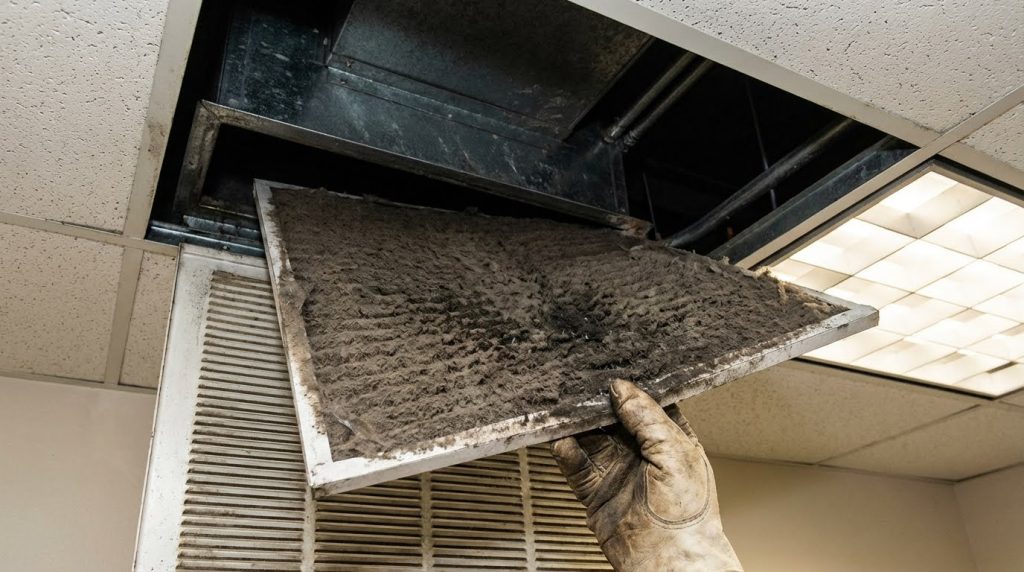
Poor ventilation is the #1 cause of SBS in Atlanta and North Carolina offices. When your HVAC system can’t deliver enough fresh air, employee complaints start rolling in. Modern buildings often sacrifice air quality to cut energy costs.
The American Society of Heating, Refrigerating and Air-Conditioning Engineers (ASHRAE) sets minimum ventilation standards. Many commercial buildings fall short to save money. That decision costs more in lost productivity than it saves on utility bills.
Inadequate fresh air creates a toxic cycle. Carbon dioxide builds up. VOCs concentrate. Stagnant air traps moisture that feeds mold growth. Dirty filters and blocked intakes make everything worse by recirculating contaminated air.
Chemical Contaminants and VOCs
Volatile organic compounds from building materials create significant indoor air pollution in commercial structures. New carpet releases formaldehyde. Fresh paint emits toxic vapors. Adhesives and manufactured wood products off-gas for months.
Office equipment compounds the problem. Printers emit ozone. Copiers release particulates. Computers generate heat that intensifies chemical off-gassing from surrounding materials.
Cleaning products and pesticides introduce additional VOCs into building environments. Janitorial staff often apply these products during evening hours when ventilation systems operate at reduced capacity. Chemical vapors concentrate overnight and create morning exposure problems for arriving employees.
Even low-level chronic exposure to chemical mixtures produces the non-specific symptoms characteristic of SBS. The contamination isn’t dramatic enough to trigger immediate illness. It’s subtle enough to confuse diagnosis while making everyone miserable.
Biological Contaminants
Mold growth represents the most common biological contamination in Southeastern commercial buildings. Water intrusion from roof leaks or plumbing failures creates ideal conditions for colonization. Mold hides in wall cavities, ceiling tiles, and HVAC systems where occupants can’t see it.
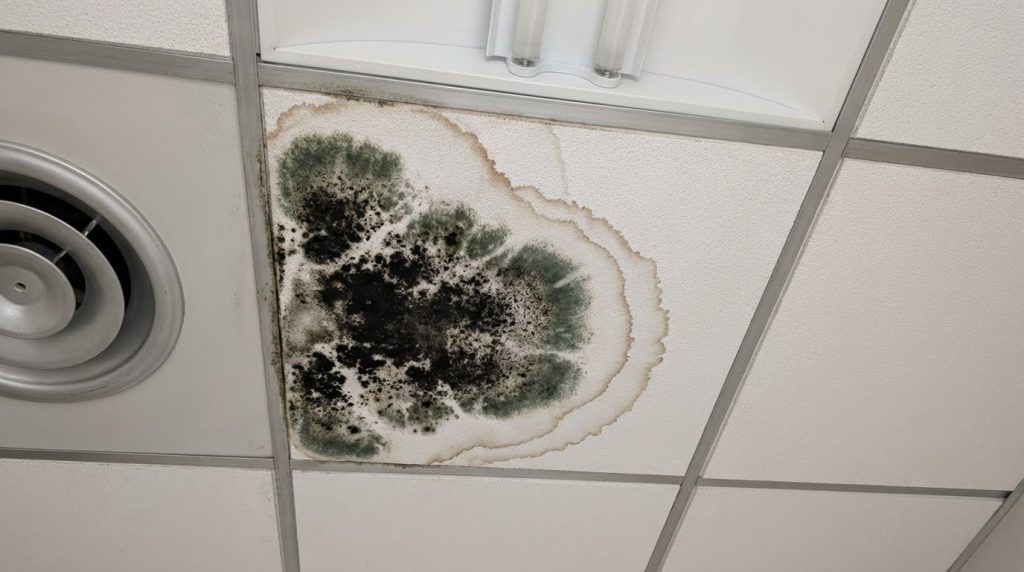
Mold spores become airborne and circulate throughout buildings. They cause respiratory irritation and allergic reactions even in individuals without diagnosed sensitivities. One Durham office building resolved headache complaints affecting 15 employees by addressing mold in the HVAC system.
Bacteria thrive in humidifiers, cooling towers, and condensate drain pans. Standing water provides breeding grounds for Legionella and other pathogens. Dust mites, pollen infiltration, and pest droppings add to the biological contamination burden. Professional air quality testing identifies these biological contaminants before they cause widespread health issues.
Building Design and Layout
Does your building design trap pollutants? Architectural features contribute significantly to SBS development. Open office designs with poor air circulation create pockets where contaminants concentrate. Sealed building envelopes prevent natural ventilation.
Deep floor plans create interior zones far from windows. These areas receive inadequate fresh air even when perimeter ventilation operates properly. Temperature and humidity imbalances across different building zones create comfort complaints that compound health symptoms.
Overcrowding increases carbon dioxide levels while overwhelming ventilation capacity designed for lower occupancy rates. Improper building pressurization allows contaminated outdoor air to infiltrate occupied spaces. Vehicle exhaust and loading dock fumes migrate inside through building penetrations.
Environmental Factors
Outdoor pollution sources near buildings introduce contaminants through air intakes. Vehicle exhaust from parking garages contains carbon monoxide and nitrogen oxides. These pollutants infiltrate building air supplies through poorly located intake vents.
Industrial facilities and construction sites create neighborhood air quality problems. These migrate into nearby buildings through ventilation systems. Loading docks and waste handling operations add to outdoor contamination sources.
Atlanta property managers often discover SBS during tenant complaint investigations. The pattern emerges clearly once someone connects the dots between symptoms and building occupancy.
Indoor Air Quality Testing and Diagnosis
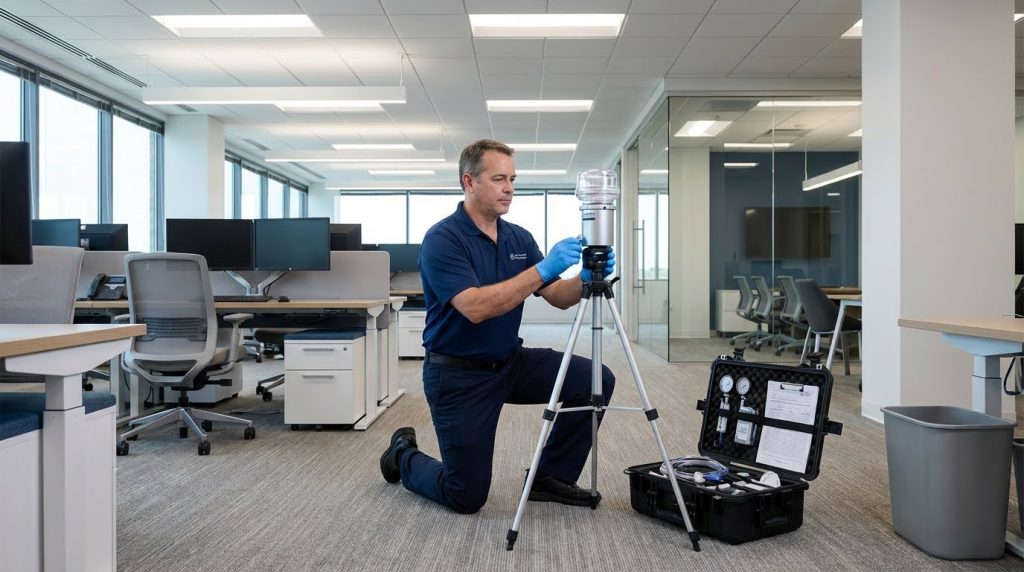
How do you prove your building causes sick building syndrome? Professional indoor air quality testing provides the data necessary to identify SBS causes and develop effective solutions. SafeAir Certified Mold Inspection Inc. serves Atlanta, Durham, Charlotte, and surrounding North Carolina communities with comprehensive assessment services.
Sick Building Syndrome Treatment and Solutions
What’s the fix for sick building syndrome? Effective treatment requires addressing underlying causes rather than masking symptoms with temporary fixes. Building managers and property owners in Atlanta and North Carolina can implement proven strategies that restore healthy indoor environments.
Improving Ventilation Systems
Increasing outdoor air ventilation represents the most effective SBS treatment across affected buildings. HVAC modifications that boost fresh air intake dilute indoor pollutants while providing oxygen necessary for cognitive function. Results appear quickly.
Bringing ventilation rates up to ASHRAE standards creates measurable improvements in air quality and symptom reduction. Regular HVAC maintenance including filter replacement and coil cleaning prevents biological contamination. Upgrading filtration to higher efficiency ratings captures smaller particles including mold spores and pollen.
Installing dedicated outdoor air systems provides supplemental fresh air without overloading existing equipment. One Charlotte property saw 30% reduction in sick days after implementing ventilation upgrades. The investment paid for itself within eight months.
Source Control Strategies
Eliminating pollution sources prevents contamination at its origin. Low-VOC building materials and finishes minimize chemical off-gassing in construction projects. Green cleaning products reduce toxic chemical exposure while maintaining sanitary conditions.
Schedule high-emission activities during weekends or unoccupied periods. Painting, carpet installation, and pesticide application should occur when employees aren’t present. Ventilation systems can clear contaminants before occupants return.
Dedicated exhaust systems for copy rooms prevent localized pollutants from spreading throughout buildings. Moisture control through roof maintenance and plumbing repairs prevents water intrusion that supports mold growth. Dehumidification systems maintain relative humidity between 30-50 percent.
Professional Remediation Services
Mold remediation and duct cleaning require professional expertise to ensure complete resolution. Independent testing before and after remediation verifies that cleanup efforts successfully eliminate contamination. SafeAir provides post-remediation clearance testing confirming air quality meets acceptable standards.
Our independence from remediation contractors ensures unbiased assessment focused solely on your building’s air quality. We don’t perform remediation work. This eliminates conflicts of interest that compromise testing integrity.
This approach protects building owners from unnecessary remediation expenses while ensuring genuine problems receive appropriate attention. You get honest answers. Not upsells.
Occupant Education and Awareness
Training building occupants to recognize SBS symptoms enables early intervention before conditions worsen. Establish reporting systems where employees can document symptoms and timing. This helps identify problem areas requiring investigation.
Communication about building improvements demonstrates management commitment to occupant health. Transparency about investigation findings and remediation timelines maintains trust. Encouraging proper workspace ventilation empowers occupants to minimize exposure while building-wide improvements proceed.
When to Call Professional Indoor Air Quality Experts
Should you test for sick building syndrome? Persistent health complaints among building occupants warrant professional assessment regardless of visible contamination. SafeAir Certified Mold Inspection Inc. provides certified inspection services throughout Atlanta, Durham, Charlotte, Greensboro, Winston-Salem, and surrounding North Carolina communities.
Signs Your Building Needs Professional Testing
Multiple occupants reporting similar symptoms that improve away from the building indicate SBS requiring investigation. The pattern can’t be ignored. Recent water damage or visible mold growth suggests contamination problems affecting air quality.
Increased employee absenteeism signals serious indoor environmental problems. Reduced productivity creates measurable business costs. Medical complaints about work environment symptoms demand professional response.
Buildings with poor ventilation or inadequate HVAC maintenance benefit from proactive testing before symptoms develop. New construction and recent renovations create risk factors warranting professional assessment. Don’t wait for complaints to start rolling in.
The SafeAir Testing Advantage
Our certified mold inspectors bring advanced equipment and genuine health-focused expertise to every assessment. We use calibrated air sampling pumps and thermal imaging cameras meeting Certified Industrial Hygienist standards. All samples undergo analysis by accredited laboratories providing detailed statistical data.
With 164+ five-star reviews and 15+ years of experience, SafeAir has established itself as the Southeast’s trusted indoor air quality testing authority. Our founder’s personal experience with toxic mold exposure creates an authentic understanding of how contaminated buildings affect occupant health.
We maintain the highest industry certifications including Council-Certified Microbial Consultant (CMC) through the American Council for Accredited Certification. That expertise makes the difference between accurate diagnosis and expensive guesswork.
Comprehensive Service Offerings
Beyond basic air quality testing, SafeAir provides specialized services addressing every aspect of building contamination assessment. Our service portfolio includes Air Samples using both spore trap and cultured methodologies detecting viable and non-viable contaminants.
Air Quality Testing examines chemical pollutants and environmental conditions affecting your building. Surface Samples through tape lift and swab techniques identify specific contamination on building materials. Clearance Testing verifies successful remediation completion before building reoccupancy.
Dust Analysis reveals historical contamination patterns in carpet and building dust. This comprehensive approach ensures nothing gets missed. You receive complete answers about your building’s indoor air quality.
Protecting Your Atlanta and North Carolina Properties

How much does sick building syndrome cost your business? Poor indoor air quality affects employee wellbeing and increases absenteeism. It exposes property managers to potential legal claims from occupants experiencing work-related illness.
Professional air quality testing identifies specific problems enabling targeted solutions. Independent assessment from SafeAir ensures accurate diagnosis without conflicts of interest. Our detailed remediation protocols minimize unnecessary work while addressing genuine contamination thoroughly.
Ready to protect your team’s health? Contact SafeAir Certified Mold Inspection Inc. today at (404) 695-0673 to schedule comprehensive indoor air quality testing for your commercial property. Our certified teams serve clients throughout Atlanta, Durham, Charlotte, and surrounding North Carolina communities with the expertise and equipment needed to identify SBS causes.
We deliver next-day appointments and accredited laboratory results in 2-3 business days. Ongoing consultation answers every question about your building’s indoor air quality. Free phone consultations provide immediate guidance about symptoms, testing options, and recommended next steps.
Don’t let contaminated indoor air drain your productivity and profits. Professional testing delivers the answers you need to create a healthy workplace environment where employees thrive instead of suffering through symptoms that shouldn’t exist.