Your home should protect your health. But what if it’s slowly making you sick?
Unexplained headaches, constant fatigue, and breathing problems that improve when you leave home point to poor indoor air quality affecting your family. These symptoms aren’t random – they’re your body responding to invisible pollutants circulating through every room where you live, sleep, and spend most of your time.
Understanding Poor Indoor Air Quality and Its Health Impact
Your home might be making you sick.
Modern homes trap pollutants inside faster than ventilation removes them. Energy-efficient sealing keeps heating costs down – but also locks in contamination from cooking, cleaning products, and hidden mold. The EPA confirms indoor air often contains two to five times more pollution than outdoor air.
That means your family breathes contaminated air with every breath at home.
Doctors often misdiagnose air quality symptoms as seasonal allergies or stress. Your persistent cough isn’t pollen. That headache isn’t from work pressure. The fatigue isn’t just aging.
It’s your air.
Professional air quality testing identifies exactly what’s making your family sick. Instead of guessing or treating symptoms endlessly, you get laboratory data showing which specific pollutants are circulating through your home. Then you fix the actual problem – not just the symptoms.
Common Poor Air Quality Symptoms in Your Home
Respiratory System Warning Signs
Notice these breathing problems at home?

Common respiratory symptoms include:
- Persistent coughing that worsens at home but disappears at work or on vacation – your airways are reacting to indoor pollutants you’re breathing constantly at home
- Chest tightness making you feel like you can’t get enough air even sitting on the couch – particle pollution constricts your airways, limiting oxygen flow throughout your body
- Throat irritation requiring constant clearing when you haven’t been sick – mucous membranes produce excess mucus trying to trap and remove airborne contaminants before they reach your lungs
- Worsening asthma or COPD requiring more medication just to breathe normally indoors – poor air quality forces your lungs to work harder with every breath you take at home
These aren’t minor inconveniences. They’re your body’s alarm system.
Breathing difficulties signal that something in your air is actively harming your respiratory system. Mild symptoms today become chronic conditions tomorrow when exposure continues without intervention.
Children, elderly family members, and anyone with existing respiratory conditions face the highest risk. Their lungs can’t fight contamination as effectively as healthy adults. If you’re noticing warning signs of mold toxicity alongside these respiratory symptoms, hidden mold may be the culprit.
The pattern matters more than any single symptom. Do your breathing problems improve when you leave home? That’s your home’s air quality speaking.
Neurological and Cognitive Effects
Is your home affecting your brain function?
Watch for these cognitive symptoms:
- Headaches that start at home but disappear at work or on vacation – volatile organic compounds from cleaning products and furniture trigger vascular changes affecting blood flow to your brain
- Mental fog making it impossible to concentrate on simple tasks – your brain needs 20% of your body’s oxygen, and indoor pollution reduces oxygen availability while introducing neurotoxic chemicals
- Persistent fatigue despite sleeping 8+ hours every night – your immune system burns tremendous energy fighting continuous pollutant exposure, leaving you exhausted even after rest
- Dizziness or lightheadedness when moving between rooms – carbon monoxide from malfunctioning appliances creates oxygen deprivation that affects balance and coordination throughout your home
These symptoms confuse doctors because the connection isn’t obvious.
Your physician treats your headaches with medication. Your therapist addresses “stress-related” fatigue. Nobody checks your air.
Professional testing reveals whether indoor pollution is causing neurological symptoms that won’t improve until you fix your air quality. Students notice improved grades. Remote workers report better productivity. Parents have energy to enjoy their families again.
All from breathing clean air.
Physical Symptoms and Skin Reactions
Your skin tells the truth about your air quality.
Physical warning signs include:
- Unexplained rashes or itching that develops at home without obvious triggers – airborne chemicals settle on exposed skin surfaces or trigger systemic allergic responses throughout your body
- Eczema flare-ups that worsen dramatically indoors but improve outdoors – inflammatory skin conditions respond strongly to poor air quality, showing visible reactions to invisible pollutants
- Red, watery eyes that burn and itch constantly at home – your eyes lack protective barriers that guard other tissues, making them particularly vulnerable to airborne irritants
- Nausea or digestive discomfort without food-related causes – volatile organic compounds and carbon monoxide trigger these symptoms through neurological pathways even though you’re breathing them, not eating them
Skin and eye irritation often get dismissed as seasonal allergies.
They’re not. Seasonal allergies follow pollen counts. Air quality symptoms follow patterns in your home – worse in certain rooms, better when ventilation improves, constant regardless of outdoor conditions.
Contact lens wearers notice these problems first. Pollutants adhere to lens surfaces and concentrate against the cornea, creating intense discomfort that eye drops can’t fix.
The solution isn’t more medication. It’s cleaner air.
Primary Causes of Poor Indoor Air Quality Symptoms
Biological Contaminants and Allergens
Mold hides in Atlanta and North Carolina homes.
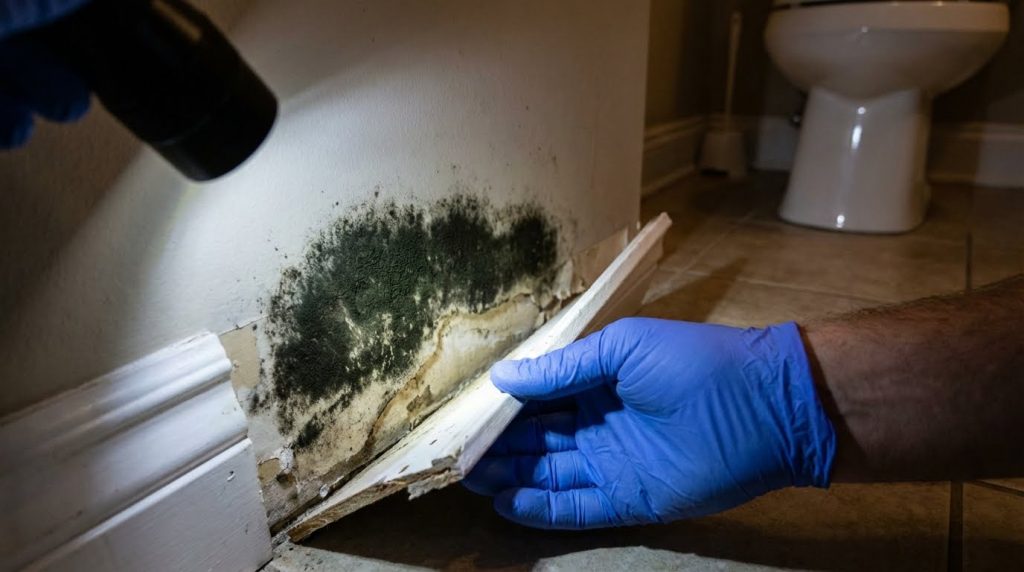
Southeastern humidity creates ideal conditions for fungal growth in crawlspaces, behind walls, and under flooring. Mold spores become airborne and circulate through ventilation systems, triggering allergic reactions and respiratory irritation even in people without diagnosed mold allergies.
Some species produce mycotoxins. These toxic compounds create health effects beyond typical allergic responses – affecting nervous systems, suppressing immune function, and causing symptoms doctors can’t explain through standard testing. Understanding how mold makes you sick helps families recognize when professional testing is necessary.
Other biological threats include:
- Dust mites thriving in bedding, furniture, and carpeting – their waste products become airborne and trigger severe allergic reactions in millions of people, particularly in humid southeastern climates
- Pet dander accumulating in homes with cats, dogs, and furry animals – protein allergens persist for months or years in carpeting and ductwork even after pets are gone
- Bacteria and viruses spreading through poorly ventilated spaces – stagnant indoor air allows pathogens to accumulate at higher concentrations than outdoor environments where natural ventilation dilutes contamination
Professional air quality testing identifies which biological contaminants are affecting your family. Then you know exactly what needs remediation instead of guessing.
Chemical Pollutants and VOCs
That “new car smell”? Chemical off-gassing.
Volatile organic compounds evaporate at room temperature from cleaning products, air fresheners, personal care items, furniture, and building materials. These chemicals continuously add pollutants to your indoor environment long after you’ve finished using products or installing materials.
Common chemical sources include:
- Formaldehyde from pressed wood furniture and building materials – this known carcinogen causes respiratory irritation, headaches, and long-term health risks at concentrations found in many homes
- Paint and flooring releasing VOCs for weeks or months after installation – new carpet installations are notorious for causing headaches, nausea, and respiratory symptoms in sensitive individuals
- Combustion byproducts from gas stoves, fireplaces, and attached garages – nitrogen dioxide, carbon monoxide, and particulate matter infiltrate living spaces when combustion appliances aren’t properly vented
Gas cooking creates surprisingly high nitrogen dioxide levels.
Kitchen concentrations often exceed outdoor air quality standards, particularly when range hoods aren’t used or vent back into the room rather than outdoors. Carbon monoxide from any combustion source creates serious safety risks alongside chronic health effects.
The scary part? You can’t see, smell, or taste most chemical pollutants until concentrations reach dangerous levels.
Environmental and Structural Issues
Your energy-efficient home is too tight.
Modern construction seals homes tightly to reduce heating and cooling costs. Energy efficiency saves money – but also traps pollutants inside when mechanical ventilation doesn’t provide adequate fresh air exchange.
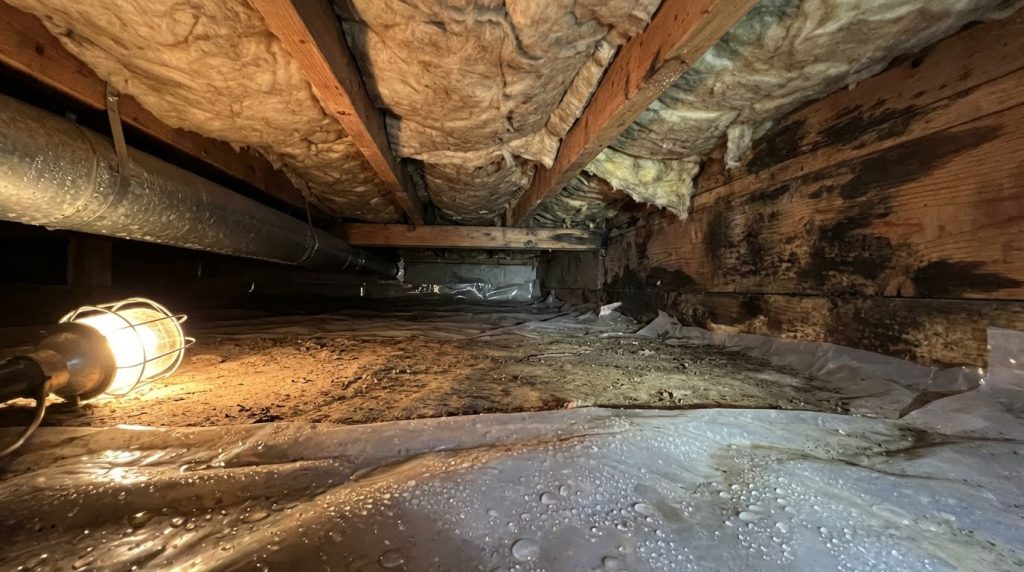
Structural problems that worsen symptoms:
- Inadequate ventilation trapping pollutants that normal living activities generate – cooking, cleaning, showering, and breathing all produce contamination that must be removed through continuous air exchange
- High humidity promoting mold growth, dust mite reproduction, and chemical off-gassing from building materials – southeastern homes battle moisture from poor drainage, inadequate dehumidification, and water infiltration through building envelopes
- Water damage from leaks, floods, or plumbing failures introducing moisture that leads to mold growth within 24-48 hours – hidden damage behind walls, under flooring, or in crawlspaces often goes undetected for weeks while continuously releasing contaminants
Maintaining indoor humidity between 30-50% helps prevent biological growth.
Atlanta and North Carolina homeowners face particular challenges during summer humidity and after heavy rainfall. Dust analysis reveals historical contamination that current air samples might miss, providing evidence of past water damage or chronic moisture problems.
Signs of Poor Indoor Air Quality Beyond Health Symptoms
Visual and Sensory Indicators
Trust your nose. Musty odors signal hidden mold.
Your sense of smell detects microbial volatile organic compounds released by mold colonies and bacteria. That musty smell provides early warning that something is actively growing where it shouldn’t – often before visible growth appears.
Never ignore persistent odors. They indicate ongoing biological activity that will worsen without intervention.
Other visual warning signs include:
- Visible mold growth on walls, ceilings, or around windows – small surface spots often indicate larger colonies hidden within wall cavities or above ceiling tiles requiring professional investigation
- Condensation on windows and walls indicating excessive humidity – this moisture accumulation shows humidity levels exceed what building materials can tolerate without supporting biological growth
- Discoloration or staining on ceilings, walls, or floors – water stains indicate current or past leaks that may have created hidden mold growth requiring air sampling to confirm
Visible mold represents advanced contamination.
By the time you see growth, substantial spore quantities have already released into your indoor air. Surface sampling identifies specific species present and guides remediation strategies.
Household Patterns and Member Responses
Does everyone feel better on vacation?
When multiple family members experience similar symptoms that improve away from home, environmental exposure is likely affecting everyone. Pay attention when new respiratory symptoms, headaches, or fatigue develop simultaneously without obvious infectious illness.
Warning patterns include:
- Pets exhibiting symptoms like respiratory issues, skin irritation, or behavioral changes – animals often spend more time at home than working adults, making them more susceptible to chronic pollutant exposure
- Increased medication requirements for allergies or asthma without corresponding changes in outdoor pollen counts – when people with diagnosed respiratory disease notice decreased symptom control at home but not elsewhere
- Seasonal worsening during high-humidity months when mold growth accelerates – southeastern homes often show symptom increases during summer and after heavy rainfall events
Veterinarians sometimes identify environmental factors when pets develop unexplained symptoms.
Your dog’s persistent coughing or cat’s skin problems might be air quality issues affecting non-human family members alongside human residents. The same contamination affects everyone breathing the air.
How Professional Indoor Air Quality Testing Identifies Problems
Stop Guessing. Get Laboratory Proof.
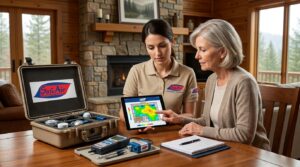
Professional testing identifies the exact pollutants circulating through your home. No more wondering if it’s mold, dust, chemicals, or something else. Laboratory analysis shows you precisely what’s in your air – and how much.
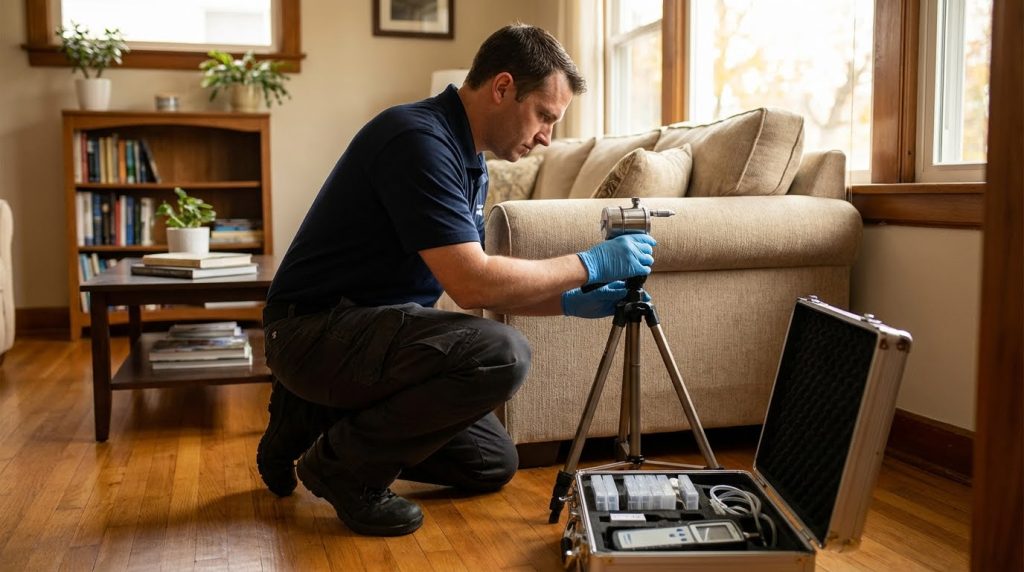
Here’s what that means for your family:
Accurate diagnosis saves money. Doctors can’t identify air quality issues from symptoms alone. You might spend thousands on allergy treatments, medications, or unnecessary remediation when testing reveals the real problem costs $200 to fix.
Outdoor comparison shows what’s abnormal. SafeAir tests your outdoor air first, establishing what’s normal for your neighborhood. Then we compare indoor results. If your indoor mold counts are 10x higher than outside? You’ve got a problem requiring action.
Targeted solutions eliminate waste. Generic “air purifier” recommendations rarely work because they don’t address your specific contaminants. Testing identifies whether you’re fighting mold spores, chemical vapors, or dust particles – then you fix the actual problem.
Comprehensive Air Sampling Methods
Our certified inspectors know exactly where contamination hides.
We sample air from problem areas, compare multiple rooms, and collect enough data for statistically valid results. You get answers, not approximations.
Professional air sampling includes:
- Spore trap analysis revealing types and concentrations of airborne biological particles – this method captures particles on specialized collection media that laboratory technicians examine under microscopes, providing genus-level identification and quantification
- Baseline outdoor samples establishing normal environmental levels for your location – comparative analysis distinguishes between normal exposure and problematic indoor sources requiring remediation
- Multiple collection points throughout your home ensuring comprehensive assessment – single samples miss localized problems that might be causing your symptoms in specific rooms
The difference between DIY kits and professional testing?
Professional testing saves you money by identifying problems accurately the first time. DIY kits provide limited information without context, often leading to unnecessary panic or missed contamination that continues affecting your health.
Surface and Material Testing
Air samples don’t catch everything.
Some mold types produce potent mycotoxins but release few spores into the air. Surface testing confirms whether visible growth or suspicious stains contain active colonies requiring removal.
Advanced testing methods include:
- Tape lift samples identifying mold species growing on building materials even when airborne counts appear normal – genus-level identification guides remediation strategies and helps predict health risks
- Swab samples from suspicious areas providing species-level identification when needed – some situations require precise identification to determine whether toxic species are present
- Material testing determining whether building components like insulation, drywall, or flooring contain contamination requiring removal – prevents treating surface mold while leaving contaminated materials that continue releasing pollutants
Bulk sampling examines actual building materials.
This testing prevents the common mistake of cleaning visible mold while contaminated materials remain in place. Professional testing ensures remediation addresses the full scope of contamination – not just what you can see.
Advanced Detection Technology
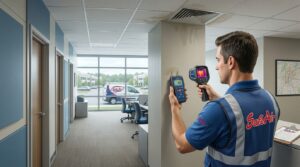
Thermal imaging finds problems before they become disasters.
Our cameras detect hidden moisture behind walls and ceilings without destructive testing. Temperature variations reveal water infiltration, poor insulation, or air leakage contributing to indoor air quality problems.
Technology advantages include:
- Non-invasive moisture detection saving thousands in repair costs – we find leaks before they cause structural damage or major mold growth requiring extensive remediation
- Hidden contamination identification in wall cavities and structural spaces – standard visual inspection misses 60-70% of moisture problems that thermal imaging reveals immediately
- Early intervention prevention stopping small problems before they become major health hazards – finding moisture today prevents mold growth that would affect your family’s health for months
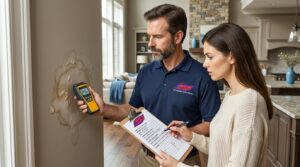
Moisture meters measure water content in building materials.
Professional inspectors map moisture distribution throughout your home, identifying the full extent of water intrusion affecting multiple areas. Accurate moisture assessment guides remediation and prevents recurrence by addressing underlying water problems.
VOC testing identifies specific chemical compounds in your indoor air. This testing distinguishes between biological and chemical causes of your symptoms, ensuring remediation targets actual problems rather than assumptions.
When to Schedule Professional Air Quality Testing
Immediate Testing Situations
Don’t wait when these situations occur:
Schedule testing immediately if:
- Family members develop sudden symptoms coinciding with moving into a new home or following renovation work – new construction materials release substantial VOCs during initial months that can cause serious health effects
- Water damage occurs from floods, leaks, or plumbing failures – hidden moisture in wall cavities supports mold growth that continues releasing spores long after surface moisture dries
- You’re purchasing a home and want verification before finalizing the transaction – pre-purchase testing identifies existing contamination that sellers may not have disclosed, protecting your investment and family’s health
Water damage requires testing 24-48 hours after the event.
Then again after remediation. Clearance testing verifies that cleanup successfully eliminated contamination rather than just hiding it temporarily.
Routine and Preventive Testing
Smart homeowners test annually.

Annual air quality testing establishes baseline conditions that help identify gradual deterioration before symptoms develop. This proactive approach catches problems early when intervention costs less and prevents health effects from chronic exposure.
Strategic testing times include:
- Before and after high-humidity months in southeastern climates – monitoring whether moisture control strategies are preventing mold growth during Atlanta and North Carolina’s challenging summer humidity
- Post-remediation verification ensuring mold removal successfully eliminated contamination – independent verification protects homeowners from contractors who perform inadequate work or fail to address all affected areas
- When selling your home to provide documentation of air quality for potential buyers – testing results demonstrate property condition and prevent transaction delays from inspection issues
SafeAir provides unbiased clearance testing.
We don’t perform remediation work, eliminating conflicts of interest that compromise testing integrity when the same company performs both services. You get honest results – not inflated problems designed to sell remediation services.

Why 164+ families choose SafeAir:
Unbiased results – we don’t do remediation, so we don’t profit from finding problems or exaggerating contamination
Fast answers – accredited lab results delivered in 2-3 business days, giving you the information needed to take action quickly
Advanced detection – thermal imaging finds hidden moisture before major damage occurs, saving thousands in repair costs
Certified expertise – council-certified inspectors, not subcontractors, who understand exactly what they’re testing and why it matters
Stop treating symptoms. Fix your air.
SafeAir Certified Mold Inspection delivers certified indoor air quality testing backed by 164+ five-star reviews and accredited laboratory analysis throughout Atlanta and North Carolina. Our independent testing model ensures you get honest results focused on your family’s health – not company profits from remediation work.
Take Action Today
Call (404) 695-0673 for a free consultation.
Tell us your symptoms. We’ll recommend the right testing for your situation. Next-day appointments available because we understand you need answers quickly.
Professional air quality testing reveals exactly what’s making your family sick. Then you fix it – not just treat symptoms forever with medications that address effects while causes continue harming your health.
Don’t let poor air quality symptoms continue affecting your family’s health and quality of life. Professional testing shows precisely what’s in your air, providing the information needed to create healthy indoor environments where everyone breathes easier.
Schedule your air quality testing service today in Atlanta or Durham and surrounding North Carolina communities. Take the first step toward eliminating the hidden pollutants compromising your home’s air quality and your family’s wellbeing.
Your family deserves to breathe clean air at home. Let’s make that happen.