
Call Us
(404) 695-0673
Email Us
inspection@safeairtesting.com
Business Hours
Mon - Fri, 8am - 5pm
(404) 695-0673
inspection@safeairtesting.com
Mon - Fri, 8am - 5pm
Wake County’s humid climate, vented crawlspaces, and clay-heavy soils make Triangle-area homes uniquely susceptible to hidden mold. From bungalows in Oakwood and Mordecai to newer builds around North Hills, SafeAir delivers independent mold testing built on accredited-lab science, not on selling removal work. Every Raleigh mold inspection ends with lab-verified spore counts.
SafeAir is inspection only — no remediation. When the company that finds the mold is also the company paid to clean it up, the incentive to inflate findings is structural. We eliminated that incentive by refusing to do the cleanup, and our mold testing services across North Carolina are cited as the independent benchmark.
Speak with a certified inspector at (404) 695-0673. Same-day or next-day appointments are typically available across Wake County and the Triangle.
The Triangle sits inside one of the most humid corridors in the southeast. Summer dew points climb into the low 70s, and that moisture saturates building cavities long after storms pass. That’s the textbook precondition for indoor mold, and the environmental reason every Raleigh inspection profiles humidity first.
Local clay holds water against foundations instead of draining it. Vapor migrates upward through slabs and crawlspace floors, raising humidity inside wall cavities where it condenses on cool surfaces and feeds mold. A mold inspection here usually finds elevated readings at the rim joist.
Bungalows in Oakwood, Mordecai, Hayes Barton, and Five Points have open vents that draw humid summer air directly under the house. That air condenses on cool joists and subfloor decking, which is where most hidden mold starts.
Tighter envelopes are not automatically safer. When mechanical ventilation is undersized, cooking, bathing, and laundry moisture stay trapped indoors, which is why indoor air quality testing catches problems a visual inspection misses.
Atlantic systems dump heavy rainfall across the Research Triangle. Slab edges, basement walls, and vapor barriers absorb that water and stay wet for weeks, which is more than enough to seed indoor mold growth.

Every Triangle-area inspection follows the same documented sequence. The goal is a defensible written mold report you can hand to a contractor, attorney, insurer, or buyer’s agent.

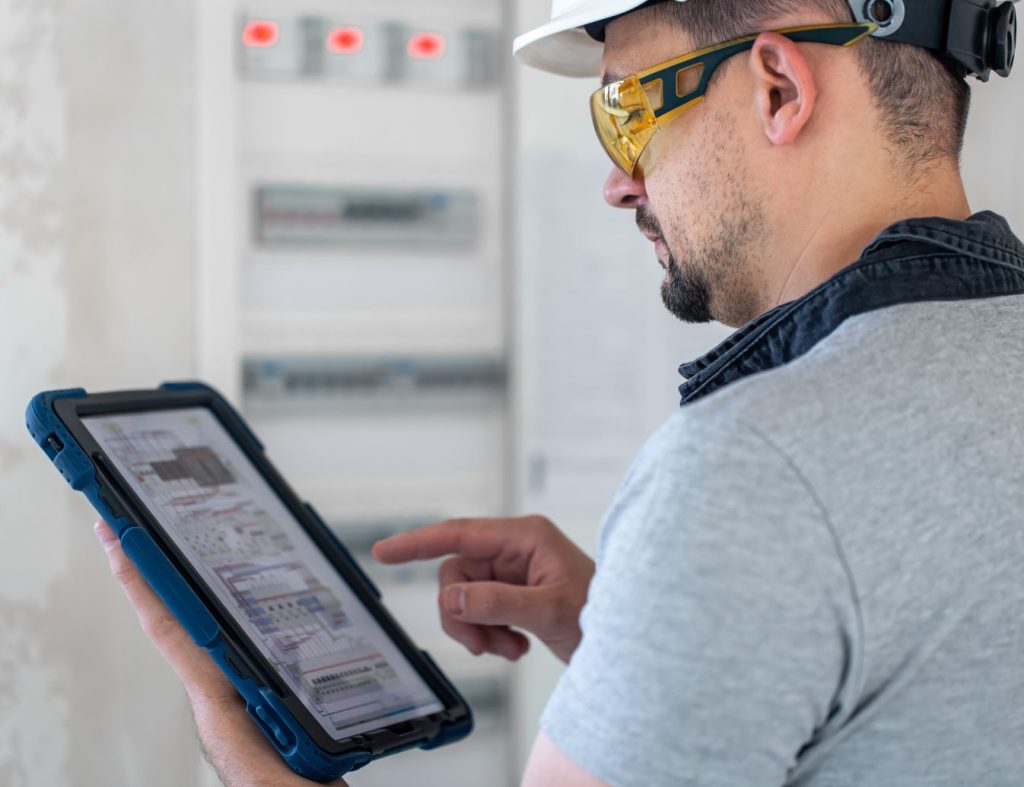
The mold inspector walks the structure with you, asks about water events, odors, and health symptoms, then catalogs visible staining, warping, and prior repairs.
Pin and pinless meters quantify moisture behind drywall, under flooring, and across ceiling cavities. Readings get logged at every suspect location so the inspection shows wet spots in the house.
Infrared cameras reveal cool wet patches behind finished surfaces without cutting holes. Thermal anomalies guide where mold samples should be drawn next.
Air, surface, and bulk mold samples ship same-day to accredited third-party labs. We follow the U.S. Environmental Protection Agency recommendation to interpret indoor air results against an outdoor baseline, which is how a mold inspection separates real contamination from background. The methodology is described in the EPA’s introduction to mold.
You receive a detailed PDF with photos, moisture readings, lab data, spore counts, and a scope-of-work summary a remediator can quote against.
Different problems call for different evidence. We pick the mold testing methodology that answers your question, not the one that maximizes lab work.
Calibrated cassettes capture particulates during sampling. The lab counts and identifies mold spores by genus, then compares the indoor air result to a paired outdoor control.
When visible mold is present, a tape lift or swab confirms whether what you see is active fungal material or harmless residue. Surface mold identification turns ambiguity into a defensible finding.
For damaged drywall, insulation, or carpet, a small section is collected for direct microscopic mold analysis. It's the right tool when the question is "is this material salvageable?"
Settled dust contains a long-term record of what has been growing in the indoor environment. Useful for chronic complaints where the current mold testing reads clean on air alone.
Visible mold is the easy case. The harder case is mold activity inside concealed assemblies that only a mold inspection finds.
An inspection crawlspace walk identifies vapor-barrier failures, standing water, and joist staining. Most Triangle mold problems start here and work upward through the rest of the structure.
Underventilated attics show dark mold staining on the underside of roof sheathing. It’s a signature pattern in Wake County houses with retrofitted insulation but blocked soffit vents.
Cooling coils, drip pans, and supply registers are condensation magnets. Contaminated equipment redistributes mold and degrades indoor air quality far from the source.
Wet rooms with weak exhaust ventilation push humid air into adjacent wall cavities. Tile grout, vanity bases, and behind-washer assemblies are common mold hot spots.

Indoor air quality testing in Raleigh is the right call when occupants report symptoms but no visible mold is present. The lab counts spore types per cubic meter and flags deviation from outdoor norms, and the indoor air quality dataset becomes a re-testable baseline.
Common findings include Aspergillus, Penicillium, and (in water-damaged structures) Stachybotrys. Genus identification matters because health and remediation implications differ sharply across mold types.
Persistent allergy symptoms triggered by mold spores, respiratory irritation, immunocompromised occupants, and post-water-damage verification all justify quantified indoor air quality data.
Total spore counts, genus-level identification, hyphal fragments, and pollen interference. Results read as a clear table you can act on.
Every inspection pairs an outdoor control sample with the indoor air reading. That comparison is what separates a defensible result from raw data.
Commercial buildings in Raleigh carry stakes residential properties do not. Occupant complaints, OSHA exposure, lease language, and continuity of operations all sit on the line, and a mold inspection becomes the evidence record.
HVAC zoning issues and post-leak ceiling tile mold are typical mold inspection findings complaints across downtown Raleigh and the Cary corridor.
Patient-facing facilities require documented air quality benchmarks after roof repairs or plumbing events that risk hidden mold.
Wake County districts and childcare facilities benefit from baseline mold and air quality data before parent complaints escalate.
Apartment complexes, restaurants, and retail tenants face landlord-tenant disputes when a unit reports mold symptoms or environmental concerns. Mold testing settles facts. An independent inspection settles the question.
Triangle real estate moves quickly, and timelines on mold inspection contingencies are tight. A clean third-party report keeps deals from collapsing. A documented mold finding gives buyers leverage.
Buyers ordering inspections during the option period get a written record before contingencies expire. We work to the timelines agents actually need.
Sellers who order pre-listing mold testing eliminate one of the most common renegotiation points. The same data that scares some buyers reassures others.
North Carolina sellers must disclose known material defects. A documented mold assessment supports disclosure and prevents post-closing claims.
Our mold inspection reports are written so a buyer’s agent can quote scoped mold remediation rather than walk away from the contract entirely.

Triangle homeowners have options. Here’s why our mold inspection report holds up.

SafeAir does not perform mold remediation. Our independence from removal work eliminates the conflict of interest that shapes most competitor mold findings, which is why our inspection services are trusted.
Jeremy Shelton, SafeAir’s founder and a Certified Microbial Consultant (ACAC), has spent over 15 years inspecting homes across Georgia and North Carolina. He started the company in 2009 after his own family was made sick by hidden mold in their crawlspace.
SafeAir has earned 164+ five-star reviews across Google and BirdEye since 2009. Every mold report is backed by accredited-lab data. Indoor air quality testing, spore trap air samples, bulk samples, clearance testing, dust analysis, and surface samples are all available across Wake County.
We typically offer next-day appointments across the Triangle. Standard lab turnaround runs 2-3 business days. Tape lift results come back in as little as three hours when urgency demands.
Our inspectors cover Wake County and the broader Triangle area from our North Carolina service hub. If your address is within an hour of downtown, we can typically be on site next business day.
SafeAir also serves Charlotte mold testing clients, plus Greensboro, Winston-Salem, and Asheville from our Durham office.
Most Raleigh-area residential mold jobs run 1-2 hours on site. Here’s the standard inspection sequence when the inspector arrives at your Raleigh property.

An inspection includes a visual walkthrough, moisture mapping, thermal imaging, air and surface sample collection, accredited-lab mold inspection analysis, and a written mold report with photos, readings, and spore counts. The on-site portion typically takes 1-2 hours.
Most residential jobs run 1-2 hours on site. Standard accredited-lab turnaround for spore trap air samples is 2-3 business days. Surface tape lift mold results can be turned around in as little as three hours when the situation requires urgent answers.
No. The state does not legally mandate inspection before sale. The NC Residential Property Disclosure Act does require sellers to disclose known material facts, which means a documented mold finding triggers a disclosure obligation. Many buyers request inspection during due diligence anyway.
Independence. When the same mold inspector finds the mold and sells the cleanup, the financial incentive favors larger findings. Separating the two functions, as the EPA, IICRC, and NCDHHS all recommend, produces results with no conflict of interest and a remediation scope tightened to what is needed.
Inspection is the visual and moisture assessment that locates suspect areas. Mold testing is the lab analysis of physical samples (air, surface, bulk, or dust) that identifies spore genera and quantifies counts. Most jobs include both because each answers a different question.
Independent, credentialed, and fast. Backed by accredited labs and 164+ five-star reviews since 2009.
Contact us to schedule your testing service today. SafeAir delivers comprehensive mold inspection and mold testing across the Triangle area, without the conflict of interest that exists when an inspector also sells removal work.
Call (404) 695-0673. For background reading, see our pillar resource on the warning signs of mold toxicity, or learn more about our process at SafeAir Mold Testing.
