Indoor Air Quality Warning Signs in Commercial Buildings requires a defined question, a documented scope, and an understanding of the property’s moisture history. A mold inspection is not the same as remediation, and testing is not automatically required in every situation. The goal is to gather reliable information that helps the property owner choose the next step.
What an inspection may review
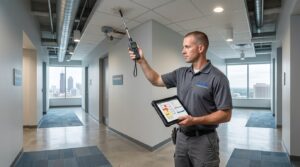
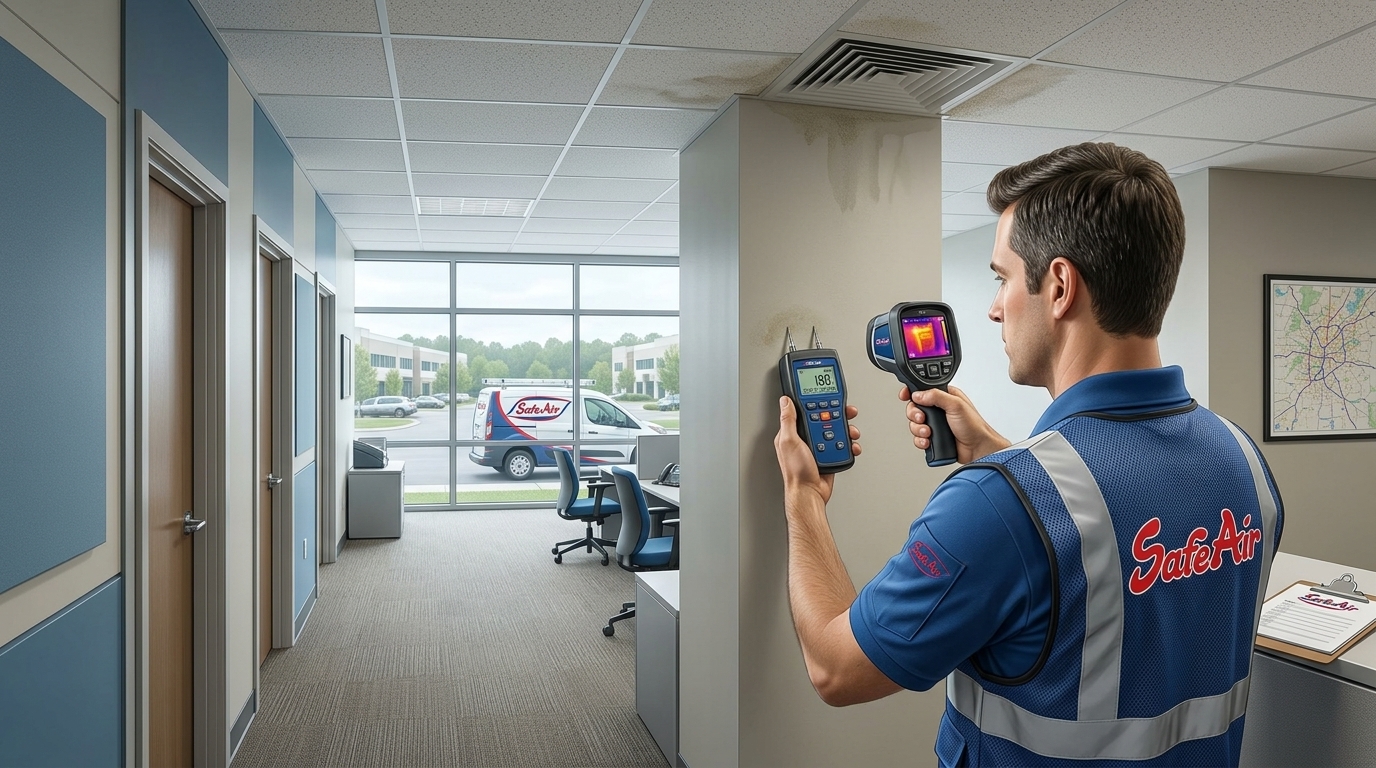
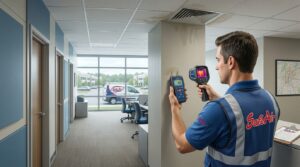
A mold inspection and testing services scope may include accessible interiors, exterior drainage conditions, moisture-prone areas, HVAC-related observations, crawl spaces, attics, and known water-damage locations. Moisture meters and other tools can support the inspection, but no tool can see through every material or guarantee that all concealed conditions have been found.
What an inspection may review
A mold inspection and testing services scope may include accessible interiors, exterior drainage conditions, moisture-prone areas, HVAC-related observations, crawl spaces, attics, and known water-damage locations. Moisture meters and other tools can support the inspection, but no tool can see through every material or guarantee that all concealed conditions have been found.
Inspection and testing answer different questions
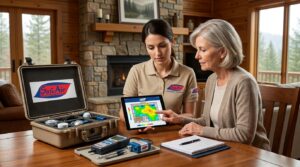
Visual and moisture observations help identify where conditions deserve attention. Sampling can help characterize collected material or compare selected environments when there is a defined reason. Sampling without a clear question can produce numbers without a useful decision framework.
What a useful report should include
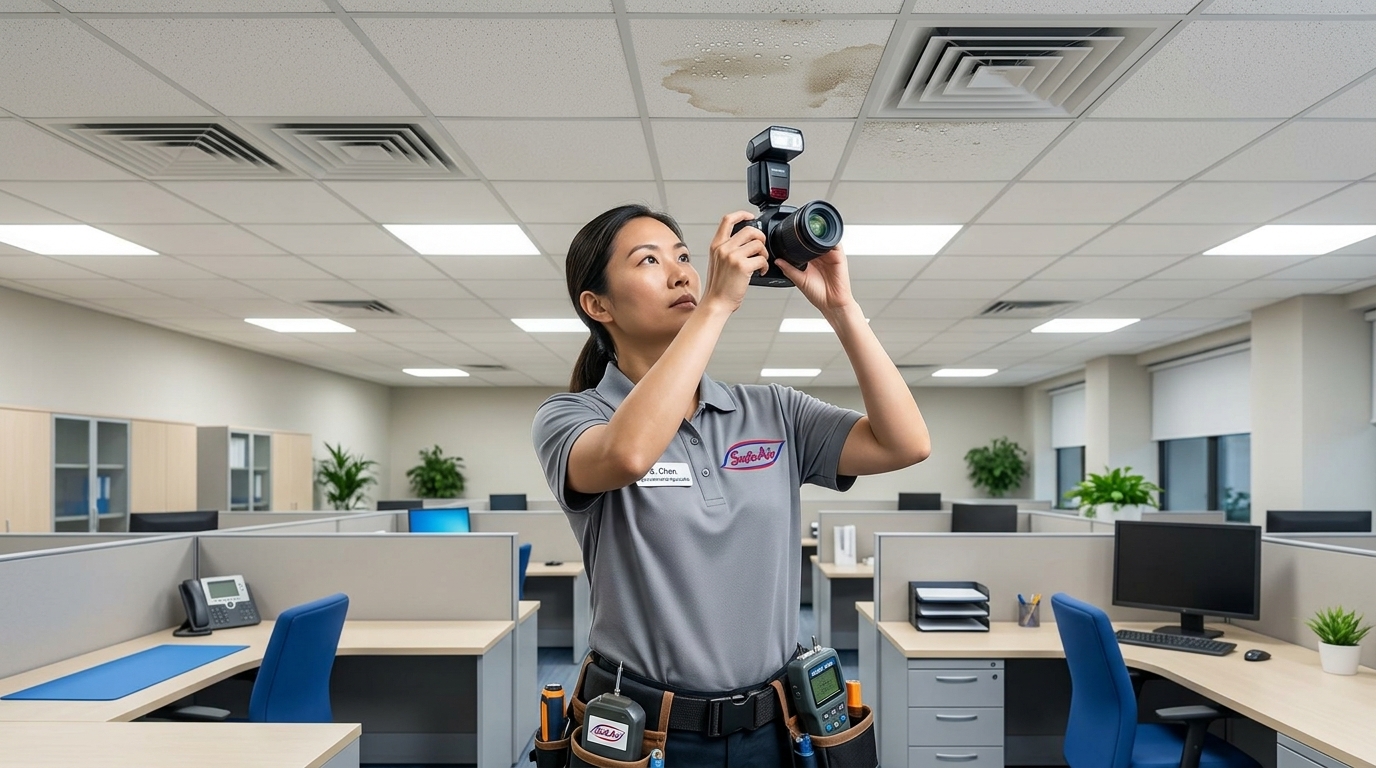
The report should identify inspected areas, observed conditions, limitations, supporting photographs or measurements, and recommended next steps. When samples are collected, the laboratory result should be connected to the sampling location and the reason for sampling. Conclusions should not extend beyond the evidence gathered.
Commercial-building considerations
A commercial mold inspection requires coordination with a building contact. Provide access to mechanical rooms, roof or ceiling areas, tenant spaces, storage rooms, and other relevant locations. Share maintenance and leak histories. Schedule work to reduce disruption while preserving access to the areas necessary for a meaningful assessment.
After water damage
Keep the incident timeline, photographs, invoices, drying records, and repair details. A clean-looking surface does not by itself prove that hidden materials dried properly. Conversely, a concern should not be described as a confirmed mold condition without evidence. The inspection should distinguish facts, indicators, and limitations.

Frequently asked questions
Does every inspection require air sampling?
No. Sampling should answer a defined question and may not be necessary in every case.
Can an inspection prove that no mold exists anywhere?
No. It documents accessible conditions and limitations at the time of inspection.
Is mold inspection the same as remediation?
No. Inspection assesses conditions. Remediation addresses affected materials and moisture-related causes under a separate scope.
What should a building owner keep after the inspection?
Keep the report, lab documents, photos, maintenance records, repair records, and any follow-up verification.
Schedule the right assessment
For help with commercial indoor air quality warning signs in Atlanta Metro, GA, review SafeAir’s Georgia mold inspection service areas and schedule a mold inspection. The scope should match the building, moisture history, and decision the owner needs to make.