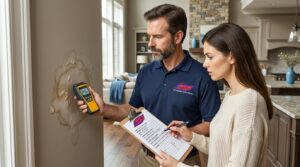
Will ozone kill mold? Yes, ozone can effectively kill mold by oxidizing its spores. However, its success depends on ozone concentration, exposure duration, and mold severity. This article will cover how ozone works, its advantages, limitations, and safety measures you need to know.
Key Takeaways
- Ozone is an effective oxidizing agent used in mold remediation, capable of killing mold spores but does not address underlying issues like mycotoxins.
- Health risks associated with ozone exposure include respiratory issues; proper safety precautions and ventilation are necessary during ozone treatment.
- Alternative mold remediation methods, such as HEPA filtration, moisture control, and physical removal, should complement ozone treatment for comprehensive mold management.
Understanding Ozone and Mold

Grasping the science behind ozone and mold is vital for successful remediation. Ozone, a molecule consisting of three oxygen atoms, is well-known for its reactivity and ability to neutralize various contaminants including mold spores. Unlike regular oxygen, which is made up of two atoms, ozone is composed of three atoms of oxygen, giving it unique properties. While ozone in the upper atmosphere protects us by filtering out harmful ultraviolet radiation, ground-level ozone can be harmful to health.
We’ll explore what ozone and mold are and how they interact. This foundational knowledge helps in understanding the efficacy and limitations of ozone treatment in mold remediation.
What is Ozone?
Ozone consists of three oxygen atoms and is highly reactive. Key points about ozone include:
- The third oxygen atom can detach and react with other substances.
- This makes ozone a powerful oxidizing agent.
- Its reactivity allows it to interact with and neutralize various contaminants, including mold spores.
At high concentrations, ozone is considered a toxic gas and can pose significant health risks if not handled properly.
Ozone generators are commonly used in mold remediation because they produce high concentrations of ozone. These devices generate ozone from energized oxygen in the air, and the resulting ozone can effectively eliminate odors and various biological contaminants, leaving the air free of any unpleasant smell.
However, caution is needed due to potential ozone exposure, which will be discussed later.
What is Mold?
Mold is a fungus that thrives in moisture-rich environments and is common in many households. It appears in colors such as:
- black
- green
- white often showing as fuzzy spots on surfaces. Mold thrives in damp environments, so maintaining indoor humidity levels below 60% helps prevent its growth.
Mold spores are tiny and can become airborne, spreading throughout a home and causing health issues. Effective removal and remediation strategies are essential to prevent mold from becoming a persistent issue, as microorganisms can contribute to the problem.
How Ozone Reacts with Mold Spores
Ozone oxidizes mold spores on contact, destroying their cellular structure. Ozone is widely used in decontamination and air purification processes because of its ability to oxidize and neutralize contaminants. The third oxygen atom attacks the cell walls of mold spores, leading to their destruction and preventing regrowth. This oxidation makes ozone treatment a viable option for killing mold spores and preventing their spread.
Ozone can be effective for mold remediation, but understanding its limitations and health risks is important, which will be explored later.
The Effectiveness of Ozone Treatment on Mold

Ozone treatment is popular for mold remediation because of its strong oxidizing properties. An ozone machine is often used to generate ozone for this purpose, and its effectiveness depends on proper application. However, its effectiveness depends on various factors such as the concentration of ozone produced, the size of the affected area, and the duration of the treatment.
We’ll delve into how ozone treatment works to kill mold spores, its limitations, and the required duration and concentration for effective remediation.
Killing Mold Spores with Ozone
Ozone is highly effective at killing mold spores, playing a significant role in remediation. The goal of using ozone in mold remediation is to restore a healthy environment by eliminating mold spores and other contaminants. Ozone treatment is also beneficial for odor removal, neutralizing odors caused by mold and other substances.
High-ozone shock treatments with ozone generators can kill all airborne mold spores, reducing the risk of regrowth.
Limitations of Ozone Treatment
Although ozone efficiently kills mold spores, it does not address underlying mold issues. Ozone treatments may not remove mycotoxins and mold fragments, which can still pose health risks. Physically removing mold often requires cleaning, scrubbing, and, in severe cases, replacing contaminated materials.
Ozone may not effectively penetrate porous materials like carpets, where mold can reside and continue to grow. Ozone treatment may also be less effective on mold embedded in other materials such as insulation or drywall, requiring additional remediation methods. High concentrations of ozone can deteriorate materials like rubber, so this should be considered when planning remediation.
Porous materials that have become moldy often need to be discarded, as they can harbor mold that is difficult to completely eliminate. Thus, while ozone treatment can be part of a comprehensive remediation strategy, it should not be the sole method used.
Duration and Concentration Required
The effectiveness of ozone treatment depends on variables such as the specific ozone generator used and environmental conditions. High-ozone treatments typically last between one and several hours, affecting overall effectiveness.
The concentration of ozone produced by generators depends on the type of device, space size, and ventilation. High levels of ozone are necessary to effectively kill mold spores and ensure thorough remediation. For example, treating a large room with heavy mold contamination will require higher ozone concentrations and a longer treatment time compared to a small, lightly contaminated area.
Health Risks Associated with Ozone Exposure

Ozone exposure can pose significant health risks, making it crucial to mitigate these harmful risks when using ozone for mold remediation. Ozone is harmful to breathe and can cause damage to human lungs. Inhaling ozone can aggravate existing lung diseases and cause other health problems. Adverse health effects can occur during or after ozone exposure, depending on the duration and concentration. Humans should not be present in areas undergoing ozone treatment to avoid health risks.
We will explore the respiratory issues associated with ozone exposure and the necessary safety precautions for security to protect yourself and others.
Respiratory Issues
Ozone exposure can lead to various respiratory issues, highlighting the need for caution during mold remediation. Inhaling ozone can result in health effects such as:
- lung damage
- chest pain
- coughing
- shortness of breath
- throat irritation Even relatively low amounts of ozone can cause these symptoms.
It can exacerbate chronic respiratory diseases, especially in individuals with asthma. People exhibit varying degrees of susceptibility to ozone and its associated respiratory effects.
Safety Precautions
Proper ventilation is crucial after using ozone generators to reduce exposure risks. Sealing off treated areas is necessary to prevent ozone exposure to occupants.
These safety precautions can significantly mitigate the adverse health effects associated with ozone exposure, ensuring a safe and effective remediation process.
Alternative Methods for Mold Remediation

While ozone treatment can be effective, several alternative methods for mold remediation are also highly effective. These methods include HEPA filtration, moisture control, and physical removal.
The ultimate goal of mold remediation is to rid the indoor environment of mold spores and mycotoxins, not just kill them.
We will explore these alternatives and how they can be integrated into a comprehensive mold remediation strategy.
HEPA Filtration
HEPA filters can capture up to 99.99% of airborne mold spores, making them highly effective for improving indoor air quality. HEPA filters trap 99.97% of particles that are 0.3 microns in diameter, including mold spores.
HEPA filtration can significantly improve indoor air quality by removing airborne mold spores and other contaminants, including air cleaners.
Moisture Control
Controlling moisture levels is crucial to prevent mold growth and maintain a healthy indoor environment. Identifying the root cause of moisture is vital to prevent mold regrowth after remediation.
Effective moisture control can involve using dehumidifiers, fixing leaks, and ensuring proper ventilation.
Physical Removal
Physically removing mold from surfaces typically involves scrubbing with detergent and water. Effective physical mold removal may also require removing contaminated materials.
Professional mold remediation offers comprehensive solutions that address visible mold and underlying moisture issues. Hiring professionals can improve the likelihood of permanent mold removal, as they use advanced equipment and methods for thorough cleanup.
Choosing the Right Mold Remediation Method

Choosing the right mold remediation method is crucial for effectively addressing mold issues tailored to specific materials and circumstances. Different mold remediation methods can complement or replace ozone treatment, offering various options to homeowners.
We’ll discuss factors to consider when choosing a mold remediation method and compare professional remediation with DIY approaches.
Factors to Consider
The size of the mold infestation affects the complexity and cost of the remediation process. Different mold species vary in toxicity, influencing the required remediation approach and associated costs. The location and accessibility of mold growth can influence the choice of remediation method, as some areas may require specialized approaches.
Hiring professionals is advisable when mold growth exceeds 10 square feet, as they ensure compliance with established guidelines and safety protocols.
Professional vs. DIY
DIY mold removal may be sufficient for small areas, typically under 10 square feet, but larger infestations usually require professional intervention. DIY mold removal might initially seem cost-effective but can lead to higher expenses in the long run due to incomplete eradication.
Professional mold remediation services often provide comprehensive inspections that a DIY approach may overlook, completing thorough and effective mold removal.
Summary
Summarizing the key points, ozone treatment can be effective in killing mold spores and improving indoor air quality. However, it has its limitations and health risks. Alternative methods like HEPA filtration, moisture control, and physical removal can complement or replace ozone treatment, providing a comprehensive approach to mold remediation.
Ultimately, choosing the right mold remediation method depends on the severity of the infestation, the affected materials, and the potential health implications. By understanding the options and taking appropriate measures, homeowners can effectively address mold issues and maintain a healthy living environment.
Frequently Asked Questions
Will ozone kill mold?
Yes, ozone can kill mold. Ozone (O3) is a powerful oxidizing agent that destroys mold by breaking down its cell structure. At concentrations of 3 to 6 parts per million (PPM), ozone effectively kills mold on surfaces and in the air. However, ozone treatment must be performed by professionals in unoccupied spaces because ozone at mold-killing concentrations is harmful to humans, pets, and plants.
Does ozone kill black mold?
Yes, ozone can kill black mold (Stachybotrys chartarum) when applied at sufficient concentrations. Black mold is one of the more resilient mold species, so effective treatment typically requires ozone levels of 3 to 6 PPM maintained over 24 to 48 hours in a sealed environment. While ozone kills the mold organism, it does not remove the dead mold material or staining, which still requires physical cleaning after treatment.
Does ozone kill mold spores?
Yes, ozone kills mold spores both on surfaces and suspended in the air. This is one of the key advantages of ozone treatment over bleach and other liquid cleaners, which cannot reach airborne spores. Ozone gas fills the entire treated space and oxidizes spores wherever they are, including in hard-to-reach areas like inside HVAC ducts, behind walls, and in carpet fibers.
Can an ozone generator kill mold?
Yes, an ozone generator can produce enough ozone to kill mold when properly sized for the space. Commercial-grade ozone generators used by professionals can output sufficient ozone to reach the 3 to 6 PPM range needed for mold remediation. Consumer-grade ozone generators typically do not produce high enough concentrations to effectively kill mold and are not recommended for mold treatment. Professional-grade treatment is necessary for reliable results.
Does ozone kill mildew?
Yes, ozone effectively kills mildew. Mildew is a surface-level fungus closely related to mold, and it is actually easier to eliminate with ozone than deep-rooted mold colonies. Ozone treatment destroys mildew on contact and also eliminates the musty odor associated with mildew growth. For mild mildew problems, lower ozone concentrations and shorter treatment times may be sufficient compared to full mold remediation.
Does ozone kill fungus?
Yes, ozone kills fungus including mold, mildew, and yeast by oxidizing and destroying their cellular structure. Ozone disrupts the cell walls and membranes of fungal organisms, making it effective against a broad spectrum of fungal species. This includes common indoor mold types like Aspergillus, Penicillium, Cladosporium, and Stachybotrys (black mold).
How long do you need to run an ozone generator to kill mold?
Professional ozone mold treatment typically requires running the generator for 24 to 48 hours to achieve complete mold elimination. The exact duration depends on the size of the space, severity of the mold infestation, the output capacity of the ozone generator, and humidity levels. The space must remain sealed and completely unoccupied during the entire treatment period, including for 2 to 4 hours after the generator is turned off to allow ozone levels to dissipate.
Is ozone treatment safe for mold removal?
Ozone treatment is safe when performed correctly by trained professionals. The space being treated must be completely vacated of all people, pets, and live plants during treatment and for several hours afterward. Ozone at the concentrations needed to kill mold causes respiratory irritation, chest pain, and shortness of breath in humans. Professional mold remediation companies use monitoring equipment to verify ozone levels have returned to safe concentrations before allowing re-entry.
Is ozone better than bleach for killing mold?
Ozone is more effective than bleach for killing mold in most situations. Unlike bleach, ozone penetrates porous materials like wood and drywall to reach embedded mold roots. Ozone also kills airborne mold spores throughout an entire room, while bleach only works on surfaces it directly contacts. Ozone leaves no chemical residue and breaks down into regular oxygen after treatment. However, ozone treatment requires professional equipment and expertise, making it more expensive than a DIY bleach application for small surface-level mold problems.
What PPM of ozone kills mold?
Ozone concentrations of 3 to 6 parts per million (PPM) are effective at killing mold. Research indicates that 3 PPM is the minimum concentration needed to reliably destroy mold spores and colonies. Higher concentrations up to 6 PPM are used for severe infestations or resistant mold species like black mold. For comparison, the safe exposure limit for humans set by OSHA is just 0.1 PPM over an 8-hour period, which is why professional ozone treatments must be conducted in unoccupied spaces.