What Georgia Law Says About Mold in Rental Properties
Georgia does not have a standalone mold statute. No section of the Georgia Code defines mold limits, mandates testing, or spells out landlord obligations specific to mold. That is the starting point, and it catches many tenants off guard.
What Georgia does have is the implied warranty of habitability. Under Georgia landlord-tenant law (O.C.G.A. § 44-7-13 and related statutes), landlords must maintain rental units in a condition fit for human habitation. Plumbing must work. The roof must not leak. The HVAC system must function. If a maintenance failure — a leaking pipe, a broken HVAC unit, a cracked window — creates conditions that allow mold to grow, the landlord’s obligation to repair that maintenance issue is clear.
The Safe at Home Act (HB 404), which Georgia passed in 2024, expanded tenant rights around habitability by strengthening enforcement mechanisms for code violations in residential rentals. While HB 404 does not mention mold by name, it reinforces the legal framework that holds landlords accountable for maintaining livable conditions. A severe mold problem caused by unaddressed water intrusion could fall under habitability violations, depending on the facts.
Georgia Does Not Allow Rent Withholding for Mold
This is the single most important thing Georgia tenants need to know: Georgia does not permit tenants to withhold rent. Unlike Washington, Oregon, or New York, Georgia law does not give tenants the legal right to stop paying rent because of a mold problem or any other habitability issue. Tenants who withhold rent in Georgia risk eviction, and courts consistently side with landlords on this point.
If you are a tenant dealing with mold, your remedies are:
- Written notice to the landlord documenting the problem
- Requests for repair under the lease terms
- Code enforcement complaints to your local municipality
- Legal action (if the landlord fails to act and the condition causes measurable harm)
- Lease termination in severe cases, with proper legal guidance
Withholding rent is not on that list. Consult a Georgia landlord-tenant attorney before taking any action that could put your lease at risk.
SafeAir Mold Inspection: Tenant Rights and Practical Steps
Finding mold in your apartment or rental house is stressful. But the steps you take in the first 48 hours shape everything that follows — including whether you have legal standing if the situation escalates.
Step 1: Document Everything Visually
Photograph and video every area where you see mold or water damage. Include timestamps. Capture wide shots that show the room and close-ups that show the mold growth. Document any water stains, peeling paint, condensation on windows, or musty odors. Your phone camera is fine.
Step 2: Notify Your Landlord in Writing
Georgia courts give significant weight to written notice. Send a dated letter or email to your landlord or property management company describing what you found, where you found it, and when you first noticed it. Keep a copy. A text message is better than nothing, but email or certified mail creates a stronger paper trail.
We have a detailed walkthrough of this process in our tenant request guide, including templates and timing.
Step 3: Request Repairs — Not Just Mold Removal
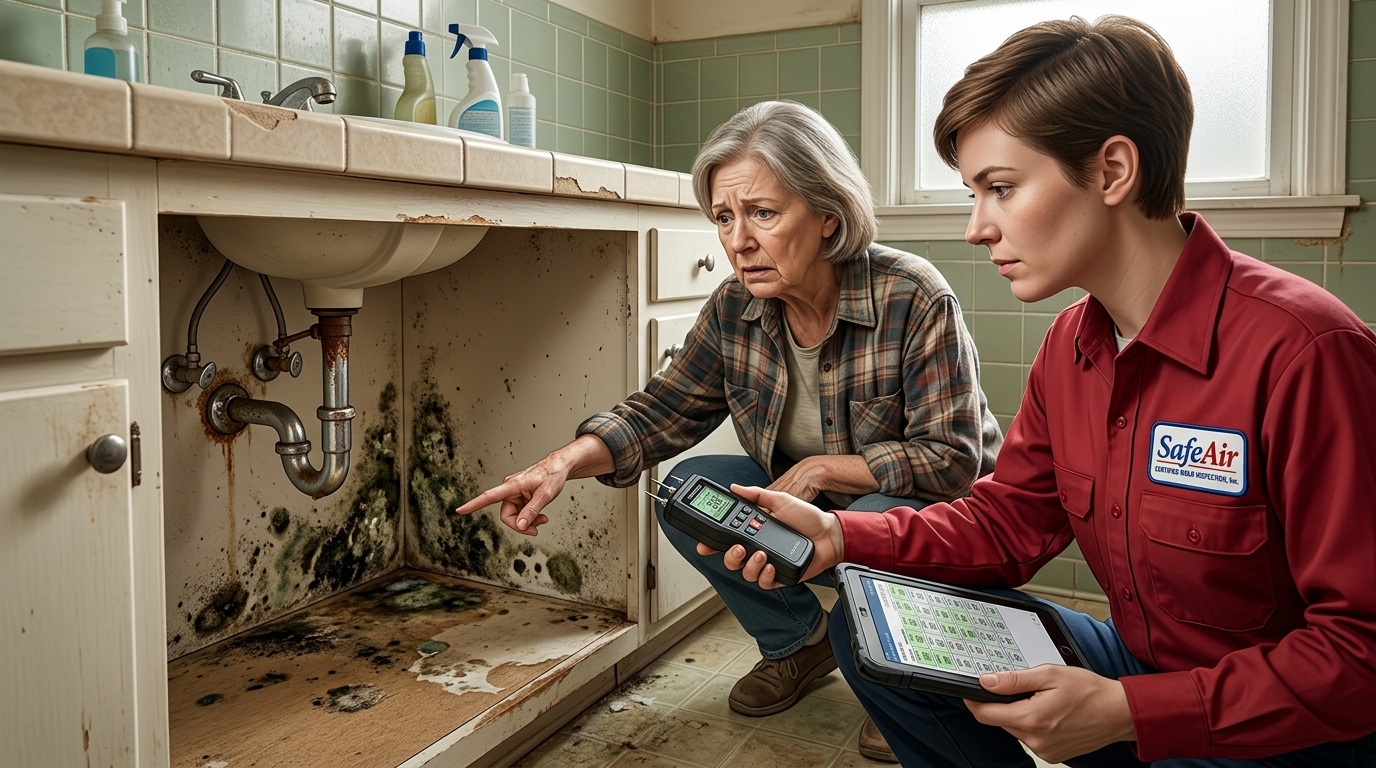
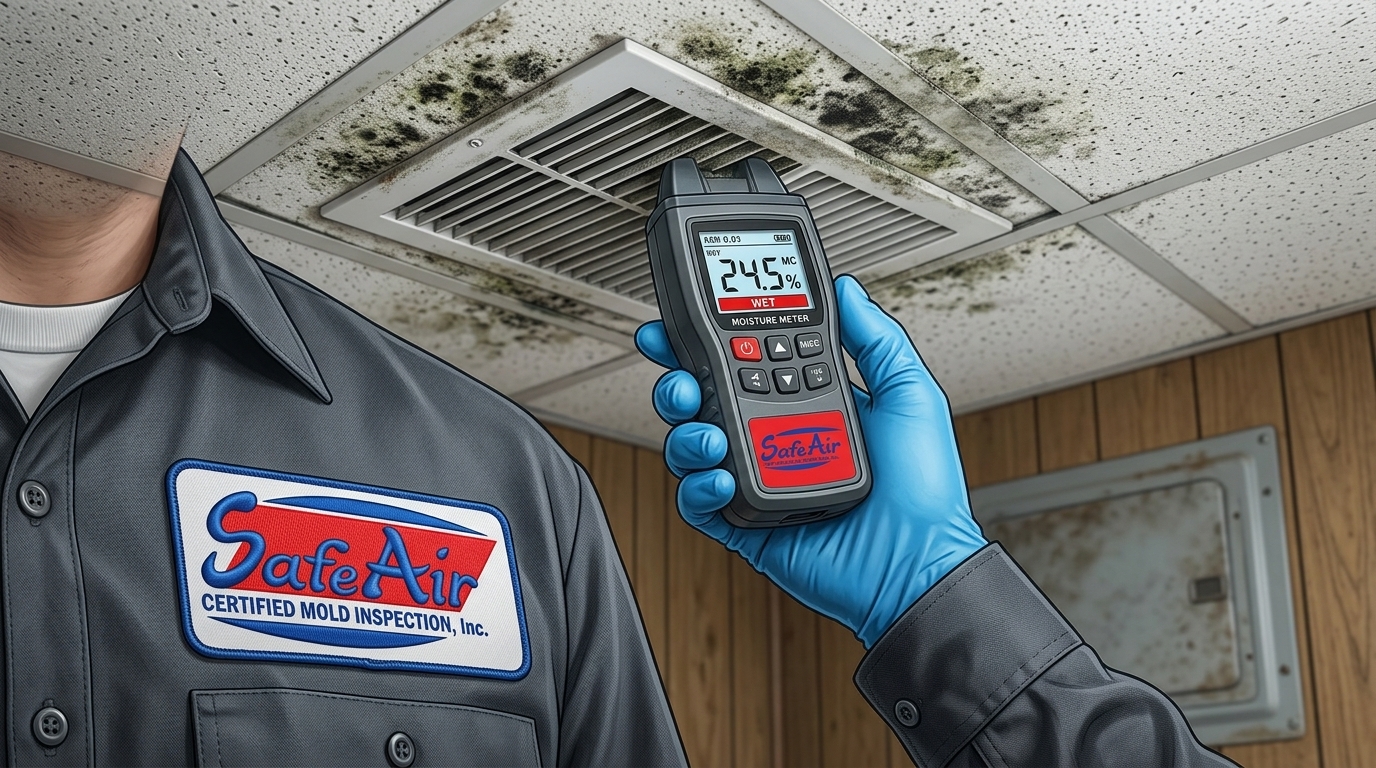
Mold is a symptom. Water is the cause. Ask your landlord to identify and fix the moisture source — the leaking pipe, the failed HVAC condensate line, the poor grading that directs stormwater against the foundation. If the landlord removes visible mold but does not fix the water problem, the mold will return within weeks.
Step 4: Get Independent Mold Testing
This is where most tenants make a critical mistake. They rely on photos, their own judgment, or a home test kit to document the problem. None of those carry weight in a dispute.
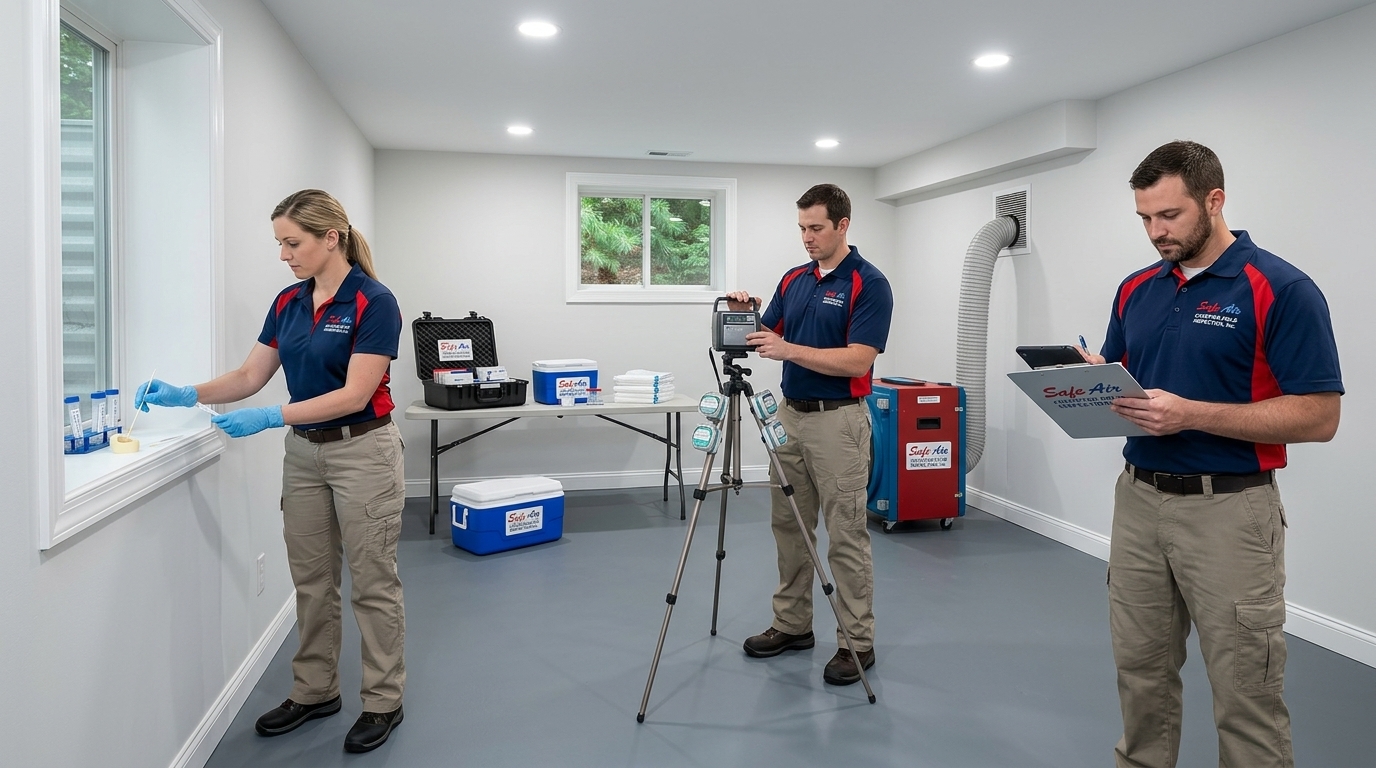
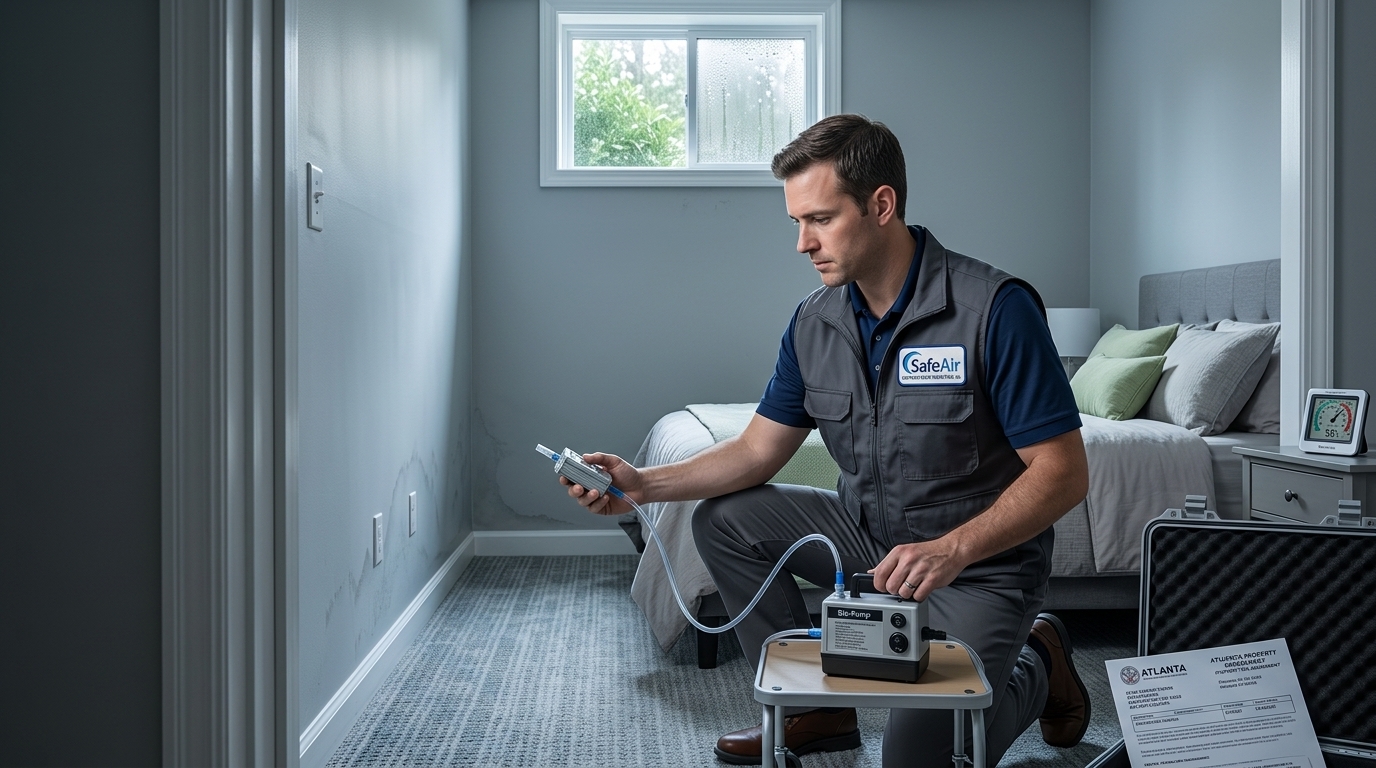
A professional mold inspection produces a lab report from an accredited third-party laboratory. That report identifies the specific mold species present, quantifies spore concentrations in the air, and documents moisture levels throughout the unit. A lab report from an independent inspection company — one that does not perform remediation — is the strongest documentation a tenant can have.
Why independent? Because SafeAir has no financial incentive to inflate or minimize findings. We do not sell remediation services. Our report says what the lab found, and that objectivity is exactly what carries weight when a landlord, property manager, attorney, or judge reviews the results. Learn more about why independent testing matters.
Landlord Responsibilities and Protections in Georgia
Landlords are not automatically liable for every mold complaint. Georgia law distinguishes between mold caused by a landlord’s failure to maintain the property and mold caused by a tenant’s behavior. That distinction matters enormously.
When the Landlord Is Responsible
A landlord is generally responsible for mold that results from:
- Plumbing leaks the landlord knew about or should have known about
- Roof leaks or exterior water intrusion from deferred maintenance
- Faulty HVAC systems, particularly failed condensate drain lines
- Structural issues (cracked foundations, missing vapor barriers in crawlspaces)
- Failure to address a reported water problem within a reasonable timeframe
The key legal question in Georgia is whether the landlord had notice of the condition and failed to act. Written tenant complaints, maintenance request logs, and previous inspection reports all contribute to establishing notice.
When the Tenant May Be Responsible
Tenants can contribute to mold growth through:
- Blocking HVAC vents or running the system improperly
- Failing to report leaks or water intrusion in a timely manner
- Keeping humidity levels high (covering vents, rarely running AC in summer, drying clothes indoors without ventilation)
- Refusing access for maintenance or repairs
- Causing water damage through negligence
A landlord who suspects tenant-caused mold should document conditions at move-in with photos and a written condition report, and should respond to every maintenance request with a written record of what was done and when.
Landlord Protection: Get Your Own Testing Done
Here is advice we give to property managers regularly: if a tenant reports mold, do not guess. Get professional testing done before you spend money on remediation, and especially before a dispute reaches legal territory.
A professional air quality test and surface sampling will tell you whether mold levels are actually elevated, what species are present, and where the moisture source is. That information protects the landlord just as much as it protects the tenant. If spore counts are within normal range, the lab report documents that fact. If counts are elevated, the report gives you clear direction on what needs to be addressed.
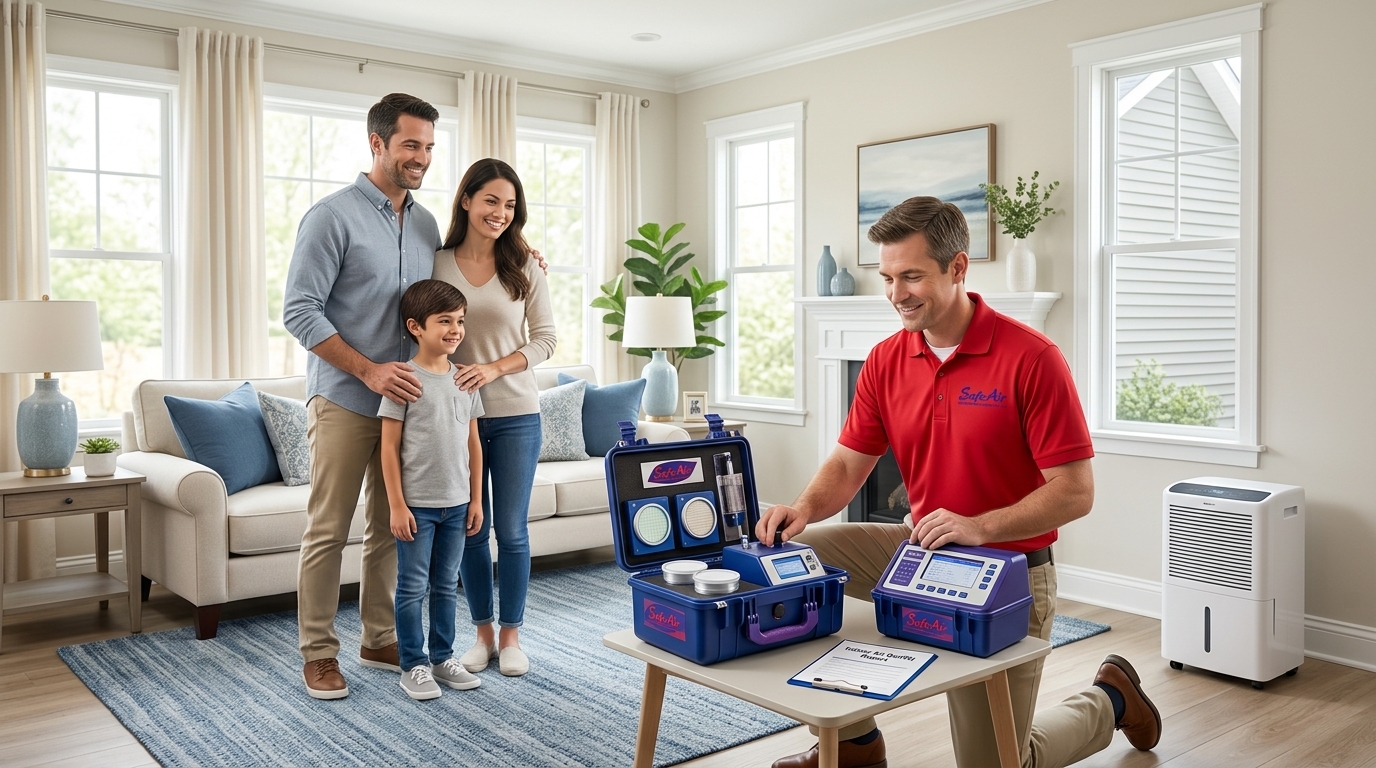
The Cost of Testing vs. the Cost of a Dispute
One of the most common objections we hear from both tenants and landlords: “Is mold testing really worth the money?” The short answer is that testing is dramatically cheaper than every alternative.
Scenario | Typical Cost |
|---|---|
Professional mold inspection (apartment/rental unit) | $300 – $500 |
DIY home test kit (unreliable, not accepted in disputes) | $30 – $50 |
Mold remediation for a single affected room | $1,500 – $4,000 |
Full remediation for a multi-room mold problem | $5,000 – $15,000+ |
Tenant relocation costs during remediation | $1,000 – $3,000 |
Security deposit dispute (legal costs) | $500 – $2,000+ |
Small claims filing and attorney consultation | $1,000 – $5,000 |
Habitability lawsuit (landlord defense costs) | $5,000 – $25,000+ |
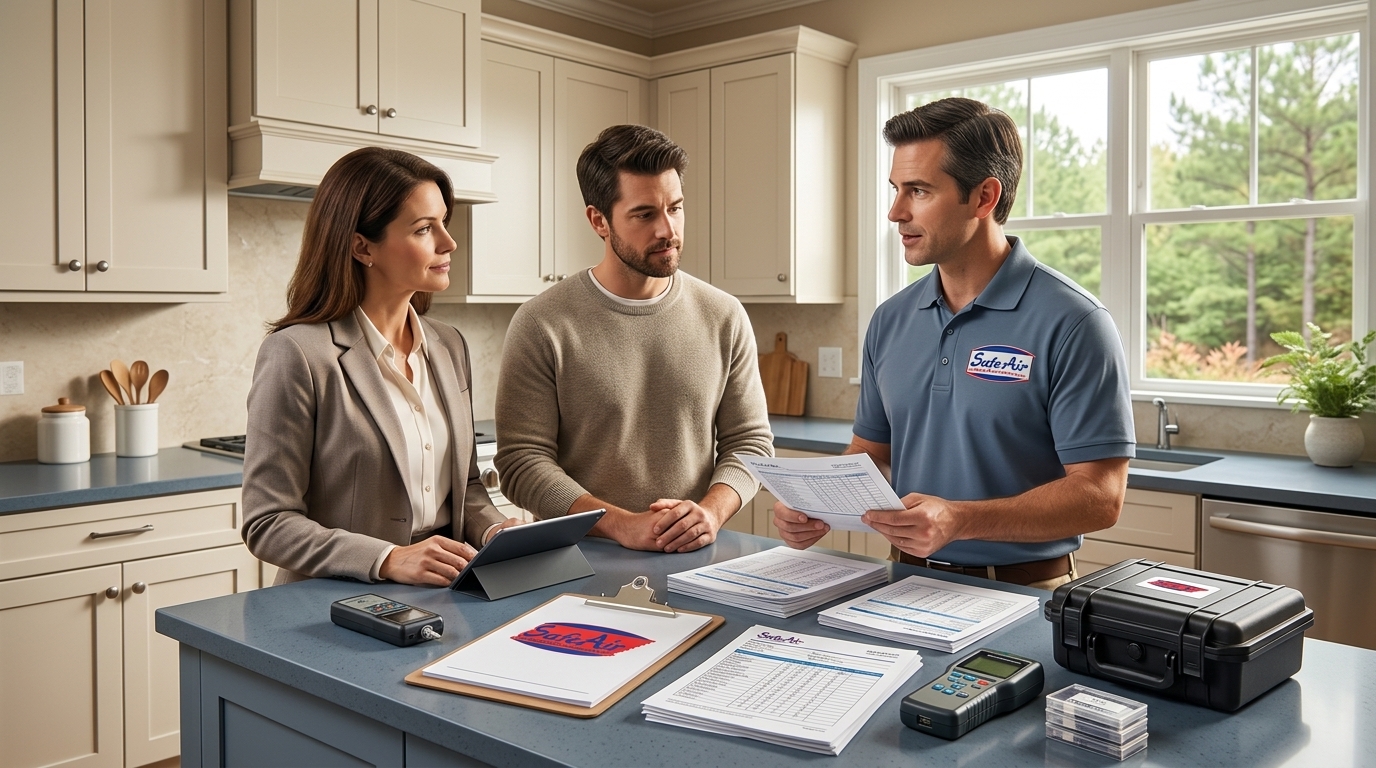
A $300 to $500 inspection gives both parties a lab-verified baseline. It identifies whether a real problem exists, what caused it, and who bears responsibility based on the facts. That clarity prevents disputes from escalating into legal proceedings that cost 10 to 50 times more than the inspection itself.
And DIY test kits? They have no chain of custody, no accredited lab analysis, and no weight in any legal or insurance context. We explain exactly why in our guide to home mold test kits.
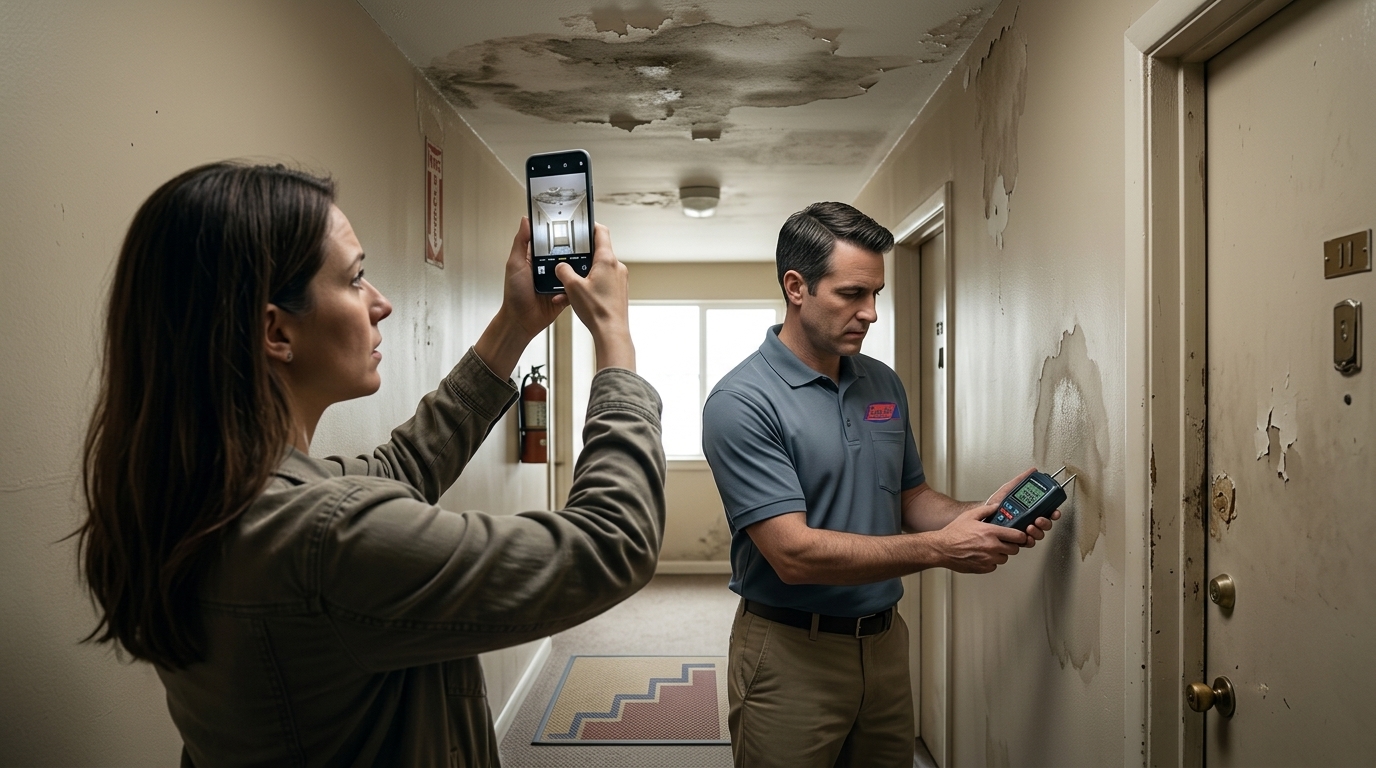
Mold Health Effects in Rental Settings
Tenants who live with mold often experience symptoms they initially attribute to seasonal allergies or a persistent cold. Common symptoms associated with mold exposure include nasal congestion, headaches, fatigue, coughing, and eye irritation. The CDC reports that people who live in damp indoor environments have an increased risk of respiratory infections, asthma development, and allergic reactions.
Children, elderly tenants, and anyone with a compromised immune system face greater risk from prolonged exposure. If your symptoms improve when you leave the apartment and return when you come home, mold exposure should be high on the list of possible explanations. Our article on how to tell if mold is making you sick covers the symptom patterns we hear about most frequently.
We do not diagnose medical conditions — that is your doctor’s role. But we can tell you whether mold levels in your rental are elevated and which species the lab identified. That information helps your healthcare provider connect the dots. Read more about mold health effects.
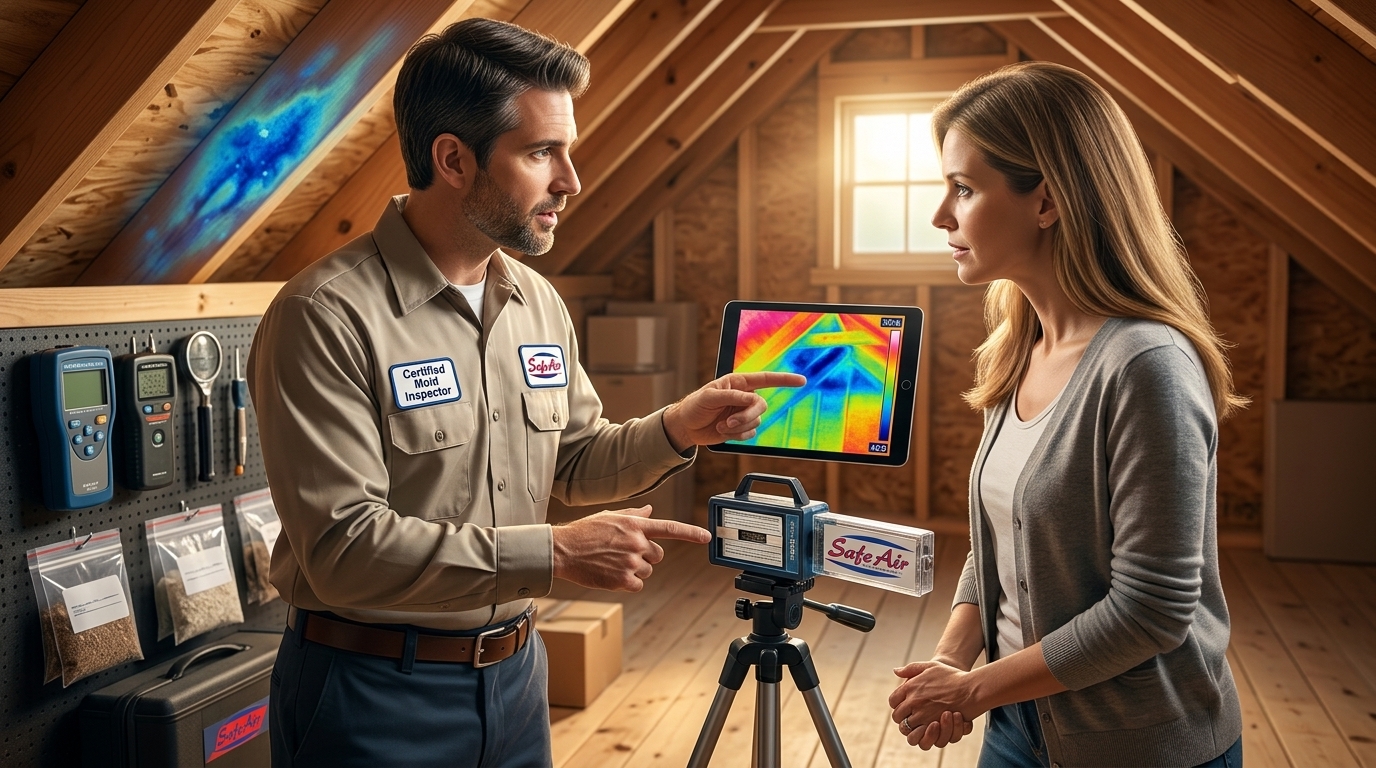
Mold in a Rental Property: Why Independent Testing Is the Critical Step
Mold disputes in Georgia rental properties almost always come down to documentation. The tenant says there is a problem. The landlord says there is not. Or the landlord says the tenant caused it. Or the tenant says the landlord ignored it.
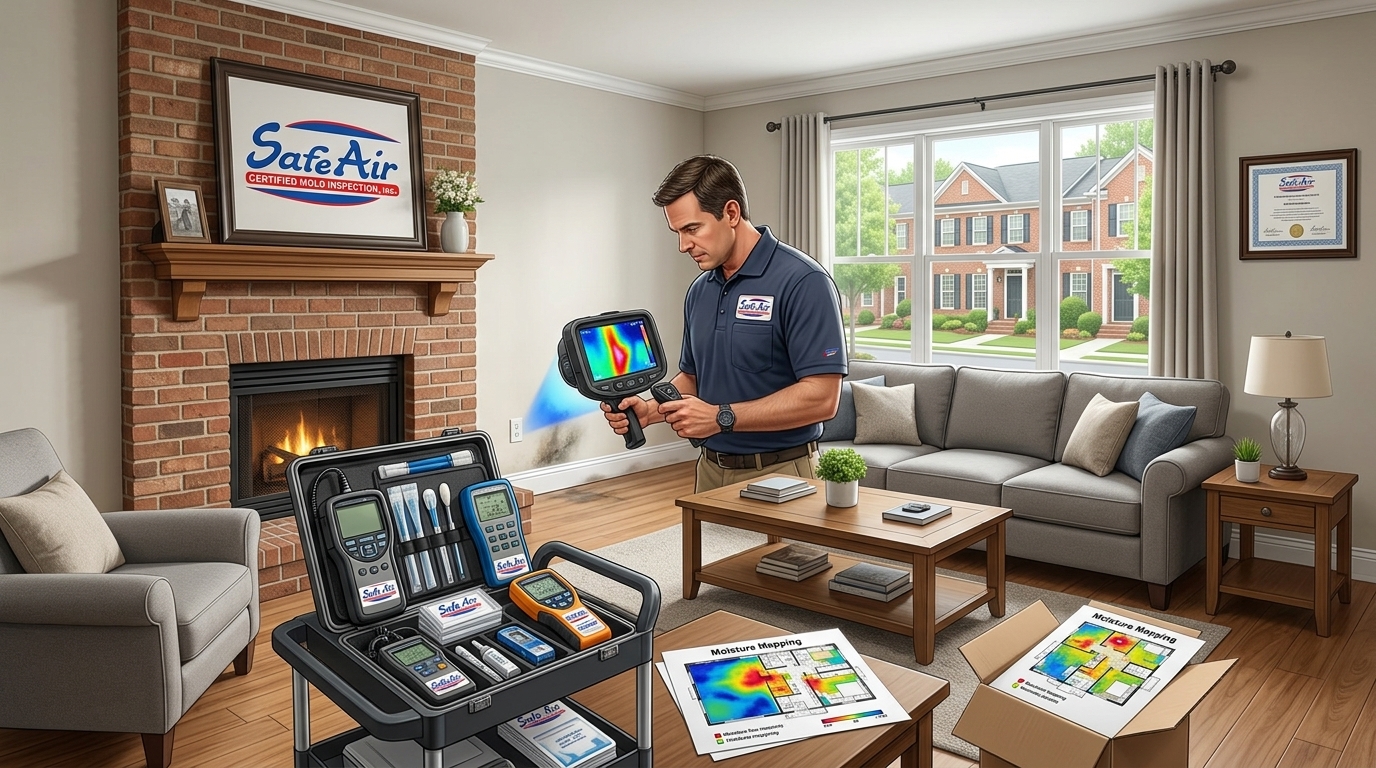
An independent mold inspection from a company that does not perform remediation cuts through all of that. SafeAir Certified Mold Inspection provides lab-verified data from an accredited third-party laboratory. We document spore counts, identify species, map moisture sources, and deliver a written report that either party can bring to a property manager, attorney, insurance adjuster, or court.
If you are in North Carolina and dealing with a similar situation, note that NC has its own set of mold-related regulations. We cover those separately in our North Carolina mold laws guide.
Call SafeAir at (404) 695-0673 to schedule a mold inspection. We serve tenants and landlords across Metro Atlanta — and we give both sides the same objective, lab-backed findings. No remediation sales. No bias. Just the data you need to move forward.