How Mold After Water Damage Develops: The 24 to 48-Hour Timeline
Mold spores are already present in every home. According to the EPA, indoor air always contains some level of mold spores — they enter through windows, doors, HVAC systems, and on clothing. Under normal conditions, these spores remain dormant. Water damage changes that equation instantly.
Here is how the timeline breaks down after a water event:
Time After Water Event | What Happens |
|---|---|
0–1 hour | Water saturates drywall, carpet pad, and wood. Wicking begins — moisture spreads beyond the visible wet area. |
1–12 hours | Drywall absorbs water and begins to swell. Wood subfloor absorbs moisture from below. Humidity in the affected area spikes. |
12–24 hours | Dormant spores on wet surfaces begin to germinate if the material stays wet. Microscopic hyphae (root-like structures) start penetrating porous materials. |
24–48 hours | Active mold colonies become established. Growth may not be visible yet, but spore production begins. |
48–72 hours | Visible mold appears on drywall paper facing, carpet backing, and wood surfaces. The musty smell (MVOCs — microbial volatile organic compounds) becomes noticeable. |
72 hours–7 days | Colonies spread rapidly. Secondary damage accelerates as mold digests organic material. Spore counts in the air climb significantly. |
In Georgia’s climate, this timeline often compresses. Atlanta averages 70% or higher relative humidity for much of the year, and indoor temperatures in water-damaged homes frequently sit in the 70–85°F range — exactly the conditions where Aspergillus, Penicillium, and Stachybotrys thrive.
A 2012 study published in Indoor Air confirmed that Stachybotrys chartarum (commonly called “black mold”) can colonize wet drywall within 48 to 72 hours under conditions typical of water-damaged buildings. The study noted that cellulose-based materials — drywall paper, cardboard, and ceiling tiles — are the most vulnerable substrates.
Common Water Damage Sources That Lead to Mold (Beyond Storms)
Most national content about mold after water damage focuses almost entirely on flooding and hurricane damage. That skips the majority of cases we handle.
In our Atlanta-area inspections, storm damage accounts for a significant share of water-related mold calls — but slow, hidden water sources cause just as many problems. The difference is that storm damage is obvious. A pipe dripping behind a wall can run for weeks before anyone notices.
Burst and leaking pipes. Copper supply lines in homes built before 2000 corrode from the inside. We find pinhole leaks behind walls in Midtown and Virginia-Highland homes regularly. By the time the homeowner sees a water stain on the ceiling, the drywall cavity above has been wet for days or weeks.
Appliance failures. Washing machine hoses, dishwasher supply lines, and refrigerator ice maker connections fail without warning. A ruptured washing machine hose can release 500+ gallons per hour. We inspected a Roswell home last year where a second-floor washing machine hose burst while the owners were at work. By the time they returned eight hours later, water had soaked through the subfloor, saturated the first-floor ceiling drywall, and pooled in the crawlspace. Three weeks later, Aspergillus and Penicillium spore counts in the laundry room measured over 6,000 spores per cubic meter — more than 10 times the outdoor baseline.
HVAC condensation. This one is a Georgia specialty. Central air conditioning systems produce condensation on the evaporator coil, which drains through a condensate line. When that line clogs — and it clogs often in humid climates — water backs up into the drain pan and overflows into the attic, ceiling, or ductwork. We see condensate-related mold in Metro Atlanta homes from May through October every year.
Roof leaks. Damaged shingles, failed flashing around chimneys and vents, and clogged gutters push water into the attic. In heavy rain events, the leak shows up as a ceiling stain. But attic decking and insulation can stay damp for weeks without the homeowner ever checking.
Slab and foundation moisture. In homes built on Georgia’s red clay soil, moisture wicks up through concrete slabs. Carpet and vinyl flooring installed directly on the slab trap this moisture, creating a low-oxygen, high-humidity environment where mold colonies develop under the flooring. You cannot see or smell the growth until someone pulls back the carpet.
Water heater failures. Tank water heaters have a life span of 8 to 12 years. When they fail, they release 40 to 80 gallons of water — usually into a closet, garage, or utility room with limited airflow. For a deeper look at this risk and how to prevent it, read our guide on preventing water heater leaks and mold.
IICRC Water Damage Categories: Why the Water Source Matters for Mold Risk
Not all water damage carries the same mold risk. The IICRC (Institute of Inspection, Cleaning and Restoration Certification) classifies water damage into three categories based on contamination level. This classification directly affects what can be salvaged, what must be removed, and how quickly mold becomes a health concern.
Category | IICRC Name | Source Examples | Mold Risk |
|---|---|---|---|
Category 1 | Clean Water | Broken supply line, faucet leak, toilet tank overflow (no urine or feces) | Moderate. Materials can often be dried and saved if addressed within 24–48 hours. After 48 hours, Category 1 water degrades to Category 2. |
Category 2 | Gray Water | Washing machine overflow, dishwasher discharge, toilet overflow with urine | High. Contains microorganisms. Porous materials exposed to gray water often need removal. Mold colonization occurs faster due to organic nutrients in the water. |
Category 3 | Black Water | Sewage backup, river/creek flooding, storm surge, standing water that has been stagnant for 72+ hours | Very High. Contains bacteria, viruses, and other pathogens. All porous materials must be removed. Category 3 events frequently result in Stachybotrys and Chaetomium growth on affected drywall and wood. |
A critical detail the IICRC standards highlight: water migrates from Category 1 to Category 2 and eventually to Category 3 over time. Clean water that sits on carpet for 72 hours is no longer clean. Bacteria multiply. Organic matter in the carpet and pad becomes a nutrient source. What started as a simple supply line leak becomes a contaminated water event if no one addresses it.
This category system matters for insurance claims, too. Some policies treat Category 1 damage differently from Category
What to Do Immediately After Water Damage
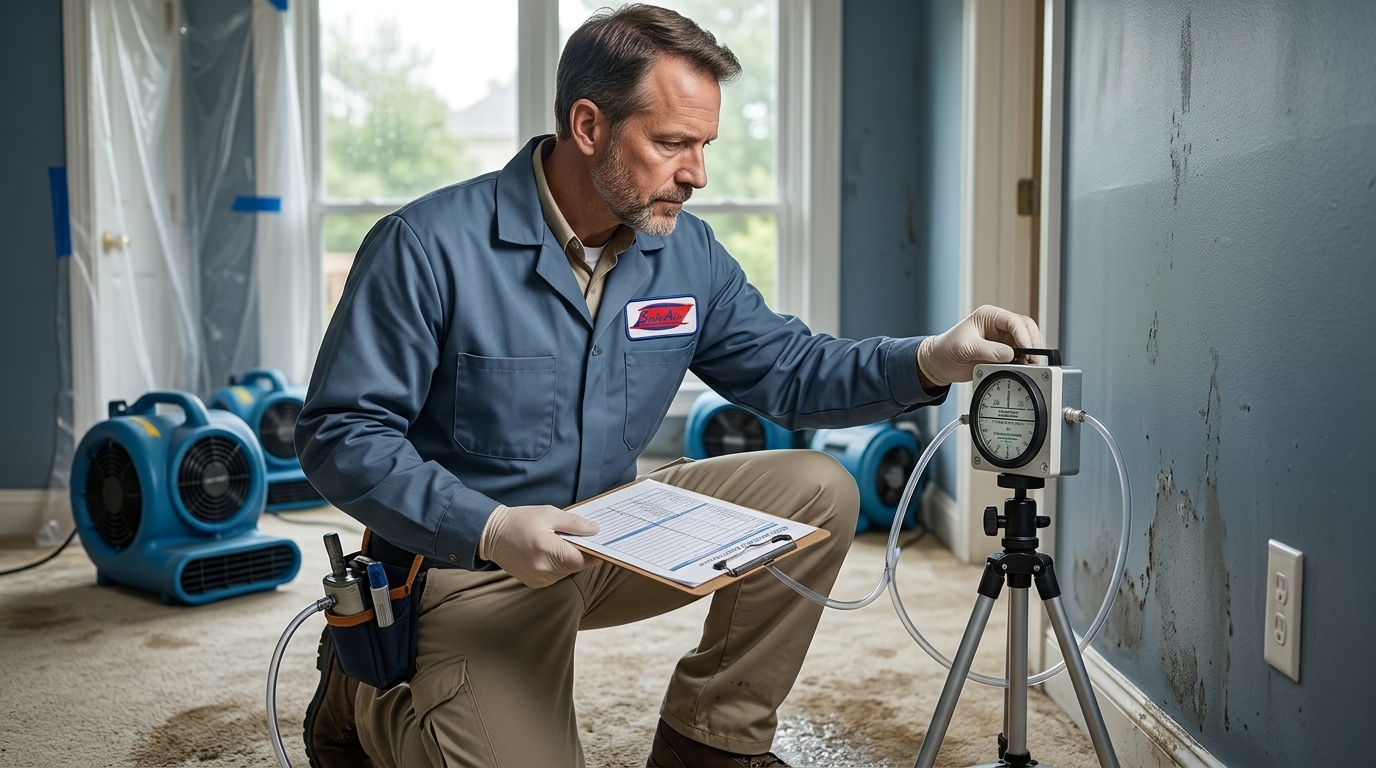
The first 48 hours after water damage are critical. Here is a step-by-step action plan:
- Stop the water source. Shut off the supply valve for a broken pipe or appliance. If you cannot locate the valve, turn off the main water supply to the house.
- Document everything before you touch it. Take timestamped photos and video of every affected area. Photograph the water source, the extent of standing water, damaged materials, and any visible moisture on walls or ceilings. Your insurance company will need this documentation, and photos taken in the first hours carry more weight than photos taken days later.
- Contact your insurance company within 24 hours. Many homeowner policies include a requirement — sometimes informal, sometimes explicit — that you report water damage promptly and take reasonable steps to mitigate further damage. Waiting days or weeks to report the event can jeopardize your claim.
- Remove standing water. Use a wet/dry vacuum, mop, or pump to extract standing water. The faster you remove bulk water, the more dryable the remaining materials will be.
- Increase airflow and reduce humidity. Open windows (if outdoor humidity is lower than indoor), run fans, and deploy dehumidifiers. The goal: get the relative humidity in the affected area below 60% as quickly as possible.
- Remove saturated soft materials. Carpet pad rarely dries in time. Wet carpet pad is one of the most common mold substrates we find during inspections. Pull it out. Wet upholstered furniture, cardboard boxes, and paper products should also be removed from the space.
- Do not use bleach on porous surfaces. Bleach kills surface mold on hard, non-porous materials but does not penetrate drywall or wood. The mold’s root structure (hyphae) survives inside the material and regrows. For more on why bleach fails, see our article on whether bleach kills mold.
Call for professional testing if water affected hidden areas. If water entered wall cavities, went under flooring, or soaked into an attic or crawlspace, you cannot confirm drying by looking at the surface. Professional mold inspection with moisture meters and thermal imaging reveals what’s happening inside those materials.
Hidden Mold After Water Damage: What You Cannot See
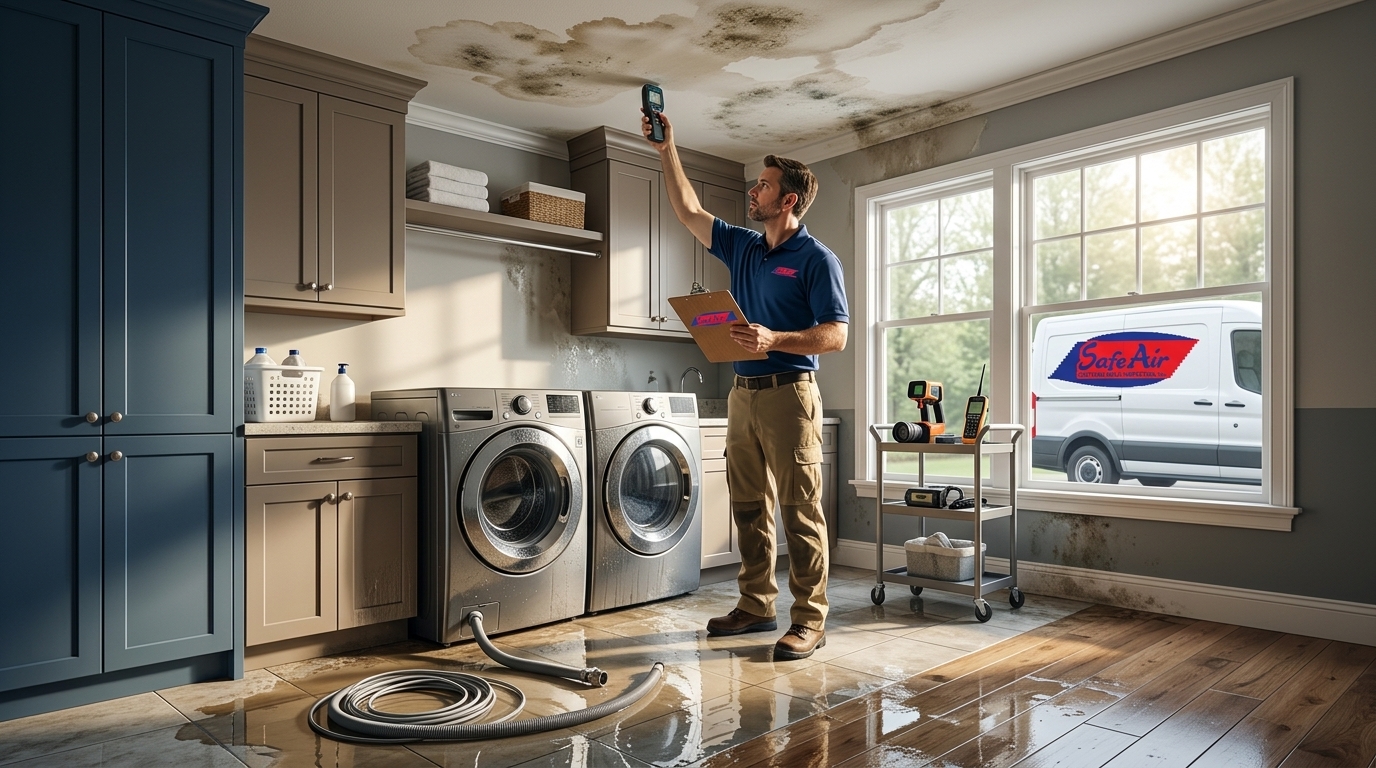
This is where most homeowners get blindsided. A wall can look and feel dry on the surface while the drywall cavity behind it stays wet for weeks.
Drywall dries from the outside in. The painted surface and the outer paper facing release moisture first. But the gypsum core and the paper backing — the side facing the wall cavity — can retain moisture far longer, especially when airflow inside the cavity is poor. That trapped moisture feeds mold growth on the backside of the drywall, on the wood studs, and on any insulation in the cavity.
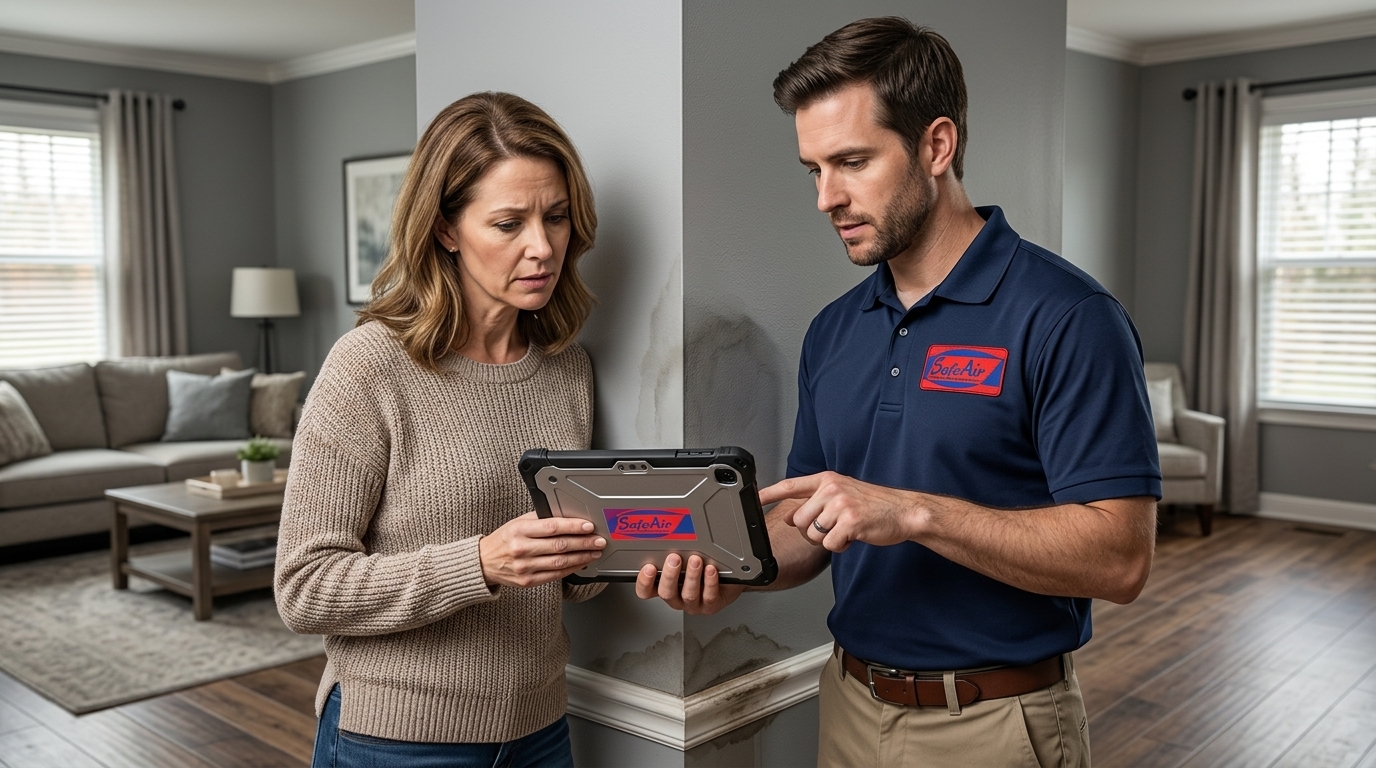
We find this pattern constantly. A homeowner calls because they had a pipe leak three months ago. They dried the visible water. The wall looks fine. But they have started noticing a musty smell in the room, or they are experiencing sinus congestion and headaches that do not respond to medication.
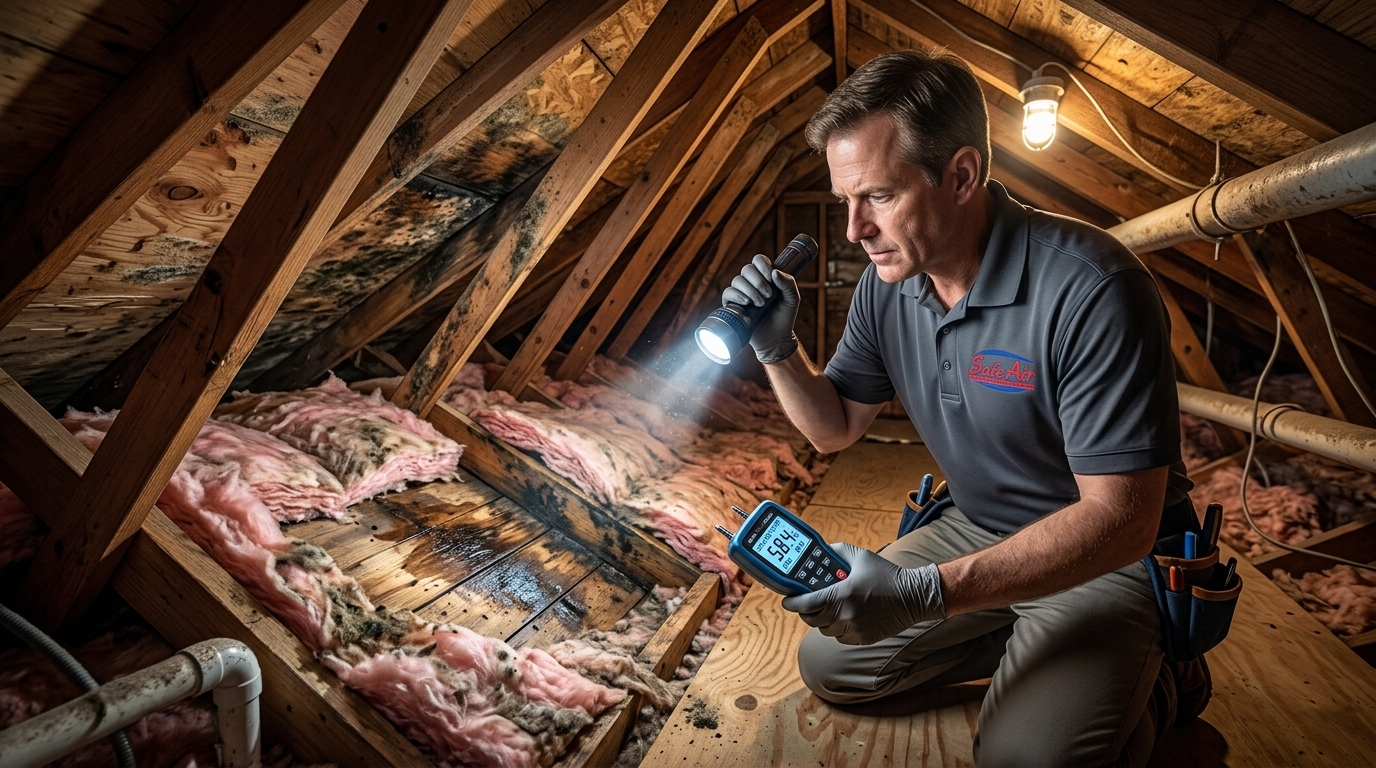
Our inspector uses a combination of non-invasive tools to find hidden moisture and mold:
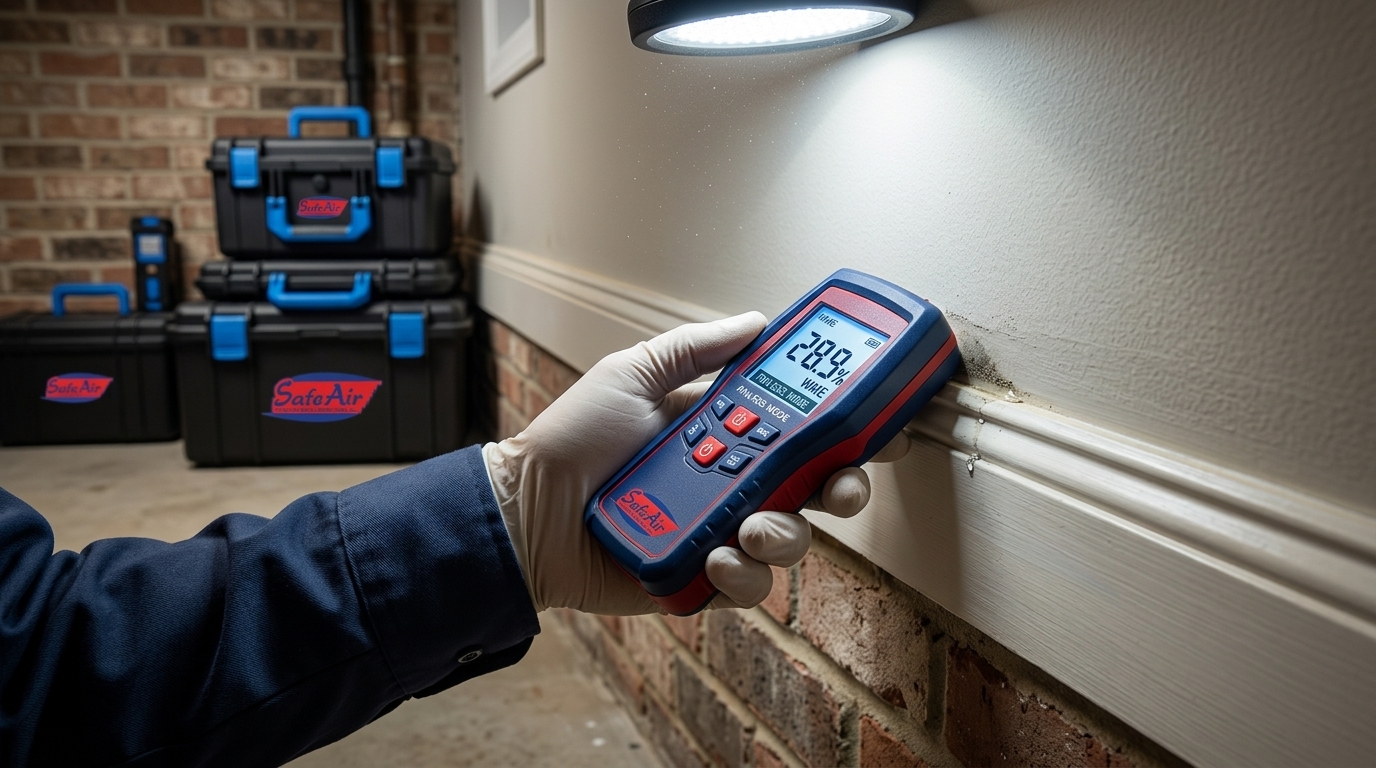
- Pin and pinless moisture meters measure moisture content in drywall and wood. A pinless meter can read through the surface without creating holes.
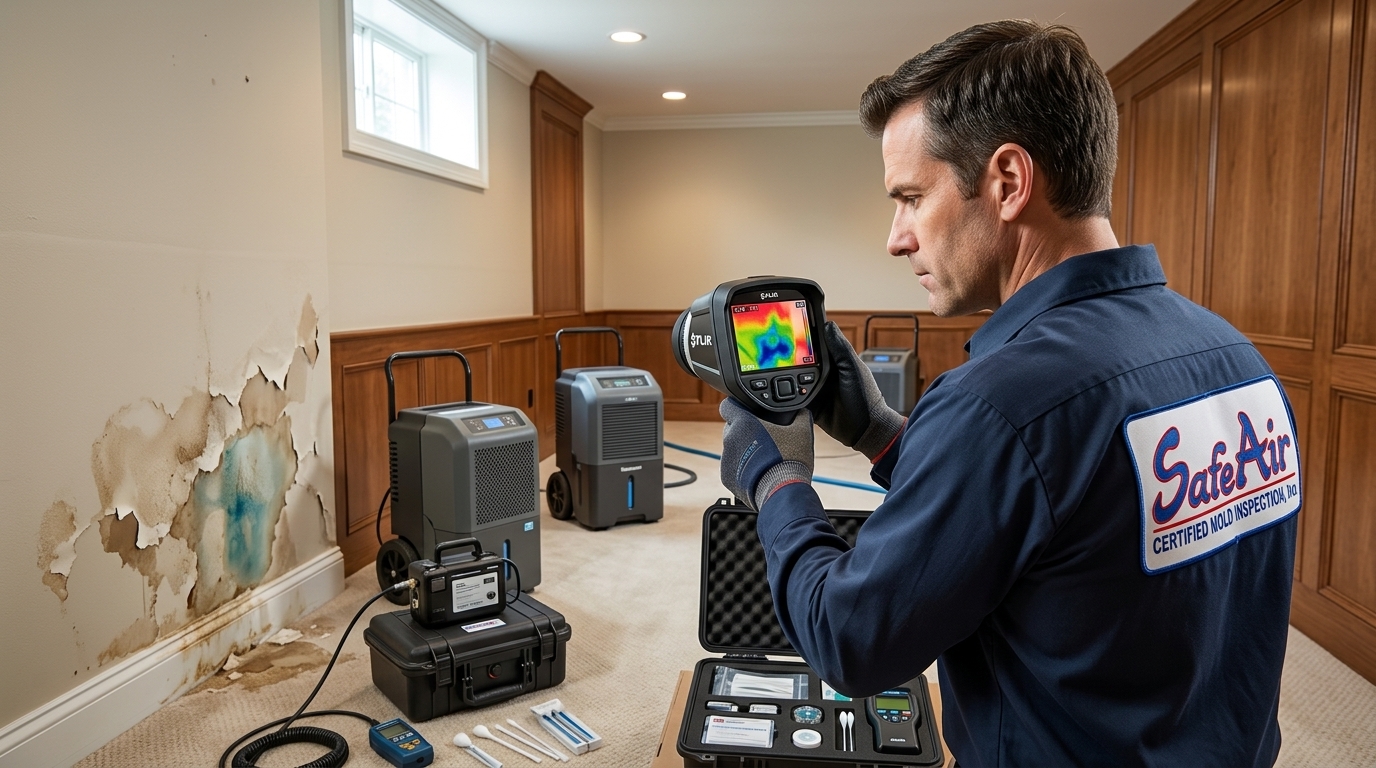
- Thermal imaging cameras detect temperature differentials that indicate evaporative cooling — a sign of trapped moisture. Wet areas appear cooler than surrounding dry material on the thermal scan.
- Air sampling with spore traps captures airborne spore concentrations in the affected room and compares them to an outdoor baseline. Elevated indoor counts suggest an active mold source, even if the growth is hidden.
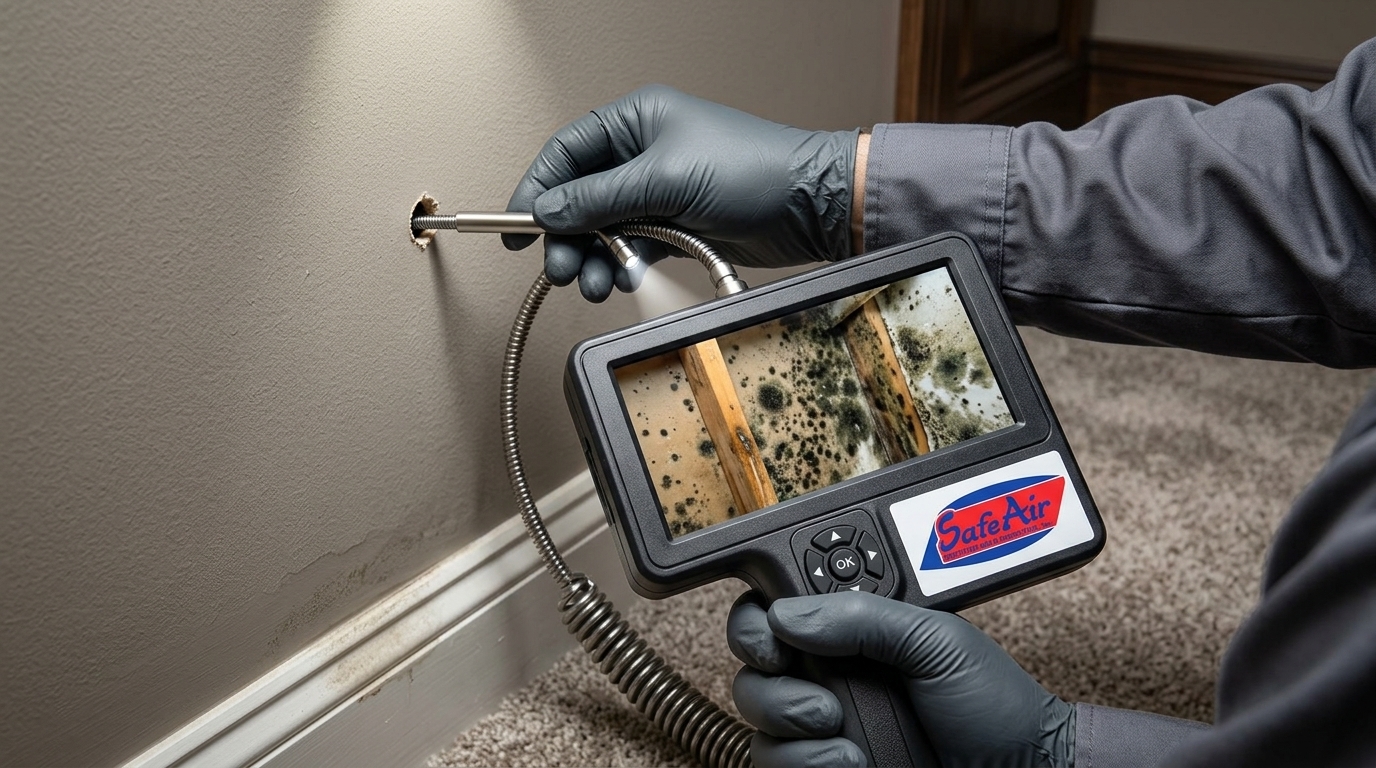
- Borescope inspection — in some cases, we insert a small camera through a small drilled hole to visually inspect inside a wall cavity without removing drywall.
One inspection from this spring illustrates the problem. A homeowner in the Dunwoody area called after noticing a persistent musty odor in their finished basement. They had experienced a minor sump pump failure during a heavy rain event about six weeks earlier. They ran fans for two days and assumed the basement was dry. Our moisture meter readings showed the lower 12 inches of drywall along two walls still had moisture content above 25% — well above the 15% threshold where mold growth becomes likely. Thermal imaging confirmed the wet zone extended behind the baseboards where airflow was minimal. Air sampling in the basement returned Aspergillus/Penicillium counts of 3,800 spores per cubic meter against an outdoor baseline of 450. That’s more than 8 times the outdoor level. The mold was growing behind the drywall, completely hidden from view.
Insurance Documentation for Mold After Water Damage
Insurance companies operate on documentation. The stronger your evidence trail, the better your claim outcome.
The 48-hour factor. Many homeowner insurance policies distinguish between “sudden and accidental” water damage and “gradual” or “maintenance-related” damage. A burst pipe that you discover immediately and report within hours falls clearly into the “sudden” category. A slow leak that went undetected for months may fall outside your coverage. Some policies include language requiring the homeowner to take “prompt” action to prevent further damage — and adjusters sometimes interpret delays of more than 48 hours as failure to mitigate.
We are not insurance adjusters, and every policy differs. But we have seen the documentation side of hundreds of post-water-damage cases, and these steps consistently help homeowners support their claims:
- Timestamped photos. Use your phone camera — it embeds date, time, and GPS location in the image metadata. Photograph every affected area on the day of discovery.
- Written timeline. Document when you discovered the damage, when you contacted your insurer, and what mitigation steps you took. Adjusters appreciate organized timelines.
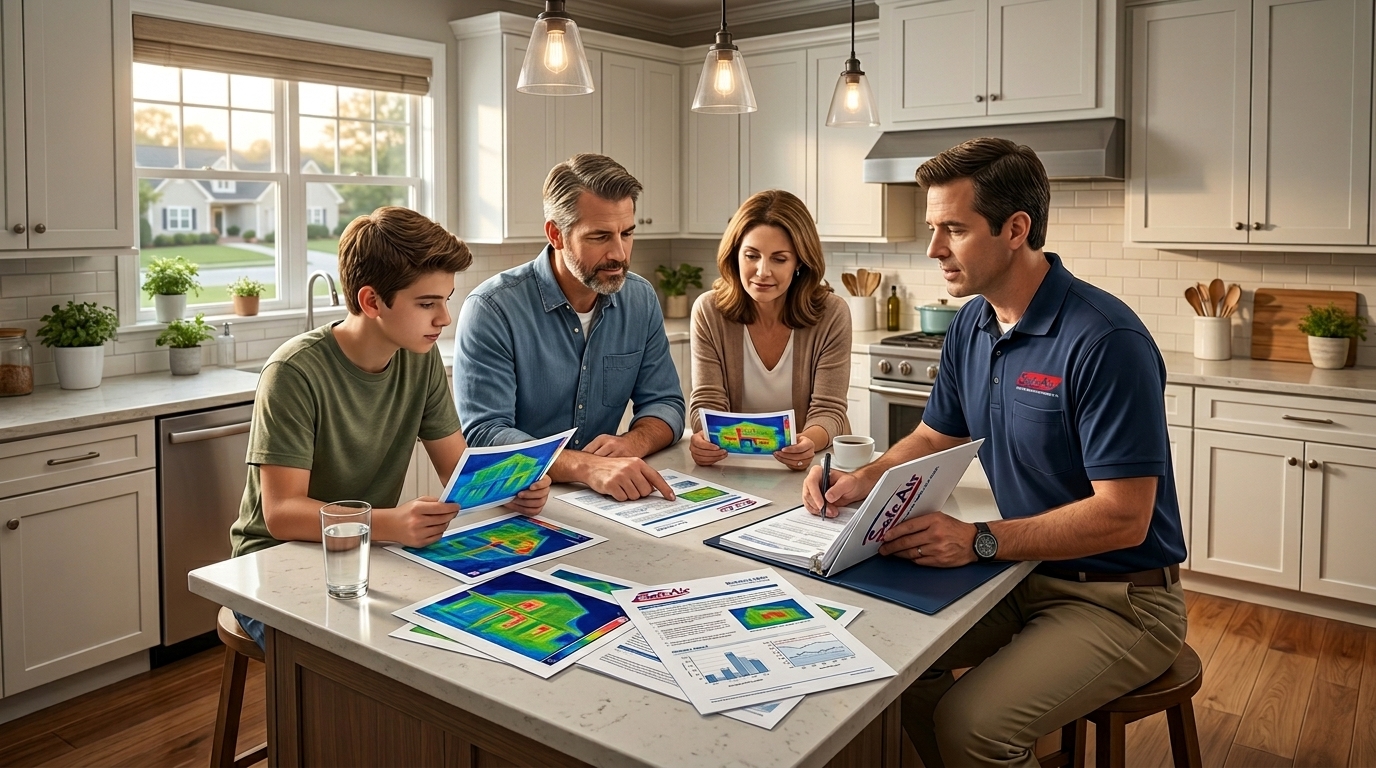
- Professional inspection report. An independent mold inspection report with lab results, moisture readings, and thermal images provides third-party documentation that insurance adjusters can reference. SafeAir’s reports include all of this data.
- Keep damaged materials. Do not throw away damaged drywall, carpet, or insulation before your adjuster has inspected or approved disposal. Photograph materials before removal if you must remove them to prevent further damage.
If your water damage originated from a storm, our guide on mold testing after storm damage covers storm-specific insurance and testing considerations in detail.
When to Schedule Mold Testing After Water Damage
Not every water spill requires professional mold testing. If you spill a bucket of water on a tile floor and mop it up in 20 minutes, you do not need an inspector.
Professional testing becomes necessary when:
- Water affected hidden or enclosed areas (wall cavities, under flooring, inside ceilings, crawlspaces, attics)
- The affected area was wet for more than 24 hours before drying efforts began
- You notice a musty smell in the affected area days or weeks after the water event
- Anyone in the household develops new or worsening respiratory symptoms, congestion, or headaches after the water damage — for more on these symptoms, read our article on warning signs of mold toxicity
- You need documentation for an insurance claim or real estate transaction
- A remediation company has completed work and you need independent clearance testing to verify the space is safe for reoccupation
SafeAir recommends waiting at least 5 to 7 days after the water event before scheduling air sampling. Spore counts need time to rise to detectable levels if mold is actively growing. Testing too early can produce a false negative — a clean air sample that misses mold still developing behind wet drywall.
Moisture readings, however, can be taken immediately. If a water event happened yesterday, a moisture assessment can tell you whether hidden materials are still wet and at risk.
Clearance Testing After Mold Remediation
Once a remediation company removes mold-damaged materials and treats the affected area, someone needs to verify the work was effective. That someone should not be the remediation company itself.
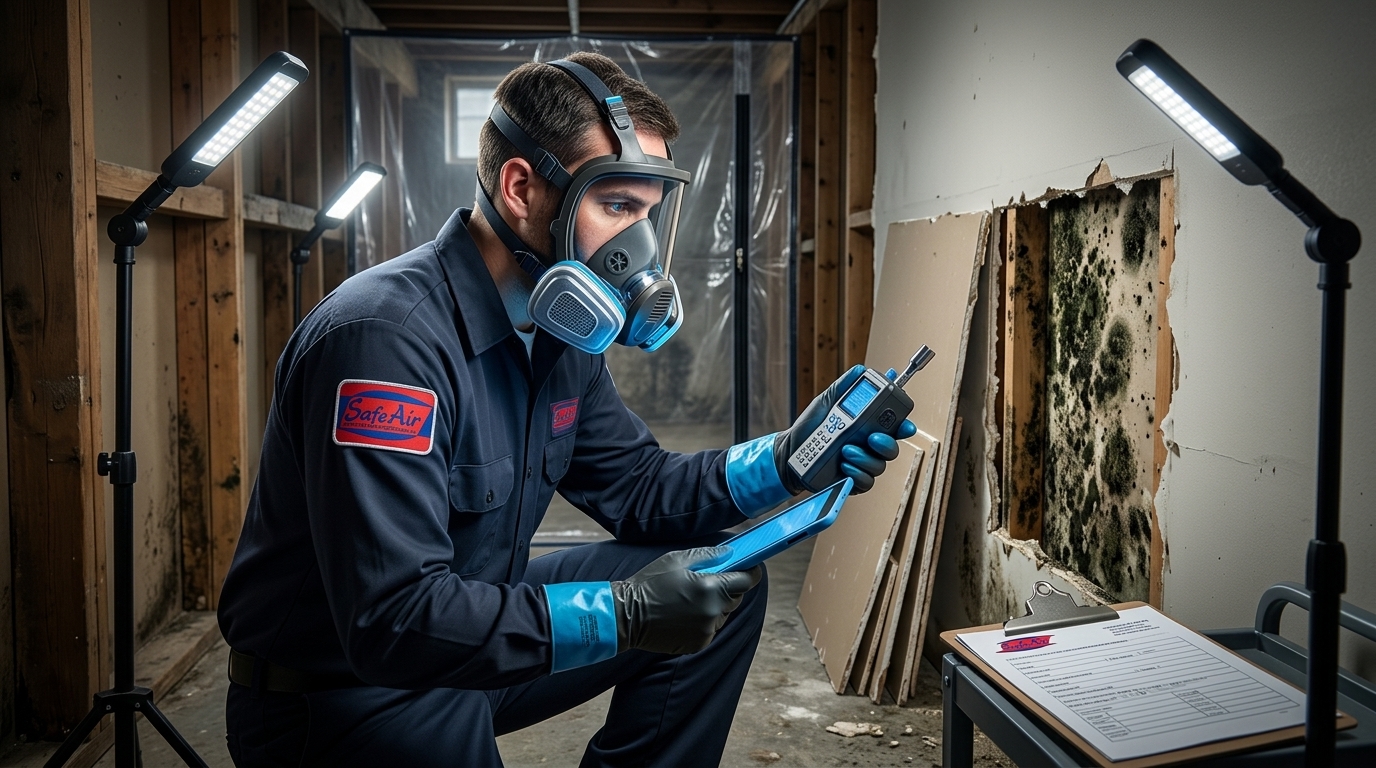
Clearance testing is a post-remediation inspection and air sampling protocol that confirms mold levels have returned to acceptable ranges. SafeAir performs clearance testing as an independent third party — we have no financial relationship with any remediation contractor, so our results are unbiased.
During clearance testing, we collect air samples from the remediated area and compare spore counts to outdoor baseline samples and to pre-remediation levels. We also take moisture readings on rebuilt materials to confirm the space is dry. If the clearance test passes, we issue a report the homeowner can provide to their insurance company, contractor, or future buyer. If the test fails, we identify what still needs attention.
For a broader look at what the remediation process involves and why independent verification matters, see our article on what happens during mold remediation.
Georgia-Specific Mold Risks After Water Damage
Georgia’s climate creates conditions where water damage escalates to mold damage faster than in drier regions. A few factors are particularly relevant:
Storm season runs March through September. Severe thunderstorms, heavy rain events, and occasional tropical weather push water into attics through damaged roofing, into basements through saturated soil, and into crawlspaces through poor grading. The air quality testing requests we handle spike every year between April and August.
Red clay soil holds water against foundations. Georgia’s characteristic red clay does not drain well. After heavy rain, the clay retains moisture against foundation walls, slab edges, and crawlspace floors. This persistent moisture drives long-term mold conditions that a single drying effort cannot solve.
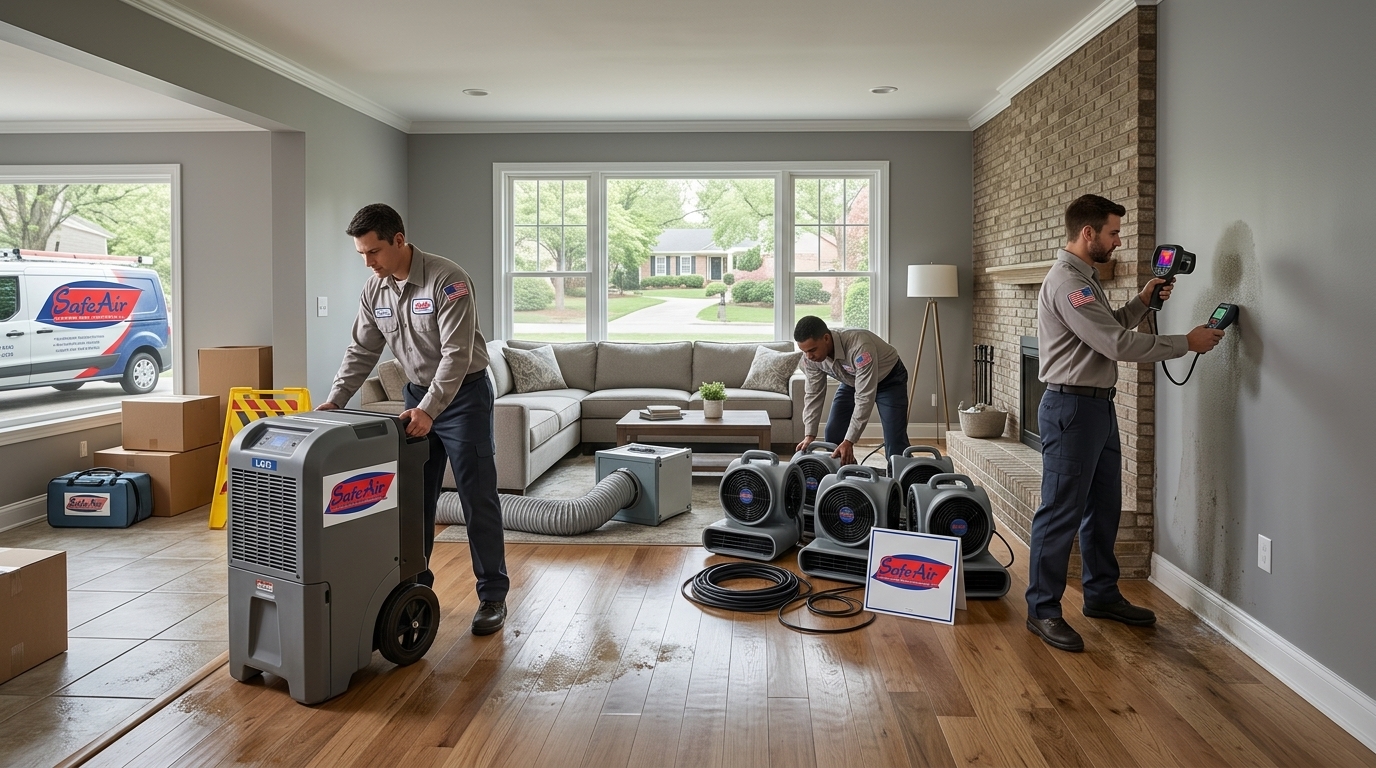
High ambient humidity slows drying. Running fans in a 75%-humidity environment moves wet air around without actually drying materials. Effective drying after water damage in Georgia almost always requires dehumidifiers — mechanical removal of moisture from the air — not just fans.
Older homes in intown Atlanta are particularly vulnerable. Homes in Grant Park, Kirkwood, and East Atlanta Village built in the early 1900s often have pier-and-beam foundations with exposed dirt crawlspaces, original plaster walls, and limited HVAC capacity. Water damage in these homes can reach structural materials quickly because the building envelope has fewer moisture barriers than modern construction.