What Air Quality Testing Measures
“Air quality testing” covers a broad range of analyses. The specific test you need depends on the problem you are trying to identify. Here is what the most common indoor air quality tests measure:
Mold spores. This is by far the most requested air quality test in our practice. A spore trap captures airborne mold spores on a sticky collection surface, and a lab technician identifies the spore types and counts under a microscope. Results are reported as spores per cubic meter of air. Common species identified include Aspergillus, Penicillium, Cladosporium, Stachybotrys, Chaetomium, and Alternaria.
Volatile organic compounds (VOCs). VOCs are gases released by building materials, cleaning products, paints, adhesives, and furnishings. Formaldehyde from pressed-wood products and new carpeting is one of the most common indoor VOCs. VOC testing requires different equipment — typically a sorbent tube or canister that collects gas samples over a period of hours.
Carbon monoxide (CO). A colorless, odorless gas produced by combustion appliances — gas furnaces, water heaters, stoves, and fireplaces. CO testing is straightforward and often performed with a direct-reading meter during a home inspection.
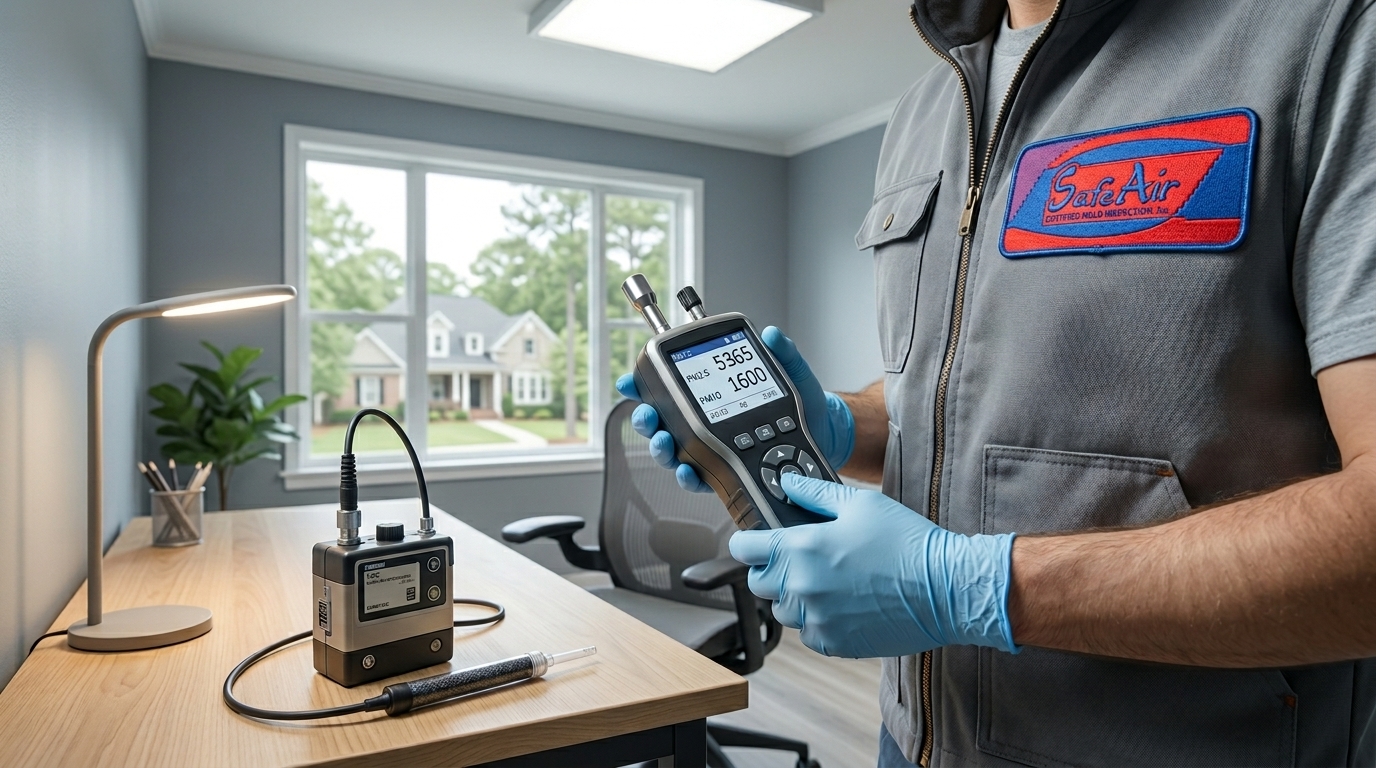
Particulate matter. Fine particles (PM2.5 and PM10) from cooking, candles, fireplaces, dust, and outdoor pollution that infiltrate through the building envelope. Particle counters measure real-time concentrations.
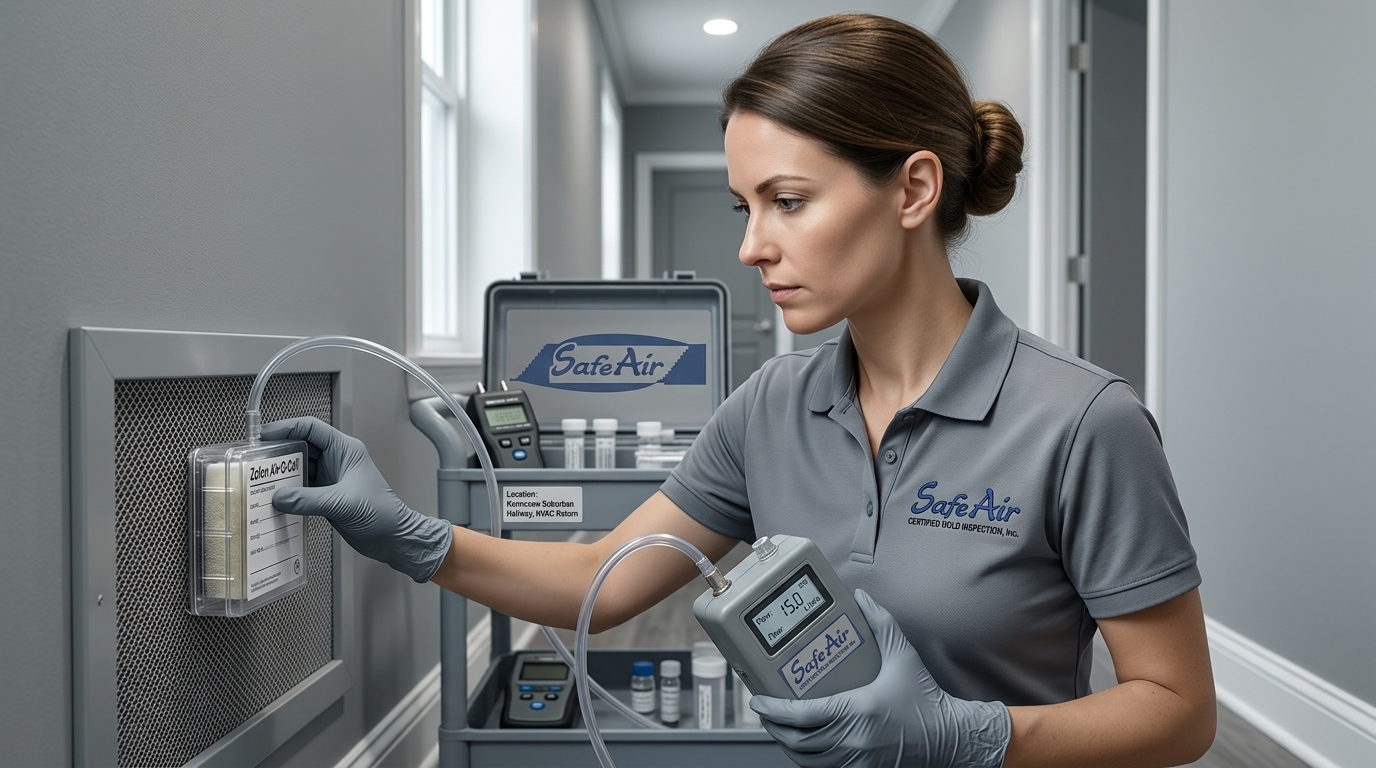
Allergens. Dust mite allergens, pet dander, and pollen can be tested through surface dust sampling or air cassettes. These tests are less common in our practice but relevant for households with allergic or immunocompromised occupants.
Test Type | What It Detects | Collection Method | Lab Required? | Typical Cost (Atlanta) |
|---|---|---|---|---|
Mold spore trap | Mold species and spore counts | Air cassette pump (calibrated volume) | Yes | $300–$600 (includes 3–5 samples + lab) |
VOC panel | Formaldehyde, benzene, toluene, and other gases | Sorbent tube or canister | Yes | $400–$800 |
Carbon monoxide | CO gas concentration | Direct-reading meter | No (real-time) | Often included in HVAC or home inspection |
Particulate matter | PM2.5, PM10 concentrations | Particle counter | No (real-time) | $150–$300 as standalone |
Allergen panel | Dust mites, pet dander, pollen | Surface dust sample or air cassette | Yes | $200–$500 |
Most SafeAir clients need mold-focused air quality testing. The rest of this article concentrates on that process, though we note where general IAQ testing differs.
How a Mold Spore Trap Works
Understanding the equipment removes the mystery from the testing process. A mold spore trap is simple in concept and precise in execution.
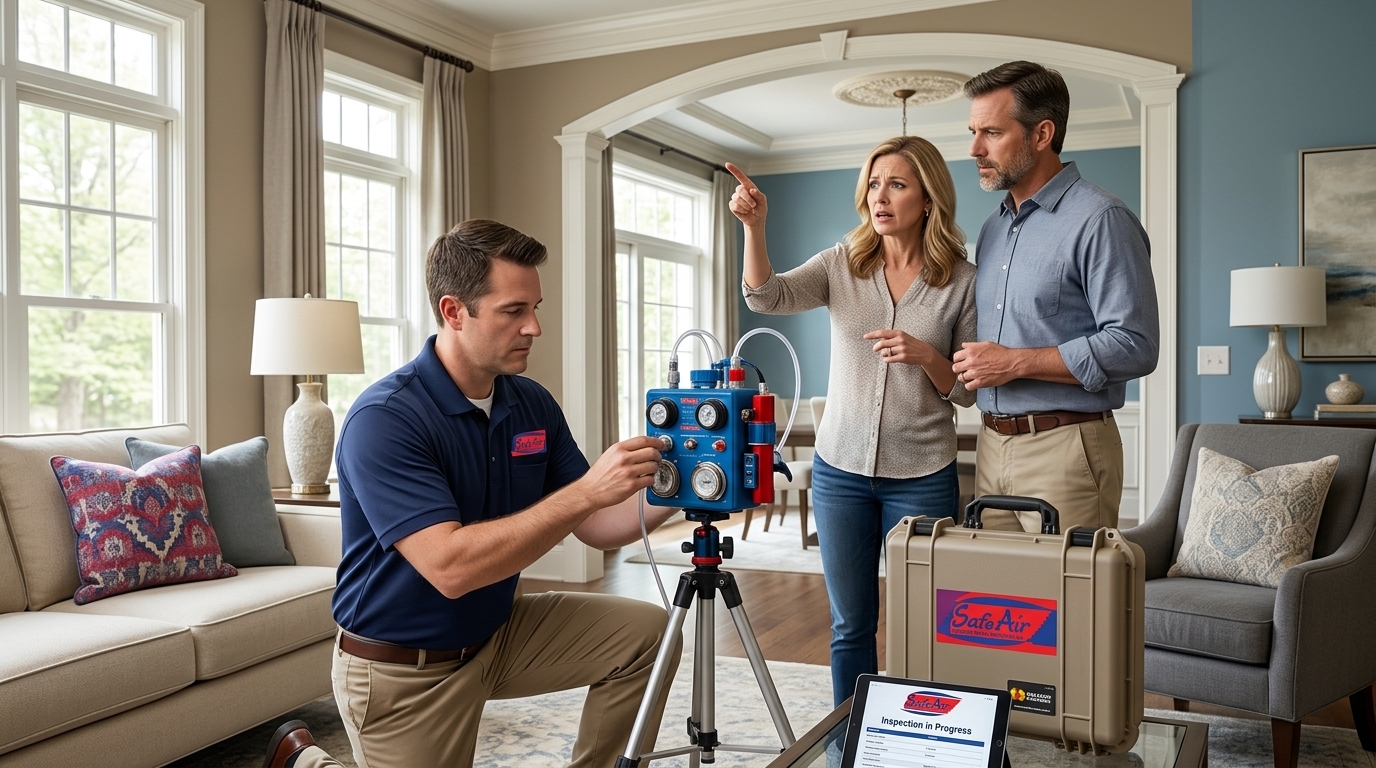
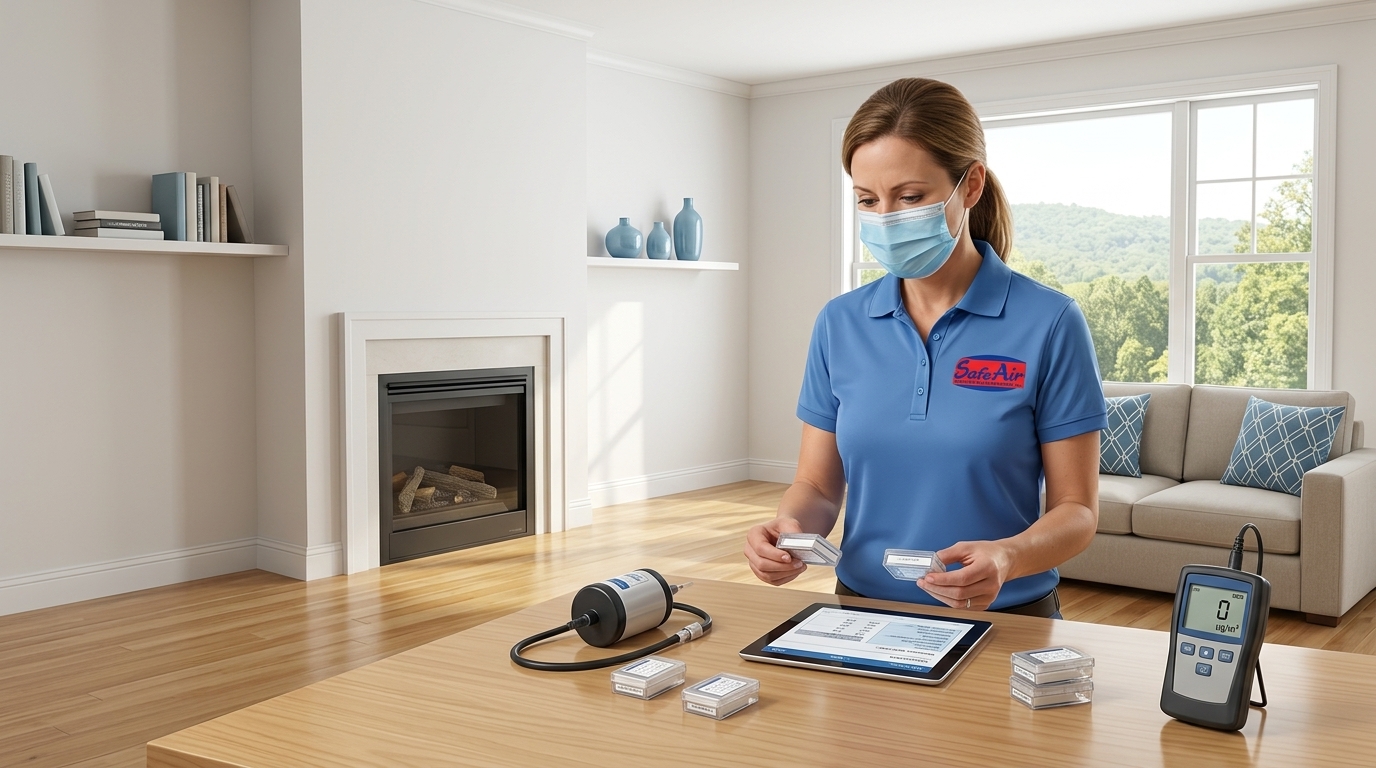
The pump. Our inspectors use calibrated air sampling pumps — the same type used in occupational health settings. The pump draws a measured volume of air through a collection cassette at a known flow rate. A standard sample pulls 75 liters of air over a 5-minute collection period. The calibrated flow rate matters because the lab needs to know the exact air volume to calculate spores per cubic meter.
The cassette. The spore trap cassette (brands like Zefon Air-O-Cell and Allergenco-D are common in the industry) contains a sticky glass slide inside a sealed housing. As air passes through the narrow slit in the cassette, particles impact the adhesive surface. Mold spores, pollen, fibers, and other airborne debris all collect on the slide. After sampling, the inspector seals the cassette and ships it to the lab with a chain-of-custody form.
Lab analysis. A trained microscopist opens the cassette, stains the slide if needed, and examines it under a microscope at 400x to 600x magnification. The analyst identifies mold spore types by their characteristic shapes, sizes, and structures. Aspergillus and Penicillium spores look similar under non-cultured analysis, so labs typically group them as “Aspergillus/Penicillium” on spore trap reports. Stachybotrys, Chaetomium, and Cladosporium each have distinct morphologies that the analyst identifies separately.
The report. Results come back in 3 to 5 business days. The lab report lists each spore type found, the raw count, and the calculated concentration in spores per cubic meter. SafeAir’s written report interprets those numbers in context — comparing indoor samples to the outdoor baseline, flagging elevated species, and recommending next steps.
Why Outdoor Control Samples Matter
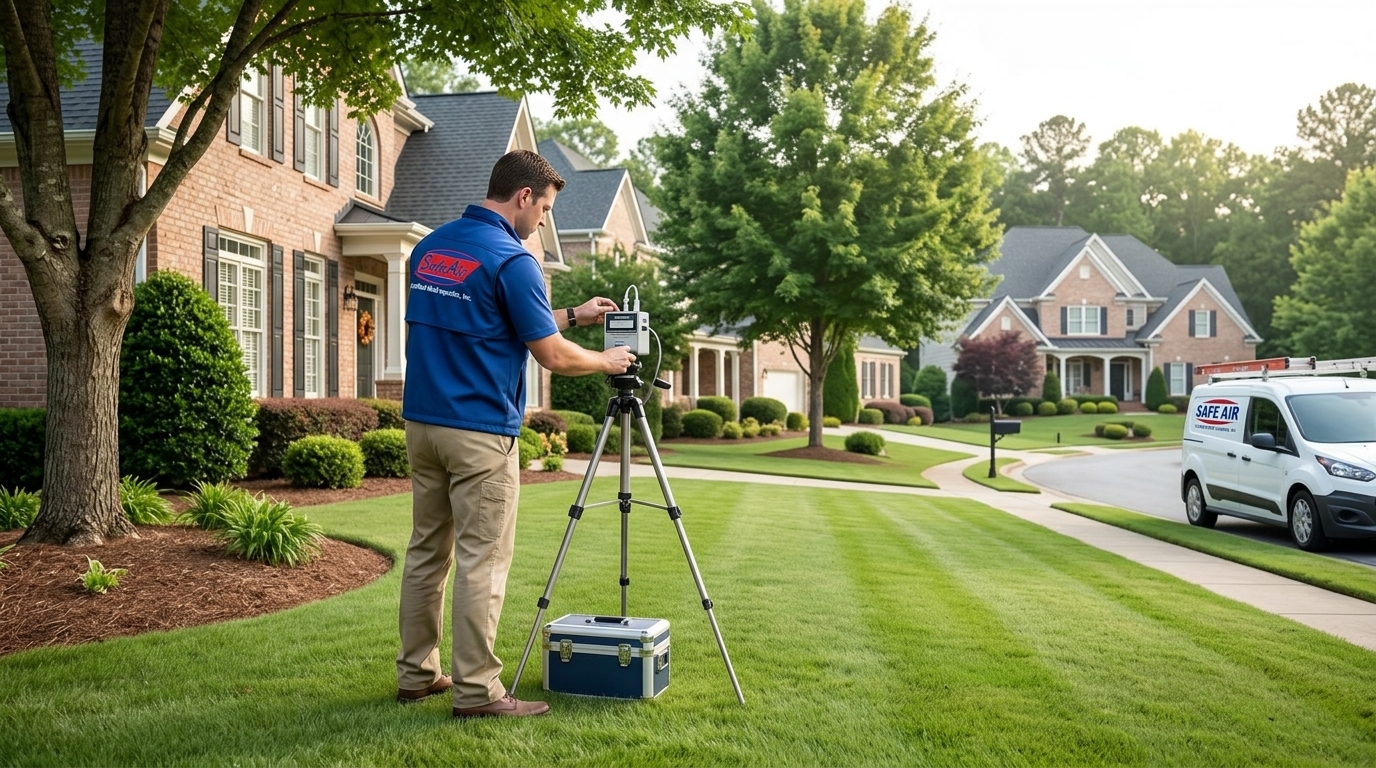
Every professional air quality test for mold includes at least one outdoor sample. This is the single most important methodological detail that separates a professional test from a DIY kit.
Mold spores exist outdoors in large numbers. That is normal biology. Cladosporium, Alternaria, and Aspergillus/Penicillium are present in outdoor air year-round, with counts fluctuating by season, weather, and geography. During Atlanta’s spring pollen season, outdoor mold spore counts can spike dramatically alongside pollen levels.
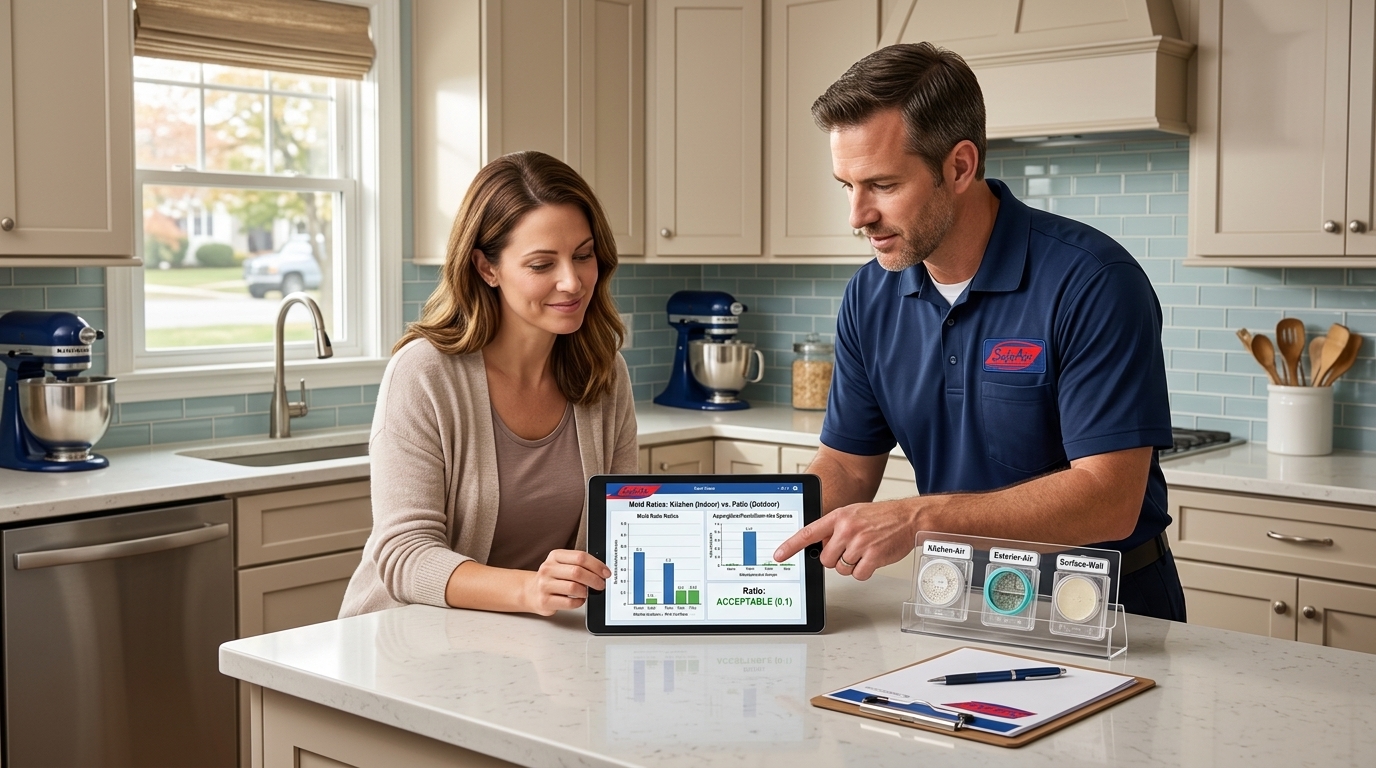
The outdoor sample establishes a baseline. What matters is the indoor-to-outdoor ratio, not the raw indoor number.
An example: if your outdoor sample shows 2,000 Aspergillus/Penicillium spores per cubic meter and your indoor sample shows 1,800, the indoor air is actually cleaner than outside. That is a normal result — the building envelope filters some particles out. No action needed.
But if the outdoor sample shows 500 spores per cubic meter and a bedroom sample shows 4,500, something inside that room is producing spores. The 9:1 indoor-to-outdoor ratio indicates an active mold source.
Without the outdoor comparison, you cannot interpret indoor results accurately. A DIY test kit that shows “mold detected” tells you nothing useful — because mold is always present in air. The question is whether your indoor levels are disproportionately higher than what’s coming in from outside, and whether the species found indoors differ from the outdoor profile.
This is one reason we recommend professional testing over retail kits. For a detailed breakdown of why home mold test kits fall short, we wrote a separate article covering their specific limitations.
Mold Air Quality Testing vs. General IAQ Testing
These are different services, and the distinction matters when you are deciding what to order.
Mold-specific air quality testing focuses on identifying mold spore types and concentrations. The sampling equipment (spore traps), the lab analysis (microscopy), and the interpretation (indoor-to-outdoor comparison) are all designed around one question: is there an active mold source affecting indoor air quality? This is what SafeAir performs as our core air quality testing service.
General IAQ testing is broader. It may include VOCs, CO, particulates, radon, humidity mapping, temperature, and ventilation rates in addition to or instead of mold. An industrial hygienist or environmental consultant typically handles these assessments for commercial buildings, workplace complaints, or post-construction air quality verification.
Most Atlanta homeowners who call us need mold-specific testing. They have a smell, a symptom, a visible concern, or a real estate question. General IAQ testing makes more sense for commercial properties, newly renovated spaces with off-gassing concerns, or situations where occupants report symptoms that do not match a typical mold pattern.
If you are unsure which type of testing you need, we can help you decide during a phone consultation. Sometimes a mold inspection reveals that the issue is HVAC-related humidity rather than active mold — and the fix is mechanical, not remediation.
DIY Test Kits vs. Professional Air Quality Testing
Retail mold test kits sold at hardware stores and online range from $10 to $50. Professional mold air quality testing in Metro Atlanta costs $300 to $600. The price gap raises an obvious question: is professional testing worth 10 times the cost?
Yes. And the reason is methodology.
Settle plates (petri dish kits) are the most common DIY option. You open a petri dish, leave it exposed in a room for a set time, seal it, and send it to a lab. The lab cultures whatever lands on the dish and reports what grows.
The problems:
- No calibrated air volume. You do not know how much air passed over the dish. Results cannot be compared to a standard or to an outdoor sample.
- Gravity bias. Heavier spores settle faster. Lighter spores (including some of the most health-relevant types) may never land on the dish.
- No outdoor comparison. Without a baseline, “Aspergillus detected” is meaningless information — Aspergillus is in every home.
- Culture bias. Only viable (living) spores grow on the petri dish. Dead spores — which still cause allergic reactions and respiratory irritation — go uncounted.
- Contamination risk. Any spore that drifts onto the dish during setup or transport gets counted in the results.
Professional spore traps pull a known volume of air at a calibrated rate, capture both viable and non-viable spores, and always include an outdoor control. The lab counts total spores (not just those that can grow on a dish), identifies species by morphology, and reports concentrations per cubic meter.
The $300 to $600 professional test gives you species identification, accurate spore concentrations, indoor-to-outdoor comparison, a professional report, and recommendations. The $30 petri dish gives you a yes/no answer to a question that always comes back “yes.” For more on the specific shortcomings of these kits, see our full breakdown: why home mold test kits don’t work.
When Air Quality Testing Is NOT Needed
Honesty about when testing is unnecessary builds more trust than selling tests to everyone who calls.
Small, visible mold on bathroom grout or caulk. If you can see a patch of mold on shower tile grout and the affected area is under 10 square feet, you already know the problem and the solution. Clean it with an appropriate product, fix the ventilation (exhaust fan), and address the moisture source. Testing will not change the course of action.
A recently cleaned surface. If a cleaning crew wiped down visible mold last week and you want to “test to make sure it’s gone,” air sampling right after cleaning often produces artificially low results. The disruption of cleaning can temporarily reduce airborne spore counts. Wait at least a week after cleaning before testing — or better yet, schedule a proper clearance test after professional remediation.
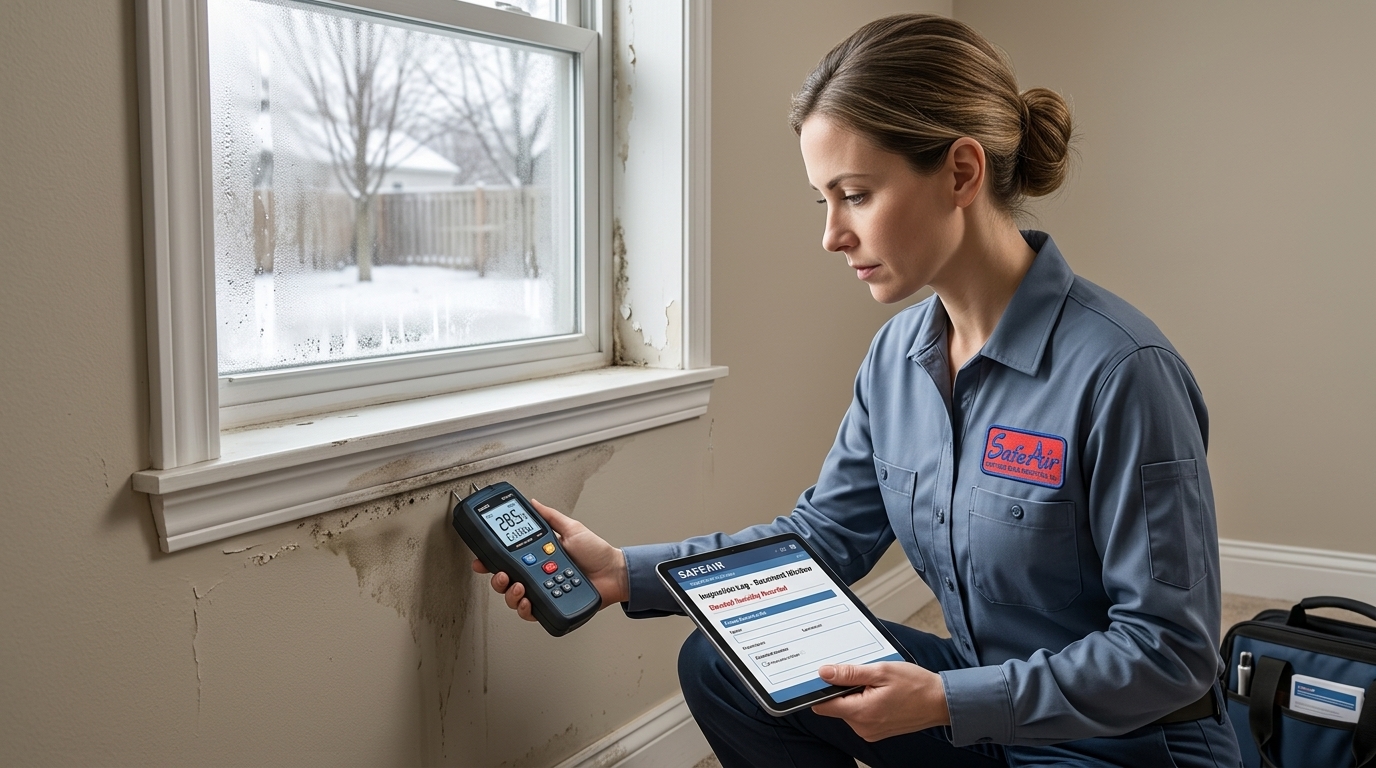
Condensation on windows. Window condensation during winter is a humidity and insulation issue, not necessarily a mold issue. Reducing indoor humidity and improving ventilation typically resolves condensation. If mold has started growing on the window frame or sill, clean it and fix the humidity source.
General curiosity without any symptoms, smells, or visible problems. Air quality testing provides the most value when there is a reason to test. If your home smells fine, no one has symptoms, and there is no history of water damage, a mold air test will likely come back normal — and spending $400 to confirm what you already suspected is rarely worthwhile.
When Air Quality Testing IS Needed
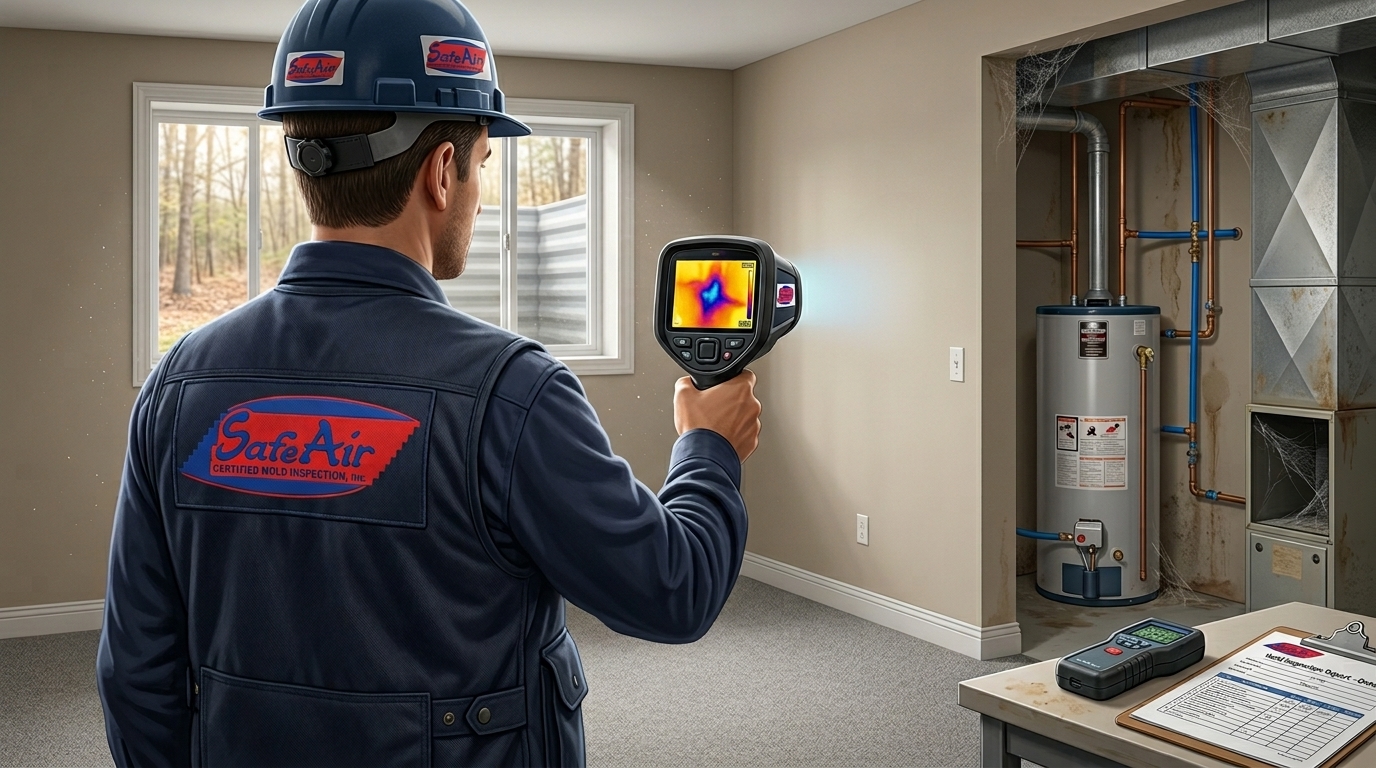
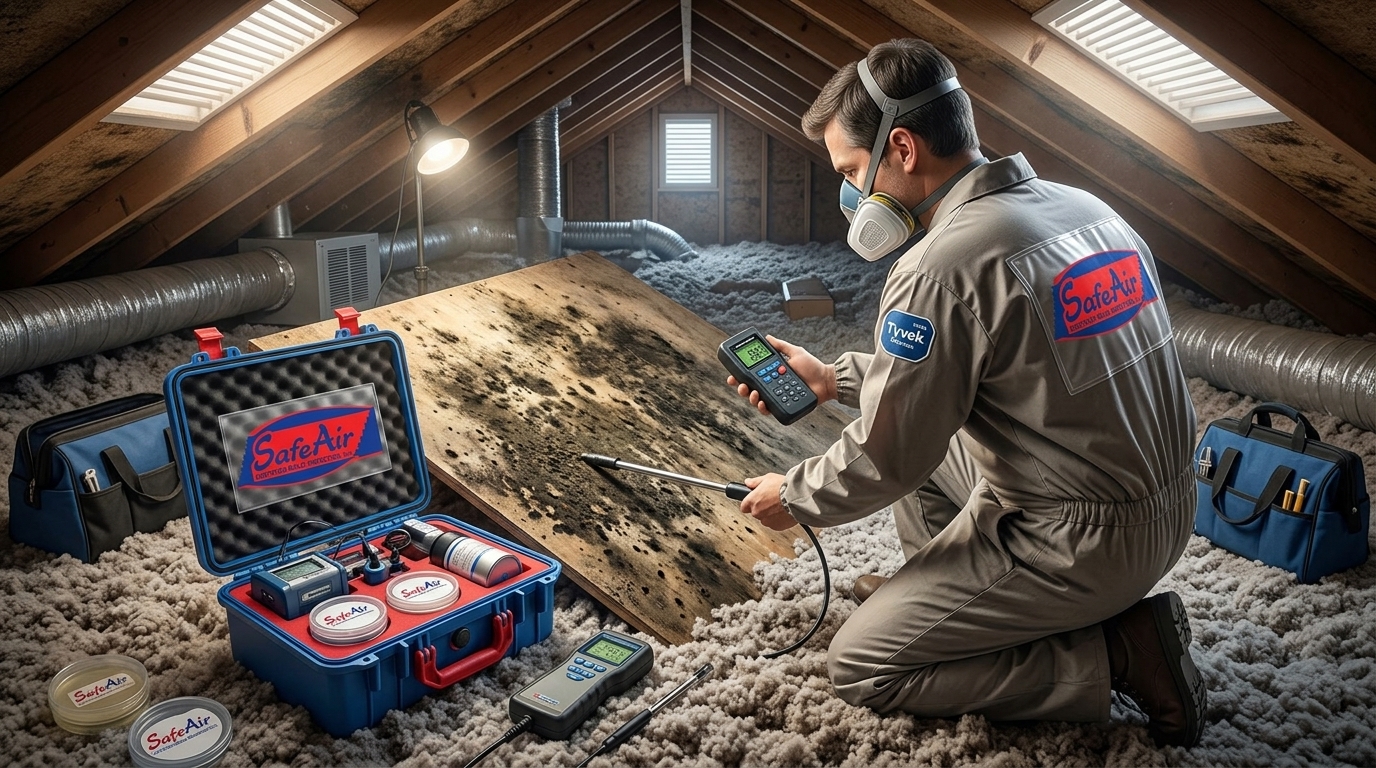
Hidden mold you cannot see. A musty smell in a room but no visible growth means mold may be growing behind walls, under flooring, or inside HVAC ducts. Air sampling detects elevated spore levels even when the source is concealed. Our mold inspection process combines air sampling with moisture mapping and thermal imaging to locate the source.
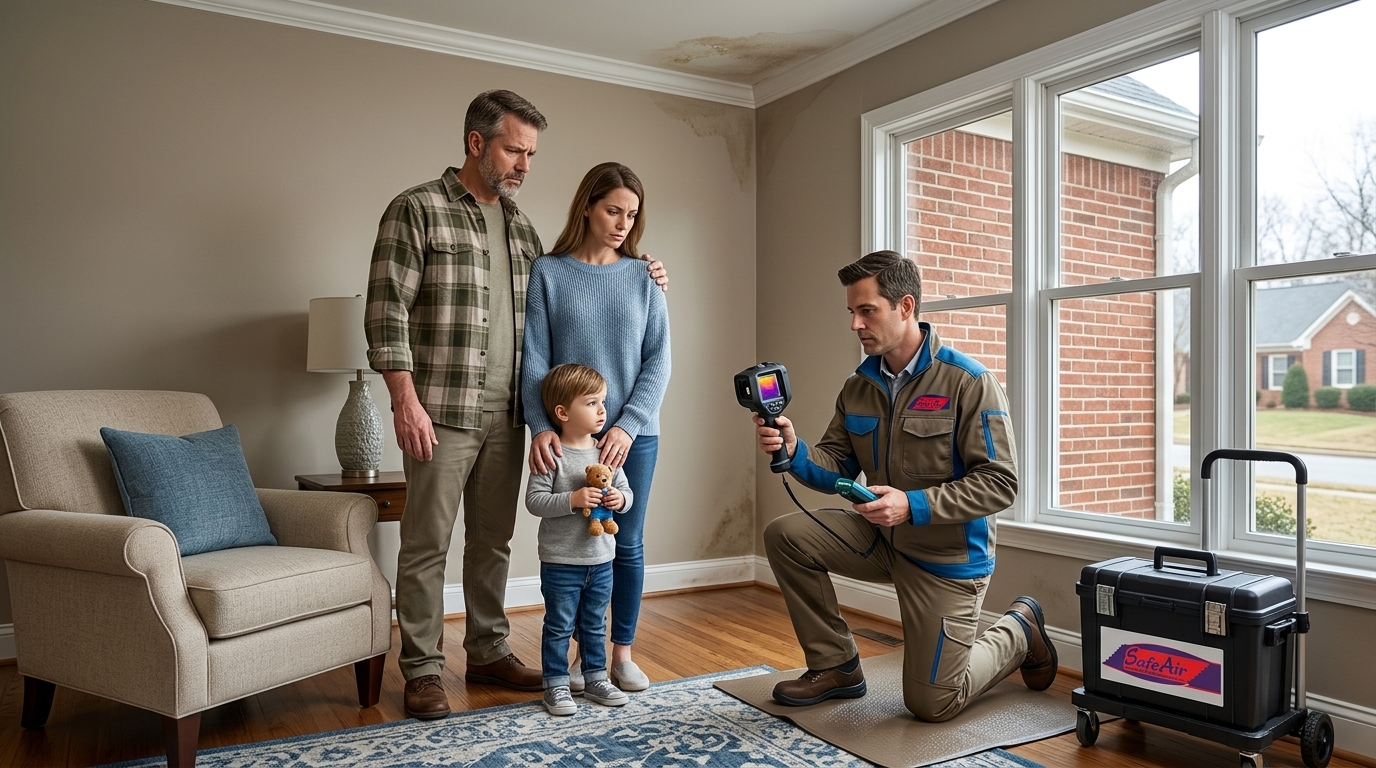
Unexplained health symptoms. Persistent congestion, headaches, fatigue, watery eyes, or respiratory irritation that improves when you leave the home is a classic pattern. We hear this from clients several times per week. Air quality testing can confirm or rule out elevated mold spore levels as a contributing factor. For more about the connection between mold and these symptoms, read our guide on how to tell if mold is making you sick.
Post-remediation verification. A remediation company finished removing mold-damaged materials. How do you know the work was effective? Independent clearance testing by a third party like SafeAir provides objective confirmation. We perform clearance testing specifically for this purpose.
Insurance and legal documentation. Insurance claims for mold damage require evidence. A professional lab report with calibrated sample data, chain-of-custody documentation, and certified inspector credentials carries weight that a DIY test result does not.
Real estate transactions. Buying a home with a damp basement, a musty crawlspace, or a prior water damage disclosure? Air quality testing before closing gives you data to negotiate repairs or walk away. Read our article on whether you should get a mold inspection when buying a house for a full breakdown.
After water damage. Any water event that affected hidden areas — wall cavities, subfloors, attics — creates conditions for mold growth within 48 hours. Testing 5 to 7 days after the event can detect whether active growth has started.
Air Quality Testing Cost Breakdown: What You Pay and What’s Included
Professional air quality testing for mold in Metro Atlanta typically runs $300 to $600. Here is what that covers:
Standard inspection (most homes): $300 to $450
- Visual assessment of the property (exterior, interior, attic, crawlspace or basement)
- Moisture readings with pin and pinless meters
- 3 to 4 air samples (typically 2 indoor rooms + 1 outdoor baseline + 1 additional area of concern)
- Third-party lab analysis with spore identification and concentrations
- Written report with findings, lab results, photos, moisture data, and recommendations
- Inspection time: 1.5 to 2.5 hours for a standard 3-bedroom home
Expanded inspection (larger homes, multiple problem areas, or insurance documentation): $450 to $600+
- Everything in the standard inspection
- 5 to 8 air samples covering more rooms or zones
- Surface samples (swab or tape lift) from visible growth for species confirmation
- More detailed moisture mapping across multiple areas
- Extended report suitable for insurance or legal use
What’s NOT included in most testing:
- Mold remediation (SafeAir does not perform remediation — we are an independent testing company)
- HVAC duct cleaning or repair
- Structural repairs
- General IAQ testing for VOCs, CO, or radon (these are separate services)
Pricing varies by property size, number of samples, and the scope of the inspection. A 1,200-square-foot condo with one area of concern costs less to test than a 4,000-square-foot home with a basement, crawlspace, and attic all needing evaluation.
How to Read Air Quality Testing Results
Lab results from a spore trap analysis include several data points. Understanding what they mean keeps you from overreacting — or underreacting.
Spore type. The lab identifies each mold genus found in the sample. Aspergillus/Penicillium is almost always present because these are the most common indoor and outdoor molds. Cladosporium is a normal outdoor mold that enters through ventilation. Stachybotrys and Chaetomium, if detected indoors, typically indicate active water damage and should be investigated further.
Raw count and concentration. The raw count is the number of spores the analyst counted on the slide. The concentration converts that count into spores per cubic meter based on the calibrated air volume. A sample that pulled 75 liters of air and yielded 30 Aspergillus/Penicillium spores calculates to 400 spores per cubic meter.
Indoor-to-outdoor ratio. This is the most important number on the report. An indoor concentration significantly higher than the outdoor sample — typically 2x or more for the same species — suggests an active indoor source. An indoor count lower than or similar to outdoor levels is generally considered normal.
Species of concern. Not all elevated counts carry the same weight. Elevated Cladosporium indoors during Georgia’s spring months may simply mean outdoor air is infiltrating (Cladosporium is a dominant outdoor mold in the Southeast). Elevated Stachybotrys indoors at any level is a concern because Stachybotrys is rarely found in outdoor air — its presence indoors almost always indicates wet building materials.
There is no single regulatory “safe” or “unsafe” threshold for mold spore counts. The EPA has not established numerical standards for indoor mold. Professional interpretation looks at the full picture: species present, indoor-to-outdoor ratios, moisture data, visual findings, and the building’s history.
Our inspectors explain every result in the written report. We do not hand you a lab printout and leave you to figure it out.
Georgia-Specific Air Quality Concerns
Atlanta’s climate creates indoor air quality challenges that homeowners in drier regions do not face.
Humidity. Metro Atlanta’s average relative humidity exceeds 70% for much of the year. That outdoor moisture loads HVAC systems and raises indoor humidity, especially in homes where the air conditioning is undersized or the ductwork is leaking. We routinely measure indoor relative humidity above 60% in Atlanta homes — the threshold above which mold growth on building materials becomes likely.
Pollen season. Atlanta is consistently ranked among the highest-pollen cities in the country. Pollen enters through open windows, doors, and the fresh air intake on HVAC systems. While pollen itself is not mold, it provides a nutrient source for mold growth on surfaces where it accumulates — window sills, HVAC filters, and return air grilles.
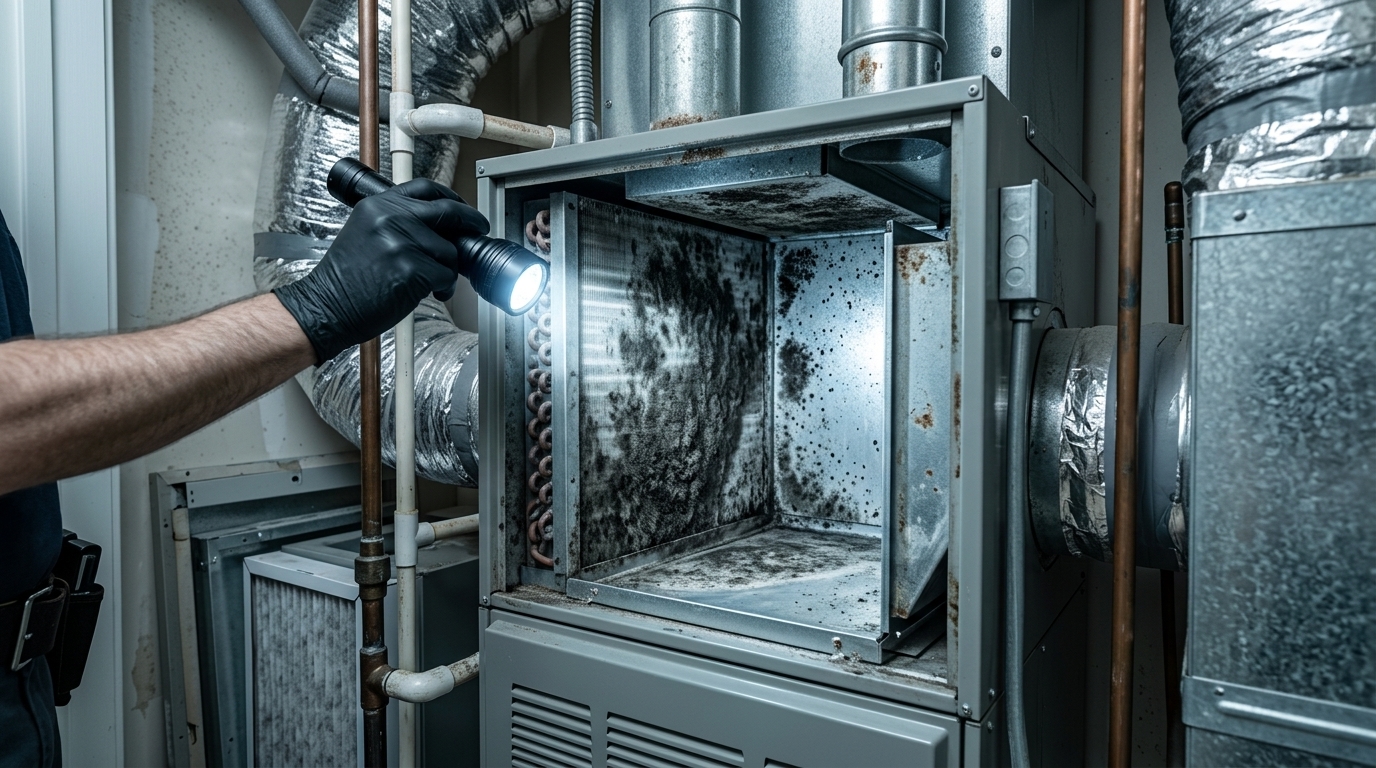
HVAC recirculation. Central HVAC systems in Atlanta homes run 8 to 12 hours per day during summer months. If mold is growing inside the ductwork, on the evaporator coil, or in the air handler cabinet, the system actively distributes spores throughout the home every time it cycles. We find mold-contaminated HVAC components in a meaningful percentage of the homes we inspect. For a broader discussion of indoor air quality monitoring in your home, see our guide on indoor air quality monitoring.
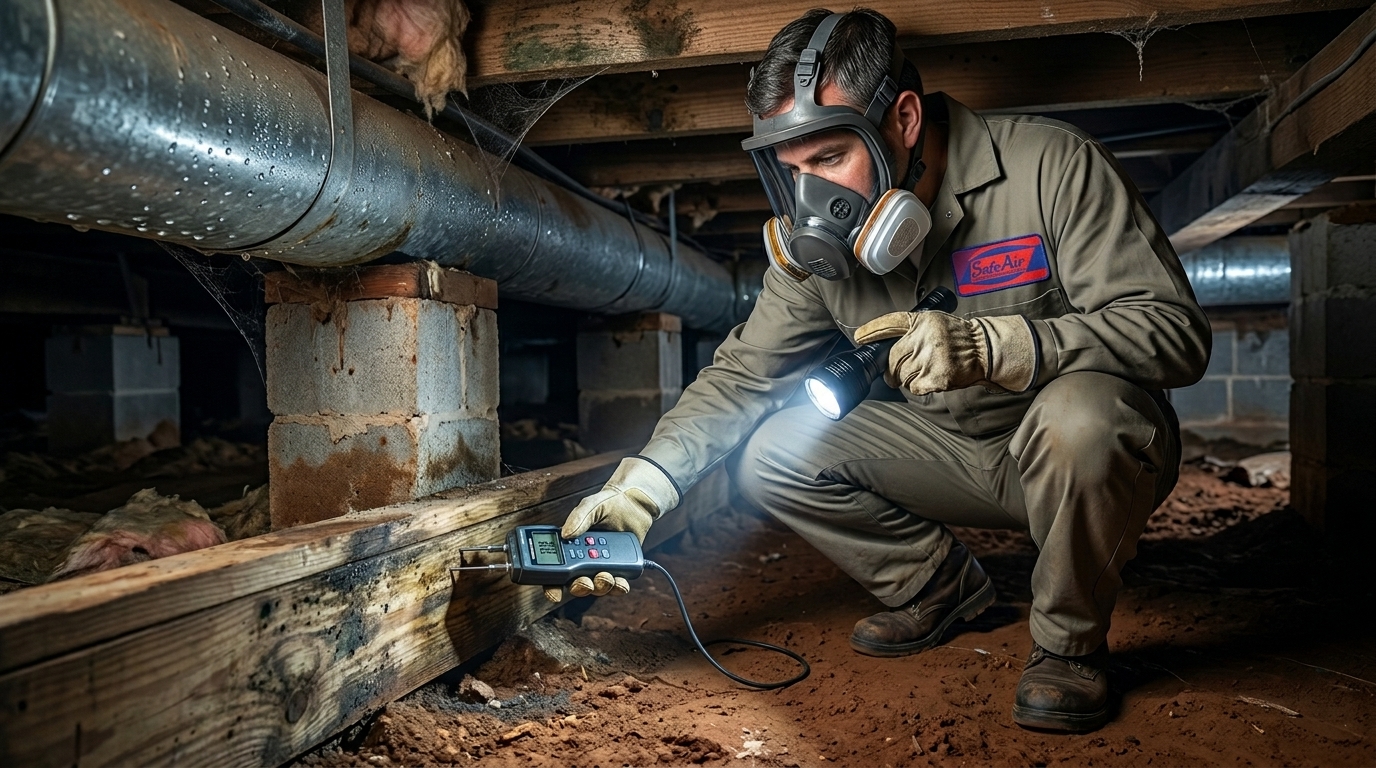
Crawlspace conditions. Many Georgia homes, particularly those inside the Perimeter (ITP) built before 1980, have vented crawlspaces. The theory behind crawlspace venting was that outdoor air would dry the space. In Georgia’s humidity, vented crawlspaces do the opposite — they draw in warm, humid outdoor air that condenses on cooler surfaces like ductwork, floor joists, and subflooring. The result is chronically elevated moisture and mold growth that feeds spores into the living space above.