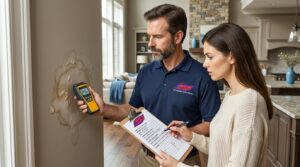
Hi, I’m Jeremy with SafeAir Certified Mold Inspection and I am a Certified Microbial Consultant. You can find me on the web at www.safeairmoldtesting.com or you can also call me at 404-695-0673.
A question I am often asked is: Do most houses have mold?
There is some mold in every home. Mold will grow in just a few days anywhere there is excess moisture or humidity above above 55%.
Mold is most common on materials such as wet tile, tubs, and toilets in living areas. Perhaps there is a small drip under the sink.
There is also some mold in all unfinished basements, crawlspaces, and attics.
The industry standard is that there is no visible mold present in unfinished spaces.
If you do have visible mold growing in you unfinished basement, crawlspace, or attic, it is an indication there is a lot more non-visible mold you can’t see on other building material and the air is contaminated.
Visible mold in unfinished spaces indicates a need for a mold remediation.
I recommend that occupants are able to occupy the indoor space without having adverse health related problems associated with indoor type mold exposure.
Having an air sample collected, by a professional mold inspector, can be useful in knowing what you are breathing and can indicate whether there is a mold problem that needs to be addressed.
I recommend there be fewer than 1,000 allergenic type mold spores, per cubic meter of air, for indoor locations that are serviced by an HVAC system.
Typically, the molds that are in the average home do not contaminate the air to a level that is above our recommended guidelines or is a problem for the vast majority of people.
If you want to know if the mold in your home is contaminating the air or just want to know what you are breathing, call SafeAir Certified Mold Inspection and have an indoor air sample collected by a professional mold inspector
Frequently Asked Questions
Do all houses have mold?
Yes, all houses have some level of mold. Mold spores are naturally present in both indoor and outdoor air. The EPA confirms there is no practical way to eliminate all mold spores from an indoor environment. What matters is whether indoor mold levels are elevated above normal outdoor levels, which indicates a moisture problem that needs to be addressed.
Is mold common in homes?
Yes, mold is very common in homes. Some mold exists in every home because mold spores are always present in the air. Mold becomes a problem when there is excess moisture or humidity above 55%, which allows spores to colonize and grow on surfaces. Common problem areas include bathrooms, basements, crawlspaces, attics, and areas near plumbing leaks.
Do all basements have mold?
Most unfinished basements have some level of mold due to higher humidity and limited ventilation. However, visible mold growth in a basement indicates a moisture problem that exceeds normal levels. The industry standard is that no visible mold should be present in unfinished spaces. If you see visible mold in your basement, it typically means there is significantly more hidden mold on other building materials and the air may be contaminated.
Is it normal to have mold in your house?
A small amount of mold is normal in every house. Mold spores enter through windows, doors, and HVAC systems and are always present at low levels. Mold becomes abnormal and potentially dangerous when indoor spore counts exceed outdoor levels or when visible mold growth appears on surfaces. Indoor environments should maintain fewer than 1,000 allergenic mold spores per cubic meter of air for healthy living conditions.
How do I know if mold in my house is a problem?
Mold in your house is a problem if you can see visible mold growth on surfaces, smell a persistent musty odor, or experience health symptoms like respiratory issues and allergies that improve when you leave the home. Professional air quality testing can determine if your indoor mold spore levels exceed safe thresholds. A certified mold inspector can identify hidden mold behind walls, under floors, and in HVAC systems.
What is a safe level of mold in a house?
There is no federal standard for safe mold levels, but industry guidelines recommend fewer than 1,000 allergenic mold spores per cubic meter of air in occupied indoor spaces with HVAC systems. Indoor mold spore counts should generally be lower than outdoor counts. If indoor counts exceed outdoor levels, it indicates an active mold source that needs investigation and remediation.