Why Bleach Fails on Wood: The Science
To understand why bleach does not kill mold on wood, you need to understand two things: how bleach works and how wood is structured.
Bleach Is Made for Hard, Non-Porous Surfaces
Standard household bleach (sodium hypochlorite) is an effective disinfectant on hard, non-porous surfaces like glass, tile, and countertops. On those flat surfaces, the chlorine in bleach contacts the mold directly and kills it.
Wood is different. Wood is a porous material with a network of tiny channels and fibers that absorb liquids. When you spray bleach on wood, the chlorine — the active killing agent — stays on the surface because its molecular structure prevents it from penetrating. The water in the bleach solution, however, soaks right through those pores and feeds the mold roots growing inside the wood.
You end up with a surface that looks white and clean while the mold underneath has a fresh supply of moisture to grow even faster.
Mold Grows Roots Into Wood
Mold does not just sit on the surface. It sends root-like structures called hyphae deep into porous materials. These hyphae extract nutrients from the wood itself. Bleach cannot reach these roots because the chlorine component evaporates and breaks down before it penetrates. The mold regrows from its intact root system within days or weeks.
The EPA’s Position on Bleach and Porous Materials
The U.S. Environmental Protection Agency does not recommend bleach for mold cleanup on porous materials. Their mold remediation guidelines specifically note that porous materials with mold contamination may need to be removed and replaced rather than treated with surface disinfectants. This recommendation exists because surface treatments like bleach cannot address mold that has penetrated into the material.
Does Bleach Kill Black Mold on Wood?
No. Bleach does not kill black mold on wood any more effectively than it kills other mold species on wood. Black mold (Stachybotrys chartarum) sends the same type of root structures into wood as other mold species. The chlorine in bleach still cannot penetrate the wood to reach those roots.
We often see homeowners reach for Clorox or other bleach products specifically when they spot black mold because it looks alarming. The impulse makes sense, but the result is the same: the black discoloration fades temporarily, and the mold returns.
Does Clorox kill mold on wood? No. Clorox is a brand-name bleach product containing the same sodium hypochlorite as generic bleach. It has the same limitations on porous surfaces.
What Actually Kills Mold on Wood
Several alternatives penetrate wood and kill mold roots far more effectively than bleach. Here are the options our team recommends based on the severity of the mold problem.
White Distilled Vinegar
White vinegar (acetic acid) kills approximately 82% of mold species according to research. Unlike bleach, vinegar can penetrate porous surfaces. It is mildly acidic, which disrupts mold growth at the root level.
Best for: Light surface mold on wood furniture, shelving, or trim.
Hydrogen Peroxide (3%)
Hydrogen peroxide is antifungal, antiviral, and antibacterial. It fizzes on contact with mold, lifting spores from wood fibers. The 3% concentration sold in drugstores works well for small mold problems on wood.
Best for: Small to moderate mold patches on wood surfaces.
Borax (Sodium Borate)
Borax dissolved in water creates an alkaline solution that kills mold and inhibits future growth. Borax does not emit toxic fumes, and it remains on the wood surface as a long-term mold deterrent after drying.
Best for: Structural wood, subflooring, and framing lumber.
Professional Mold Remediation
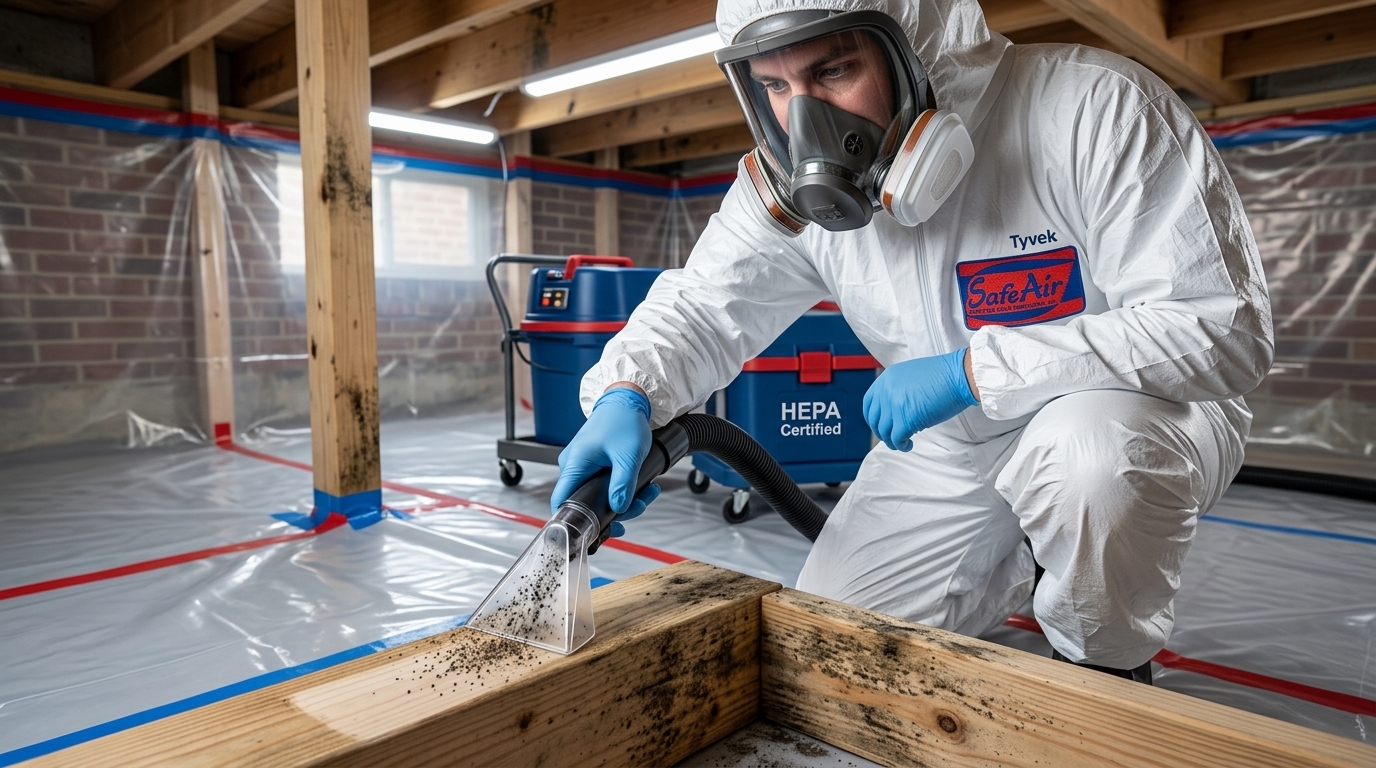
When mold has spread extensively into structural wood, professional remediation is the safest and most effective option. Professionals use commercial-grade antifungal treatments, HEPA containment systems, and controlled drying equipment. Our team follows strict mold cleaning protocols that address both the mold and its moisture source.
Best for: Mold covering more than 10 square feet, mold inside walls, mold on structural framing, or any situation involving water damage.
Step-by-Step Guide: How to Remove Mold From Wood
If the mold covers a small area (less than 10 square feet) and the wood is still structurally sound, you can treat it yourself. Here is our recommended process.
What You Need
- White distilled vinegar OR 3% hydrogen peroxide
- Spray bottle
- Stiff-bristled brush (not wire — it damages wood)
- HEPA-rated respirator mask (N95 minimum)
- Rubber gloves
- Eye protection
- Plastic sheeting
- Fan for ventilation
Step 1: Protect Yourself and the Area
Put on your respirator, gloves, and eye protection before you start. Disturbing mold releases spores into the air. Seal off the work area with plastic sheeting if possible and open windows for ventilation.
Step 2: Vacuum Loose Mold
Use a vacuum with a HEPA filter to remove loose mold spores from the wood surface. A regular vacuum will blow spores into the air and spread contamination.
Step 3: Apply Your Cleaning Solution
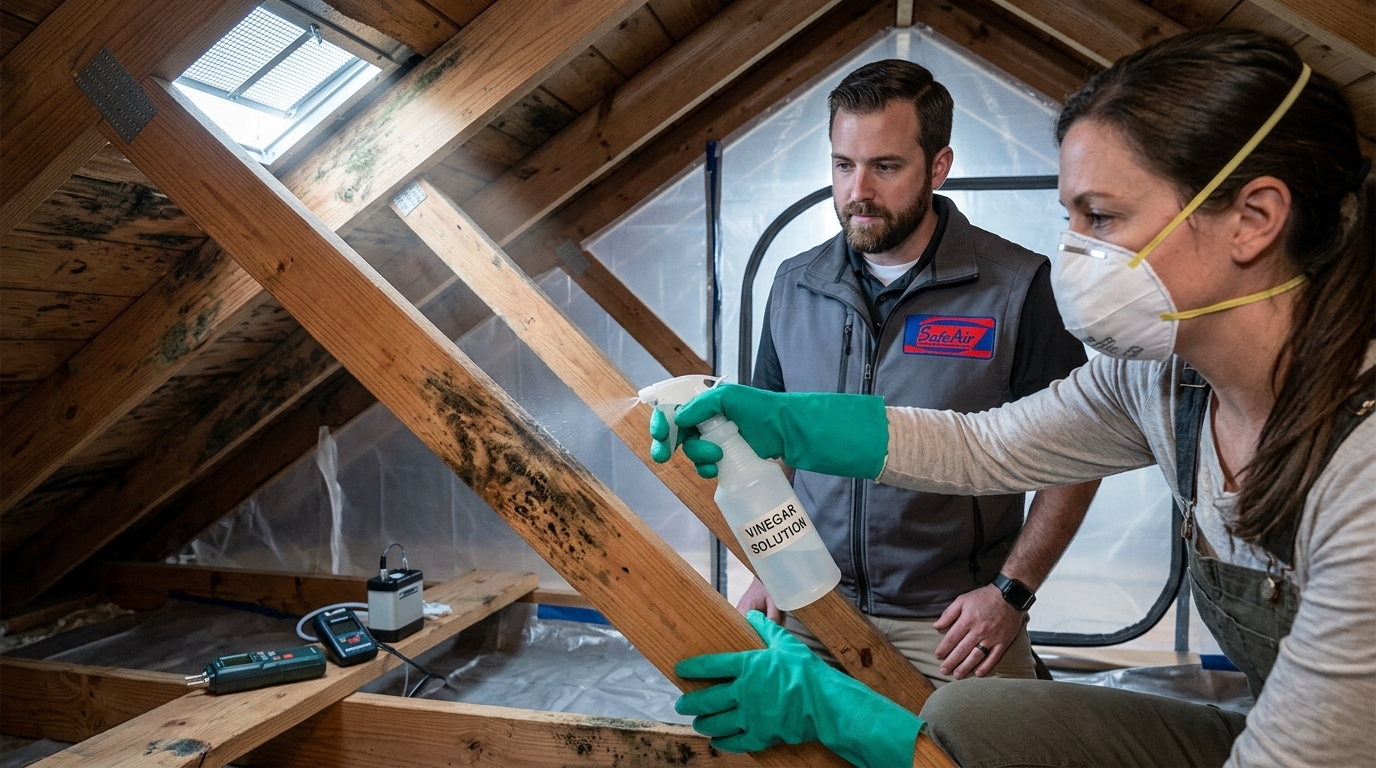
Fill a spray bottle with undiluted white vinegar or 3% hydrogen peroxide. Spray the moldy wood thoroughly until the surface is saturated. Let the solution sit for at least 60 minutes. This contact time allows the solution to penetrate the wood and reach mold roots.
Do not mix vinegar and hydrogen peroxide. Choose one. Mixing them creates peracetic acid, which can irritate your skin, eyes, and lungs.
Step 4: Scrub the Surface
Use a stiff-bristled brush to scrub the mold from the wood. Work in small sections. Re-apply your cleaning solution as needed.
Step 5: Rinse and Dry
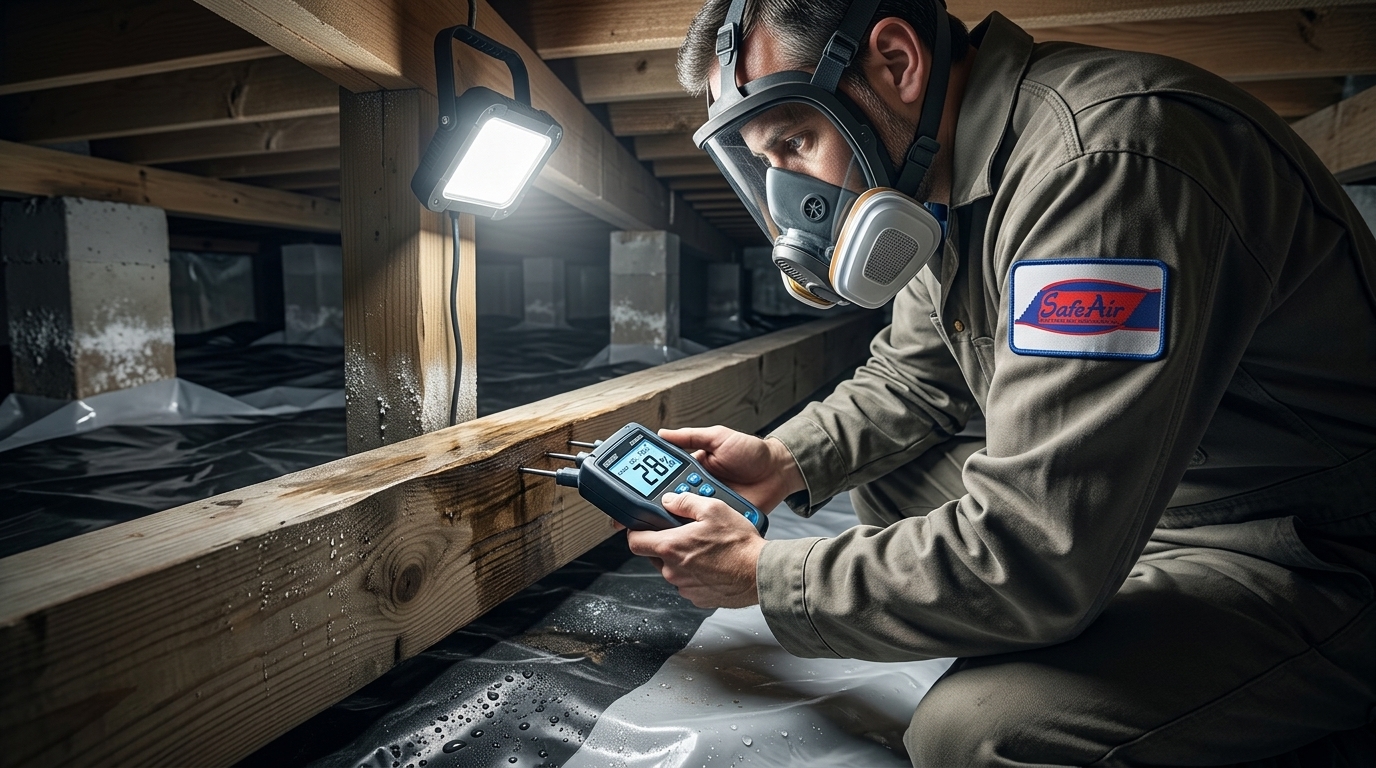
Wipe the surface with a damp cloth to remove residue. Then dry the wood completely. This step matters. Any remaining moisture will invite mold back. Use fans, dehumidifiers, or both to bring the wood’s moisture content below 20%.
Step 6: Apply Borax as a Preventive
Mix one cup of borax in one gallon of warm water. Apply this solution to the cleaned wood and let it dry without rinsing. The borax residue creates an alkaline surface that resists future mold growth.
Step 7: Address the Moisture Source
Mold does not grow without moisture. If you skip this step, the mold will return. Find and fix the water source: a leak, condensation, poor ventilation, or high humidity. Consider air quality testing to confirm the mold problem is resolved and no hidden moisture issues remain.
When to Replace Wood vs. Treat It
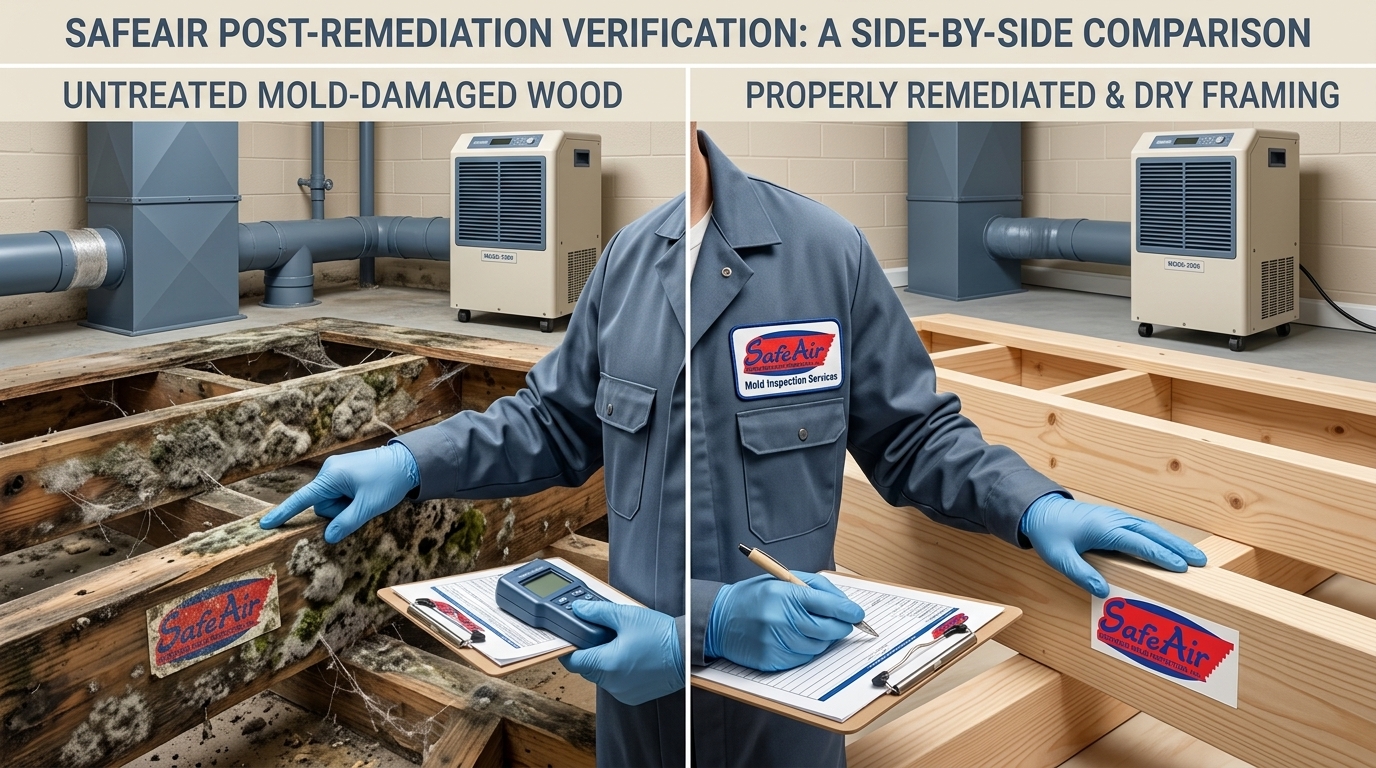
Not all moldy wood can be saved. Here is how we evaluate wood during our inspections.
Treat the Wood When:
- Mold is only on the surface and has not penetrated deeply
- The wood is still structurally solid (no soft spots, crumbling, or warping)
- The affected area is smaller than 10 square feet
- The mold appeared recently (weeks, not months)
Replace the Wood When:
- The wood feels soft, spongy, or crumbles when pressed
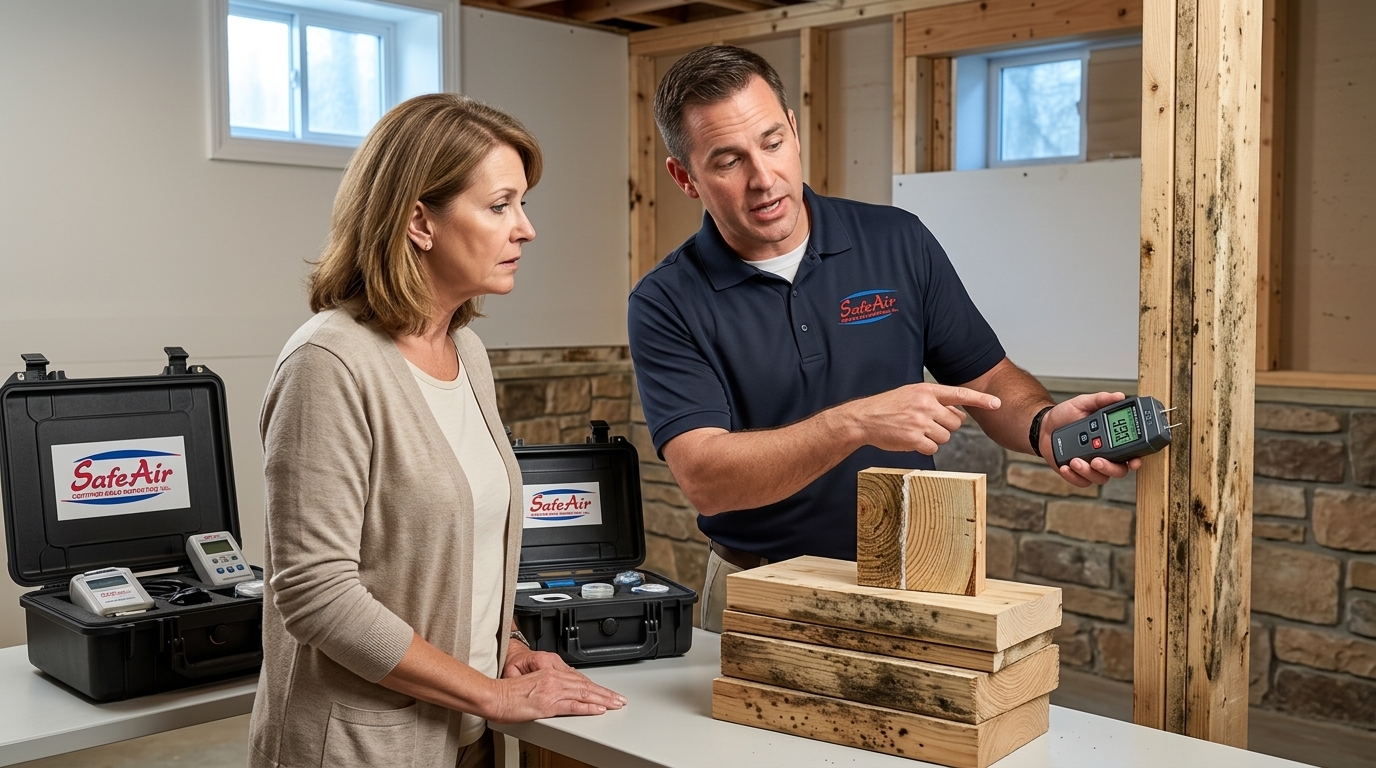
- Mold has penetrated deep into the grain (visible on cross-sections)
- The affected area exceeds 10 square feet
- The wood shows signs of rot alongside mold growth
- Structural integrity is compromised (framing, joists, subflooring)
- The mold returns repeatedly after proper treatment
When wood reaches the point of structural compromise, no cleaning product — bleach, vinegar, or otherwise — will restore it. Replacement is the only safe option, and this is the type of work that requires professional assessment. Our team can inspect your property and tell you exactly which wood needs replacement and which can be treated.