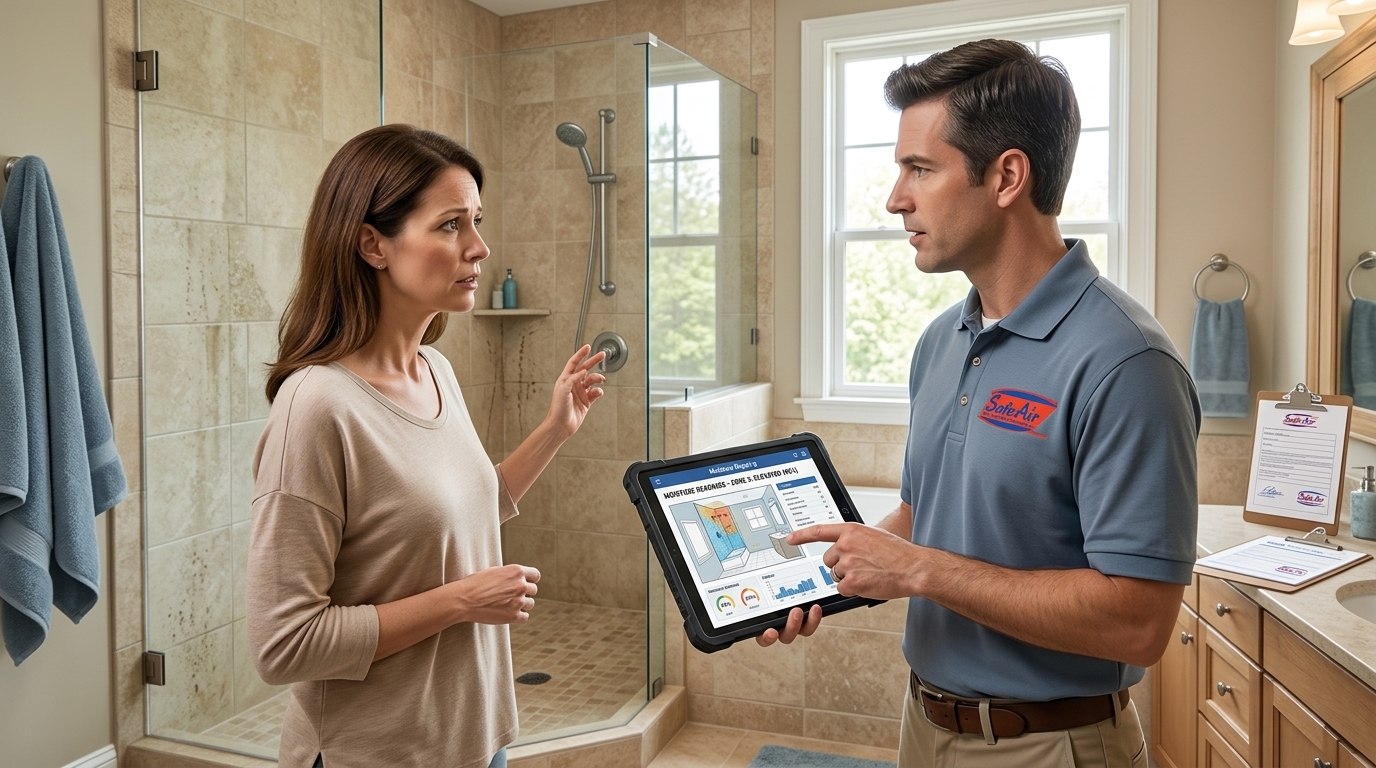
What Black Mold in the Shower Actually Is
Most online articles treat “black mold” as a single thing. It is not. The color of mold tells you almost nothing about the species. Several common mold species appear black or dark green on bathroom surfaces, and each one has different growth requirements, health implications, and recommended responses.
Here are the species we most frequently identify on shower surfaces during mold inspections in the Atlanta area:
Species | Appearance | Where It Grows | Health Concern Level |
|---|---|---|---|
Cladosporium | Dark green to black, velvety | Grout, caulk, shower doors, window sills | Low to moderate — common allergen |
Aspergillus niger | Black, powdery or granular | Caulk seams, silicone, tile grout | Moderate — can trigger respiratory symptoms; produces mycotoxins in some conditions |
Alternaria | Dark brown to black, fuzzy | Shower pans, damp tile corners, under bath mats | Low to moderate — strong allergy trigger |
Aureobasidium | Pink to black, slimy | Caulk, window frames, painted surfaces | Low — mainly a cosmetic issue |
Stachybotrys chartarum | Greenish-black, slimy | Wet drywall, ceiling tiles, wood behind walls | High — toxigenic, produces mycotoxins |
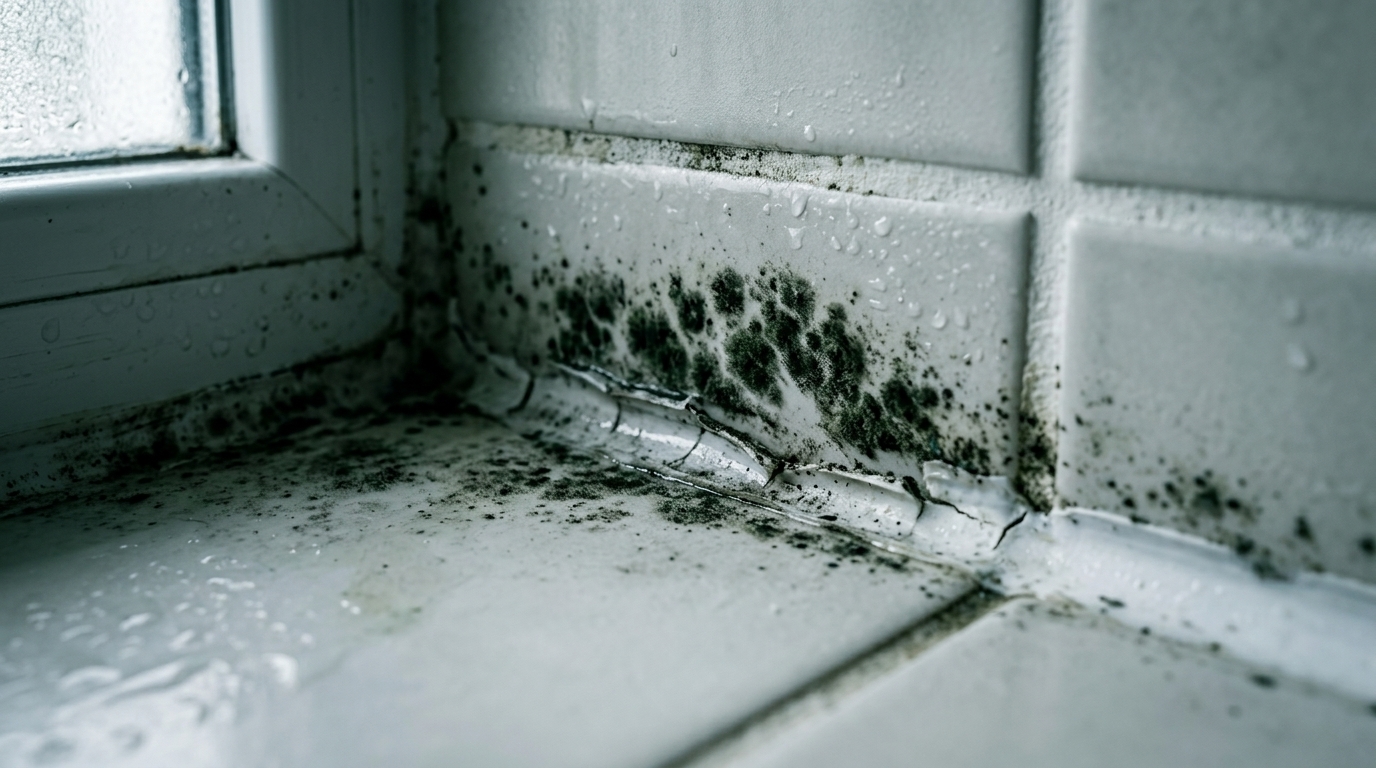
The critical difference: Stachybotrys needs cellulose and sustained saturation to grow. Tile, porcelain, and glass do not contain cellulose. Stachybotrys cannot colonize a glazed tile surface or a silicone caulk bead. If you see dark mold directly on your shower tile or grout, it is almost certainly one of the first four species on that list.
Stachybotrys becomes a concern when the mold you see on the surface is a symptom of water getting behind the tile — into the drywall, the wood framing, or the subfloor. That is a different situation entirely.
Why Showers Grow Mold So Easily
A shower creates perfect mold growth conditions multiple times a day. Warm water, steam, skin cells, soap residue, and body oils provide both moisture and nutrients. But some showers stay clean while others develop mold within weeks. The difference usually comes down to three factors.
Ventilation (or Lack of It)
A bathroom exhaust fan should run during every shower and for at least 20 minutes after. The fan should vent to the exterior — not into the attic, which we see in older Atlanta homes more than you would expect. Without adequate ventilation, relative humidity in the bathroom stays above 70% for hours after each use. That sustained humidity is what mold needs.
In Metro Atlanta, the outdoor humidity averages above 70% from May through September. Your bathroom exhaust fan is fighting against high ambient moisture, which means it has to work harder and run longer than the same fan would in a dry climate. A fan rated below 50 CFM in a standard bathroom is not moving enough air for a Georgia summer.
Failed Grout and Caulk
Grout is porous. Over time, it absorbs water, loses its seal, and becomes a food source for mold. Caulk has a finite lifespan — typically 5 to 10 years in a shower that gets daily use. Once silicone or latex caulk starts to peel, crack, or pull away from the tile, water seeps behind it.
We frequently find mold growing under caulk rather than on top of it. A homeowner scrubs the visible surface clean, but the mold colony lives between the caulk and the substrate. Removing the old caulk, treating the surface, and reapplying fresh silicone is the only way to address that pattern.
Leaks Behind the Tile
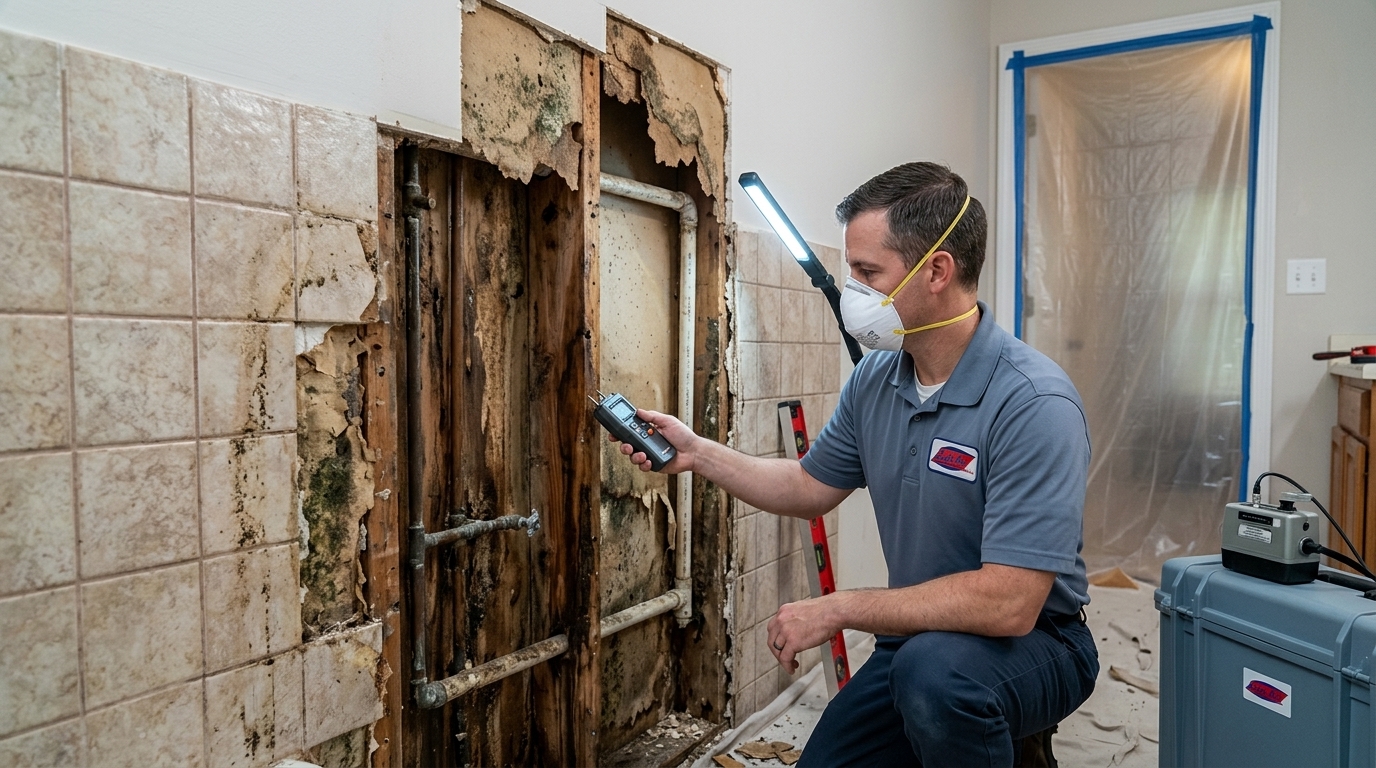
This is where a cosmetic problem becomes a structural one. Cracked grout, missing caulk at the tub-to-wall joint, or a failed shower pan liner can allow water to reach the wall cavity behind the tile. Once moisture hits drywall or wood framing, the conditions shift from surface mold on tile to potential Stachybotrys or Chaetomium growth on cellulose materials.
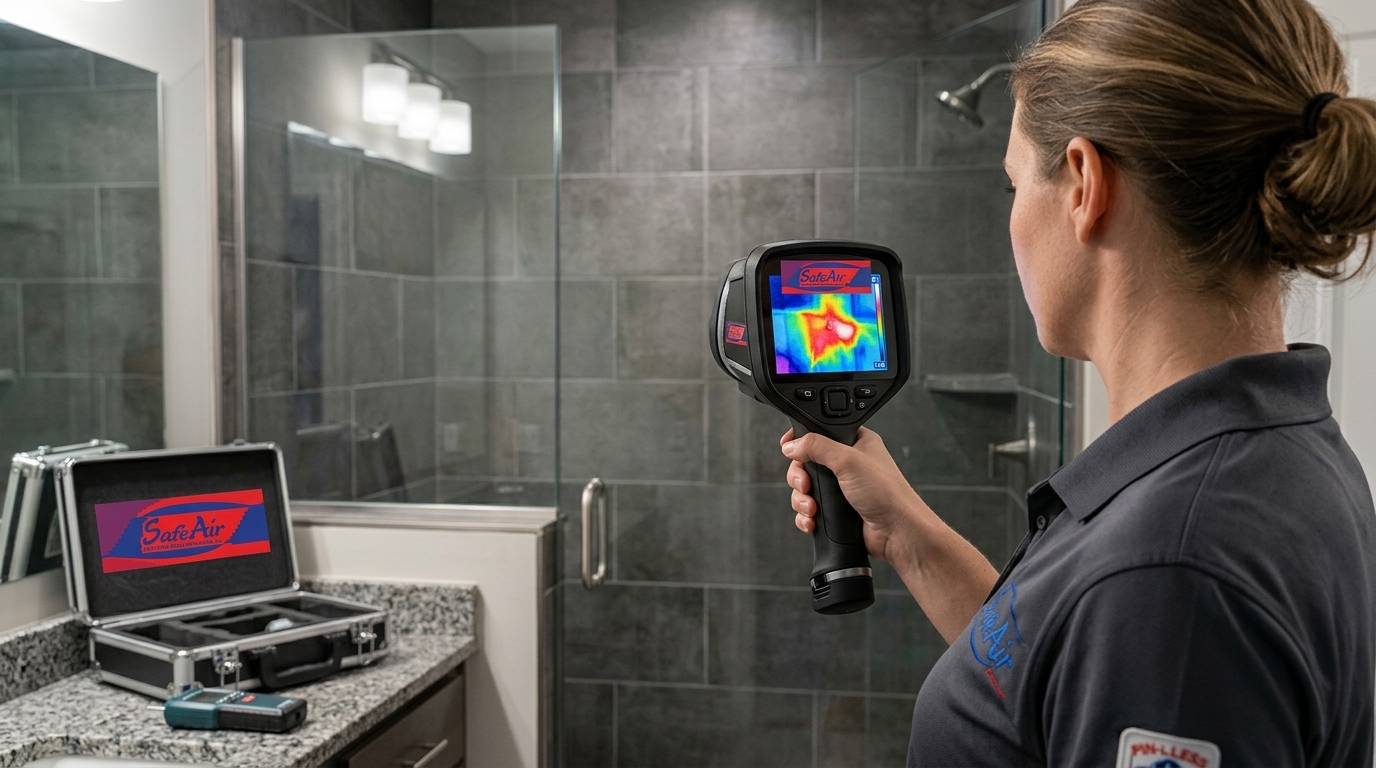
An Atlanta Bathroom Inspection: Surface Mold That Told a Bigger Story
Last spring, we inspected a 1980s ranch-style home in the Brookhaven area. The homeowner called about recurring black mold on the shower grout in the master bath. She had scrubbed the grout clean three times in two months, and the mold returned every time within a week or two.
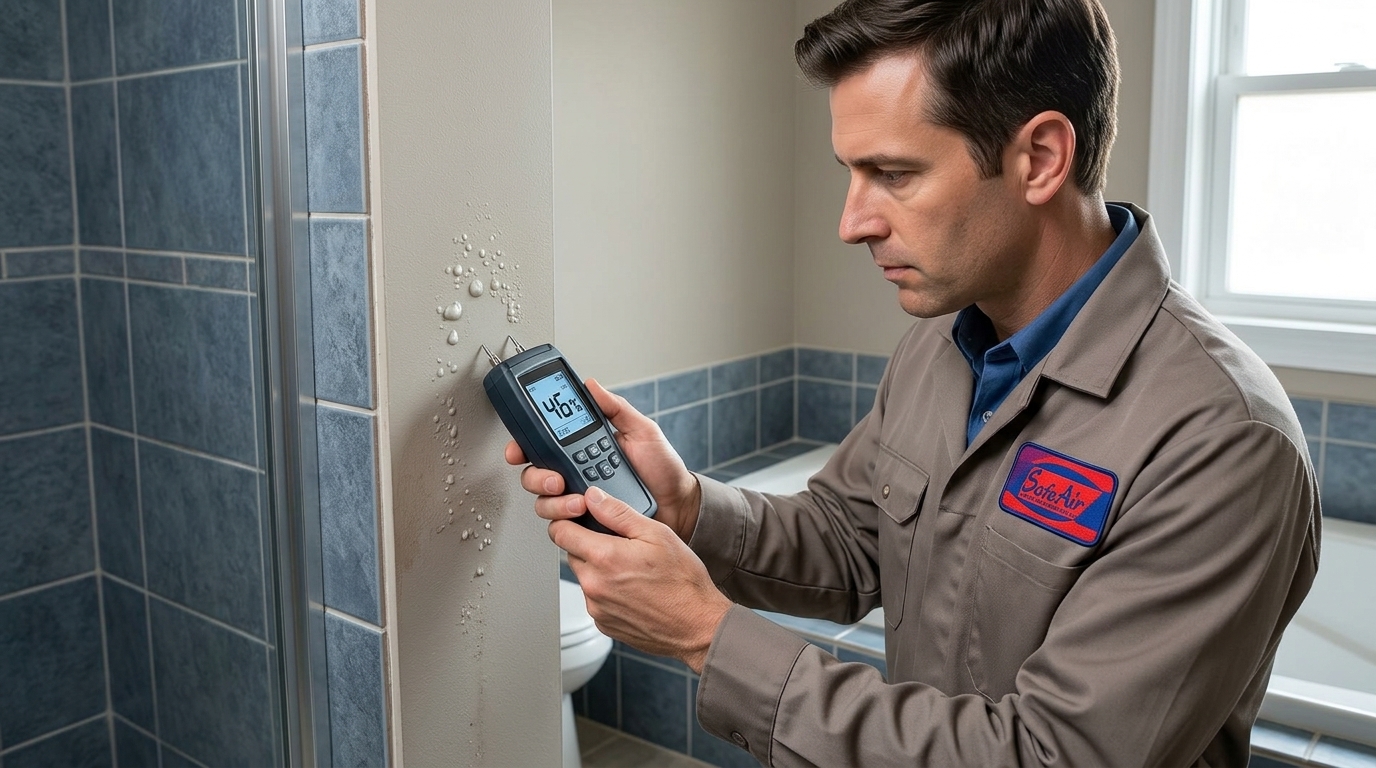
Our inspector started with a moisture reading on the tile wall. The tile itself was dry on the surface. But the moisture meter showed elevated readings — above 30% — on the drywall adjacent to the shower, just outside the tile line. That reading should have been below 15%.
We pulled a surface sample from the visible grout mold: Cladosporium, as expected. But the moisture pattern pointed to water migrating behind the tile. The homeowner authorized us to collect an air sample from the bathroom and a comparison sample from the living room. The bathroom air sample showed Aspergillus/Penicillium at 3,800 spores per cubic meter — roughly six times the outdoor baseline that day.
The source turned out to be a slow leak at the shower mixing valve. Water had been seeping into the wall cavity for months, soaking the paper-faced drywall behind the tile. The visible grout mold was cosmetic. The real problem was growing silently inside the wall.
That distinction — surface mold on tile versus mold colonizing the wall cavity behind it — is the core question every homeowner with black mold in the shower needs to answer.
When Shower Mold Is Cosmetic vs. When It Is Serious
Not all shower mold requires professional testing. A thin film of dark mold on grout lines in an otherwise dry, well-ventilated bathroom is a cleaning issue. But certain signs indicate something beyond a surface problem.
Likely Cosmetic (DIY Is Appropriate)
- Mold is on the surface of grout or caulk only
- The area is smaller than 10 square feet
- Mold stays away after cleaning and improved ventilation
- No musty smell when the shower is dry
- No moisture readings above normal on surrounding walls
- No one in the household has unexplained respiratory symptoms
Potentially Serious (Professional Assessment Recommended)
- Mold returns within days of cleaning, repeatedly
- Musty odor persists even when the bathroom is dry and ventilated
- Discoloration or staining on the wall or ceiling outside the shower area
- Soft spots, bubbling paint, or warped baseboards near the shower
- Moisture meter readings above 20% on walls adjacent to the shower
- Household members experiencing headaches, congestion, or respiratory irritation that improves when away from the home
- Visible mold on drywall, wood trim, or ceiling — not just on tile
The EPA’s general guideline is that homeowners can handle mold on non-porous surfaces covering less than 10 square feet. Shower tile qualifies as non-porous. But that guideline assumes the mold is only on the surface and there is no hidden moisture source feeding growth behind the wall.
How SafeAir Tests Black Mold in Shower Areas
When a homeowner calls about shower mold and the situation suggests more than a surface issue, our inspection follows a specific process.
We start with a visual assessment of the entire bathroom — not just the shower. We check for discoloration on ceilings, walls, and the floor around the base of the shower or tub. We look at the condition of the grout, caulk, and tile.
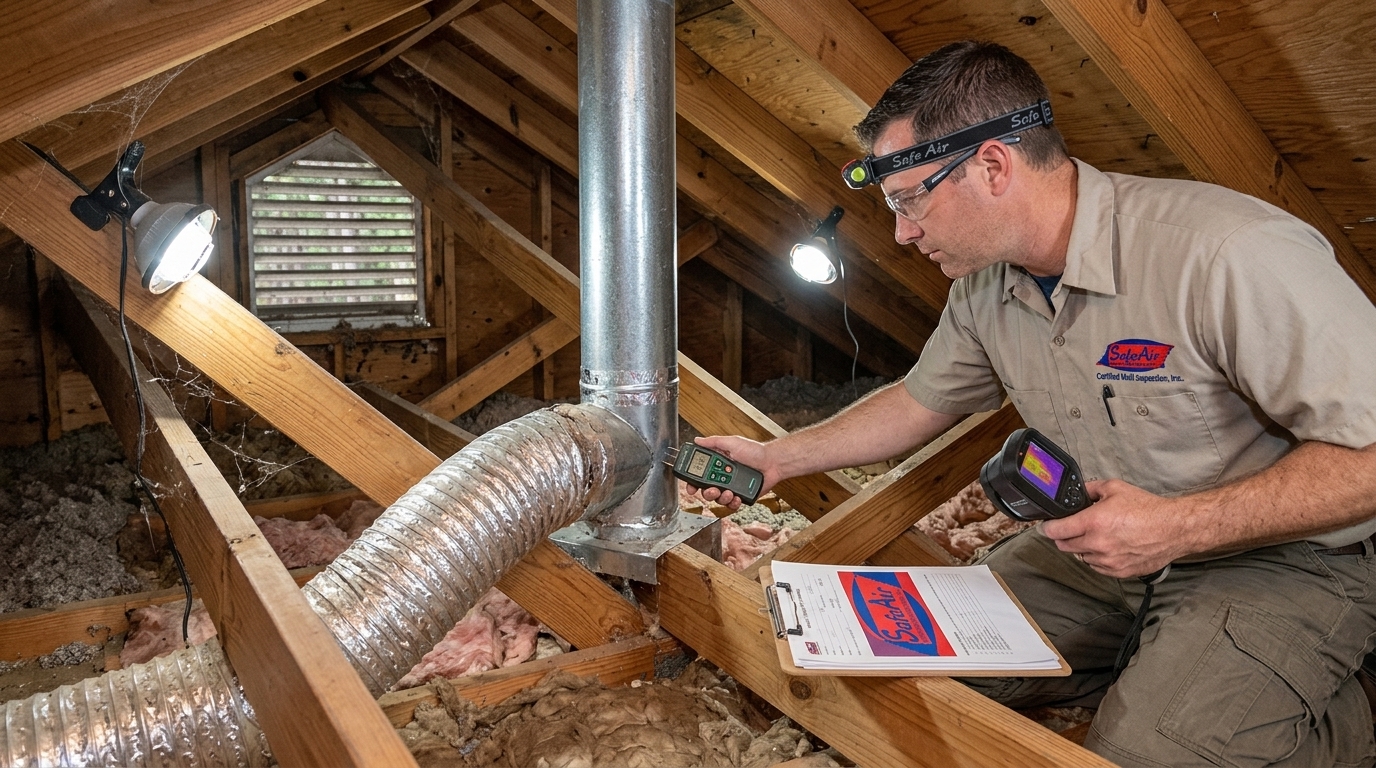
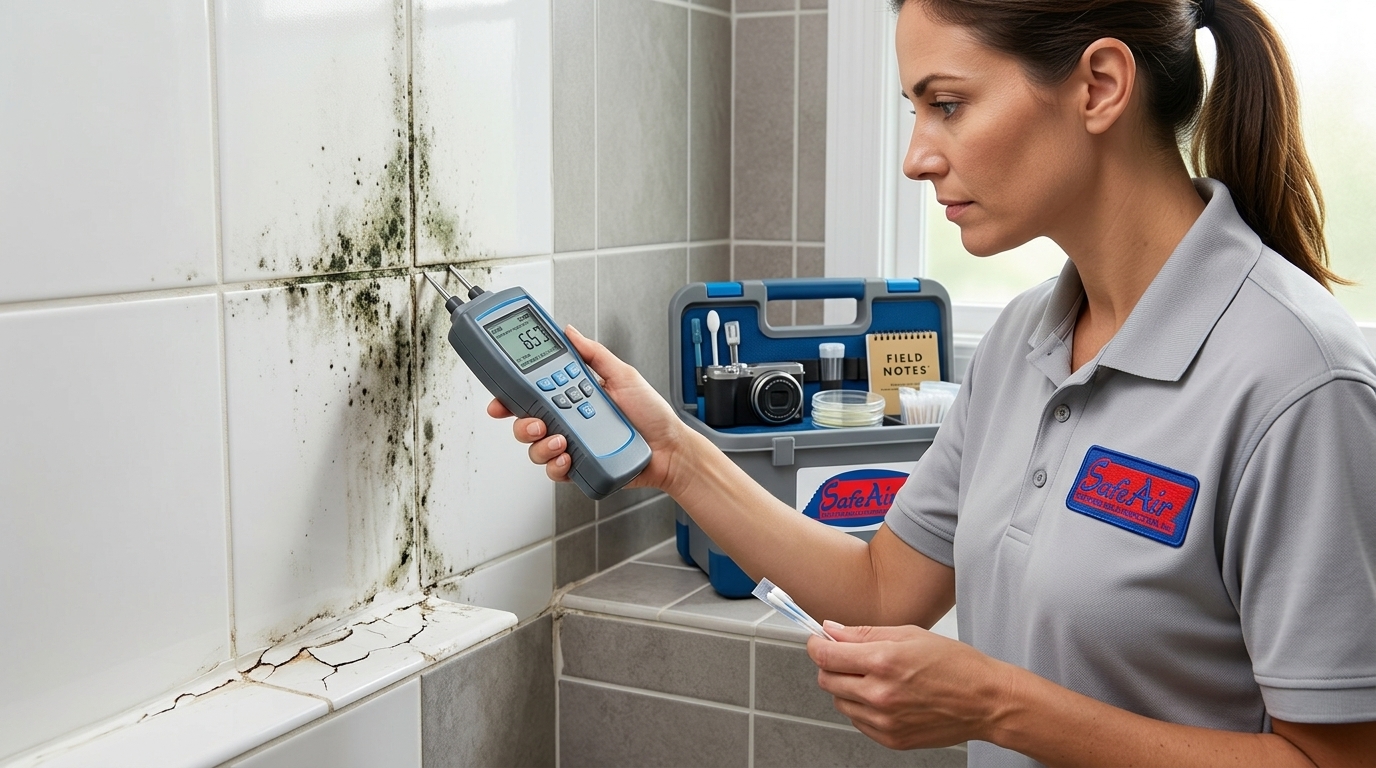
Next, our inspector uses a moisture meter to map moisture levels on every wall surface adjacent to the shower. We check above, beside, and below the shower line. Moisture that has migrated into the wall cavity shows up clearly on these readings, even when the visible surface looks fine.
If moisture readings are elevated or the visual assessment raises concerns, we collect samples. A surface sample from the visible mold identifies the species. An air quality test measures the spore concentration in the bathroom compared to a baseline sample from another room or the outdoors. The lab processes these samples and returns results within 3 to 5 business days.
Our report tells you exactly which species are present, at what concentration, and whether the levels indicate a problem beyond what you can see. Because SafeAir does not perform remediation, our findings carry no conflict of interest — we have no reason to inflate or minimize what we find.
The Atlanta Humidity Factor and Black Mold in Showers
Georgia’s climate makes bathroom mold management harder than in drier regions. Atlanta averages relative humidity above 70% for much of the year, with summer months regularly exceeding 80%. That outdoor moisture directly affects how quickly your bathroom dries after a shower.
In Phoenix or Denver, a bathroom with no exhaust fan might dry out within an hour after a shower. In Atlanta, that same bathroom might hold elevated humidity for three to four hours. Mold needs consistent moisture above 60% relative humidity to grow, and Atlanta’s baseline is already near or above that threshold from April through October.
Three things help counteract this:
- Run the exhaust fan for 30 minutes after every shower — not 10, not 15. In Metro Atlanta’s humidity, 20 minutes is a minimum, and 30 is better.
- Keep the bathroom door open after showering to allow moisture to disperse into a larger air volume.
- Use a squeegee on tile walls and the shower door after each use. This removes the standing water film that mold feeds on. It takes 30 seconds and dramatically reduces surface mold growth.
A dehumidifier in the bathroom is usually unnecessary if the exhaust fan is properly sized and vented. But if your bathroom lacks any exhaust ventilation — which we see regularly in older intown Atlanta homes, especially in Grant Park, Kirkwood, and Virginia-Highland — a small portable dehumidifier can fill the gap until a fan is installed.

Mold Under Caulk vs. Mold on Caulk
This distinction trips up a lot of homeowners. Mold growing on the surface of caulk is different from mold growing between the caulk and the tile or tub.
Mold on caulk: The dark discoloration sits on the exposed surface. You can scrub it off, and the caulk underneath is still white or clear. This is surface growth feeding on soap scum and moisture. It cleans up easily and stays away with better ventilation.
Mold under caulk: The discoloration is behind the caulk — visible through translucent silicone or showing along the edges where the caulk has pulled away. Scrubbing the surface does nothing because the mold colony is sandwiched between the caulk and the substrate. The only fix is to remove the old caulk entirely, clean and dry the surface underneath, treat it with an antimicrobial, and apply new caulk.
When we inspect bathroom mold, we always check the caulk lines at the tub-to-wall junction and the shower floor-to-wall junction. These are the two most common points of water intrusion. A bead of caulk that looks intact from a distance can have microscopic gaps that allow water to wick behind it for months.
If your caulk is older than five years and you are seeing recurring mold in the same spots, replacing it is almost always a better investment than repeated cleaning. A tube of quality silicone caulk costs under $10. The mold inspection that follows a failed caulk line costs significantly more.
How to Prevent Black Mold in Your Shower
Prevention works better than repeated cleaning. These steps address the three root causes — moisture, ventilation, and surface integrity — that drive shower mold growth.
- Fix the ventilation first. Make sure your bathroom exhaust fan is rated for the room size (1 CFM per square foot minimum), vents to the exterior, and runs for at least 20 to 30 minutes after every shower.
- Inspect grout and caulk annually. Look for cracks, gaps, discoloration, or areas where caulk has separated from the surface. Regrout or recaulk before water finds its way behind the tile.
- Squeegee after every shower. Removing standing water from tile and glass surfaces cuts surface mold growth dramatically.
- Keep the shower door or curtain open after use to allow air circulation inside the shower stall.
- Address slow drains promptly. Standing water in the shower pan creates prolonged moisture contact with grout and caulk at the floor line.
- Check for areas prone to mold beyond the shower — under the vanity, around the toilet base, and behind the bathroom wall where pipes run.
For cleaning methods and product recommendations, our guide on whether bleach kills mold covers the science behind different cleaning agents. The short version: bleach works on non-porous surfaces like tile but does not penetrate grout or caulk effectively.
When to Call a Professional About Shower Mold
Most shower mold does not need professional testing. But there are specific situations where calling SafeAir Certified Mold Inspection is the right move:
- Mold keeps returning despite thorough cleaning and improved ventilation
- You detect a musty odor in the bathroom that persists when everything is dry
- Moisture meter readings (even from an inexpensive pin-type meter) show elevated moisture in walls near the shower
- You or family members are experiencing health symptoms associated with mold exposure — persistent congestion, headaches, or respiratory irritation — that improve when away from home
- You see mold or discoloration on surfaces outside the immediate shower area: the bathroom ceiling, the wall behind the toilet, or the floor around the tub base
- You suspect water damage behind the tile from a leak or health effects from prolonged exposure
- You are buying or selling a home and need independent documentation of bathroom mold conditions