Why Georgia Crawl Spaces Grow Mold
Three factors converge in Georgia to make crawl spaces a persistent mold problem: the soil, the climate, and the way homes were built.
Red Clay Soil and Vapor Pressure
Georgia’s red clay soil holds moisture far longer than sandy or loamy soils. After a rainstorm, red clay can retain saturation for days or weeks. That moisture does not stay in the ground. It migrates upward through the soil surface as water vapor — a process called vapor diffusion.
In an unencapsulated crawl space with exposed dirt, this vapor enters the crawl space continuously. On a warm Georgia day, a 1,000-square-foot crawl space with a bare dirt floor can release 10 to 15 gallons of moisture into the air per day. That volume of water has to go somewhere, and it condenses on the coolest surfaces: floor joists, subflooring, metal ductwork, and pipes.
Sustained High Humidity
Atlanta’s average relative humidity exceeds 70% for roughly seven months of the year (April through October). Mold needs a surface relative humidity above 60% to germinate and grow. In much of the country, crawl space humidity climbs seasonally and drops in winter. In Georgia, the baseline stays elevated for a longer period, giving mold more growing time per year than in northern states.
A crawl space with open foundation vents — which many Georgia homes still have — actually makes the humidity problem worse during summer. Conventional wisdom said venting crawl spaces would keep them dry. The reality in a humid subtropical climate is the opposite: warm, humid outside air enters the crawl space, meets cooler surfaces, and condenses. The vents that were supposed to dry the space are flooding it with moisture.
Pier-and-Beam Construction
Older neighborhoods inside the Atlanta perimeter — Grant Park, Kirkwood, Inman Park, East Atlanta Village, Candler Park — have a high concentration of pier-and-beam homes built between the 1920s and 1960s. These homes sit on brick or block piers with dirt-floor crawl spaces, minimal or no vapor barriers, and original foundation vents.
The construction style creates a large, open air space directly beneath the living area with maximum soil exposure and minimal moisture control. Many of these crawl spaces have never been encapsulated. Some have a thin 6-mil poly sheet that was laid down decades ago and has since torn, shifted, or degraded.
Newer homes in suburban areas like Cumming, Canton, and Buford sometimes have crawl space issues too — typically from builders who installed a vapor barrier but skipped proper sealing at the seams and piers, or who vented the crawl space per older building code requirements that have since been revised.
The Stack Effect: How Crawl Space Mold Affects Your Whole Home
Your crawl space is not separate from your living space. Research on building science estimates that 40% to 60% of the air on your first floor originates from the crawl space — a principle known as the stack effect.
Warm air rises. As heated air exits through the upper levels of your home (through the attic, ceiling fixtures, and upper-floor windows), it creates negative pressure on the lower levels. That negative pressure pulls air upward from the lowest point — the crawl space — through gaps in the subfloor, around plumbing penetrations, through HVAC duct connections, and along electrical chases.
If your crawl space has active mold growth, the spores and MVOCs (microbial volatile organic compounds — the musty smell) that mold produces travel directly into your living space through this air pathway. This is why some homeowners experience persistent mold-related health symptoms — congestion, headaches, fatigue, respiratory irritation — without ever seeing visible mold inside their home. The source is below them, in a space they rarely enter.
We have tested homes where the first-floor air sample showed Aspergillus/Penicillium at 4,000+ spores per cubic meter while the second floor read at 800. The crawl space sample came back at over 12,000. That gradient tells the story: the crawl space is producing spores, and the stack effect is pulling them up into the living area.
HVAC Ducts in Unconditioned Crawl Spaces
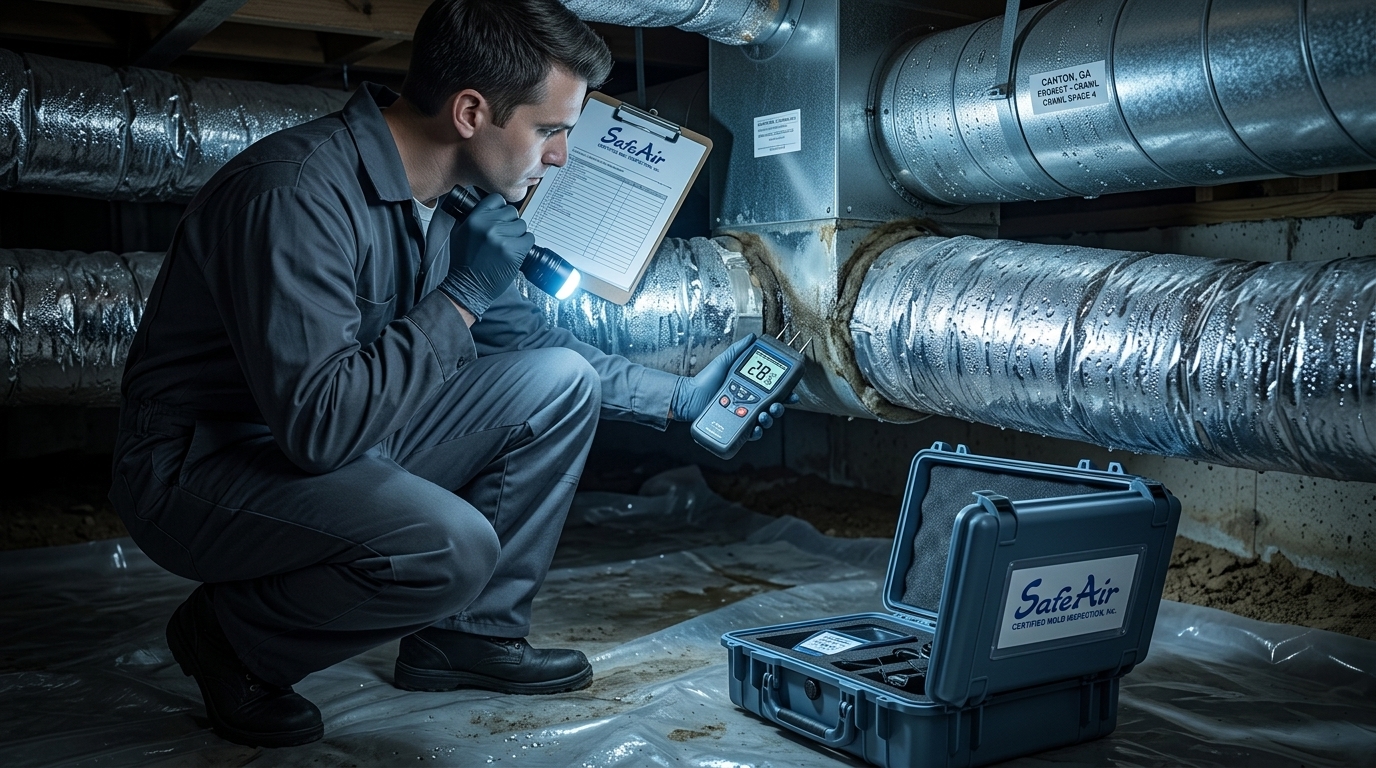
This is one of the most significant — and most overlooked — mold risk factors in Georgia homes. Many homes built before 2000 have HVAC supply and return ducts running through the crawl space. During summer, those ducts carry cold air (55 to 60 degrees) through a crawl space that might be 80 to 90 degrees with 80%+ relative humidity.
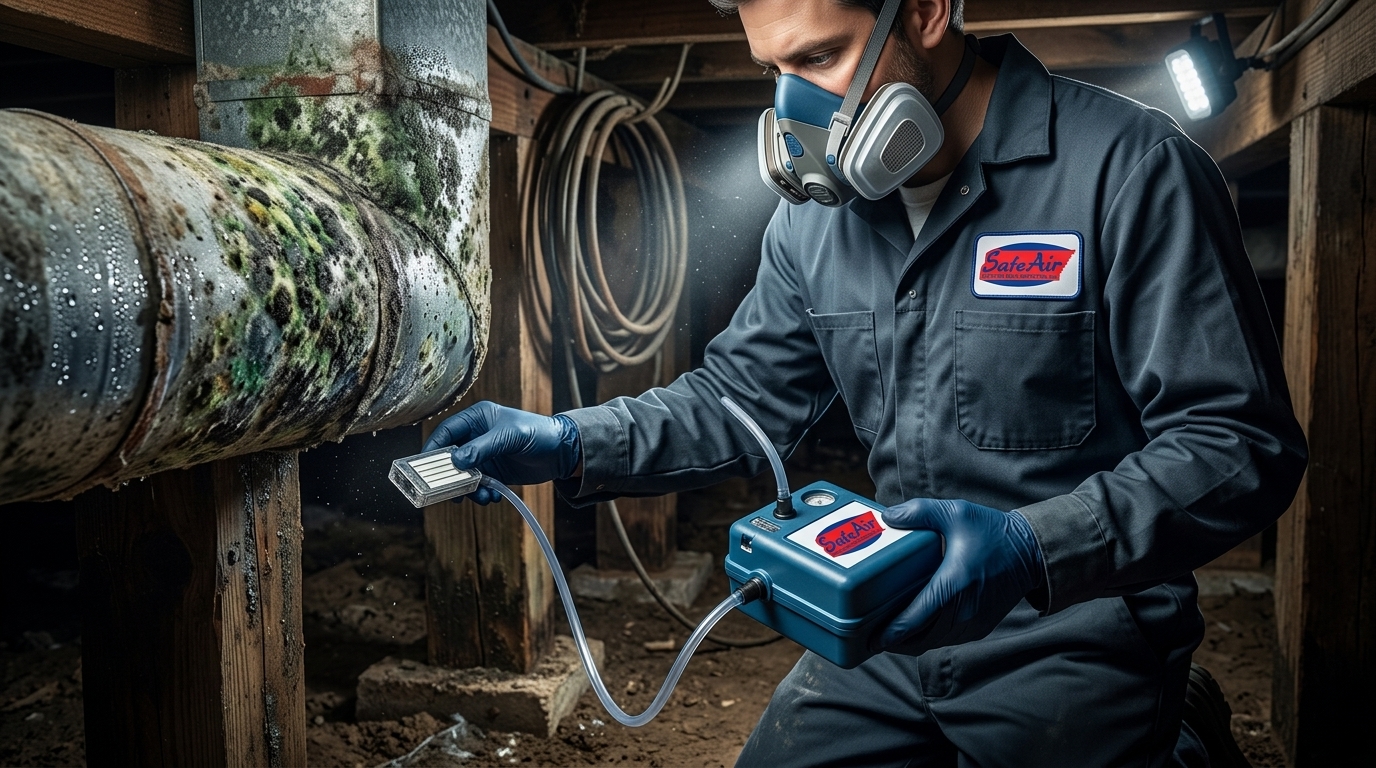
The temperature difference causes condensation on the exterior surface of the ductwork. It is the same principle as a cold glass sweating on a humid day. That condensation drips onto insulation, floor joists, and the vapor barrier below — creating wet conditions that support mold growth even in a crawl space that would otherwise stay relatively dry.
Flex duct is especially vulnerable. The outer jacket of flex duct can trap moisture between the insulation layer and the inner liner. We have pulled sections of flex duct in Atlanta crawl spaces that were visibly dry on the outside but soaked through on the inner insulation — with Aspergillus and Chaetomium growing inside the duct wall itself.
Duct condensation is also a major driver of poor indoor air quality because the HVAC system is actively blowing air through compromised ductwork and distributing it to every room in the house.
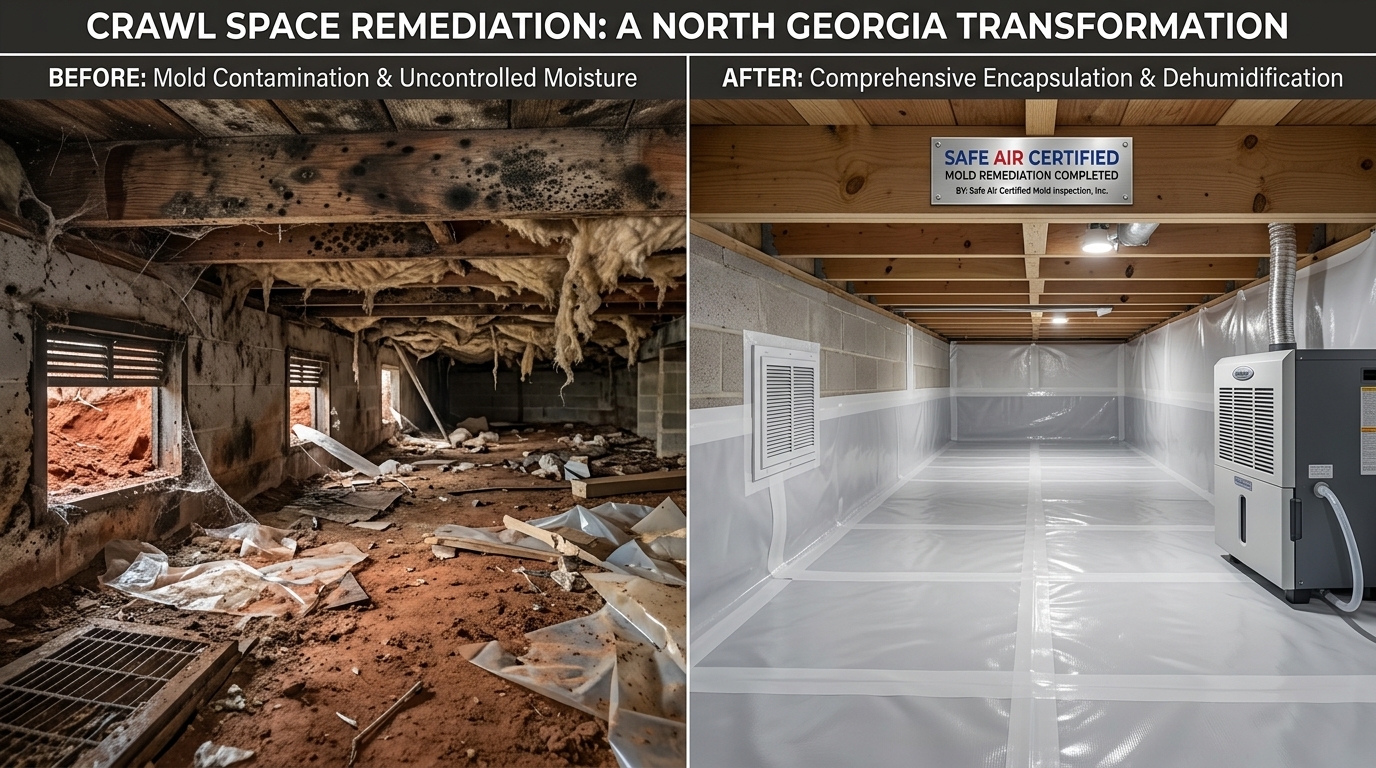
What Mold Species Grow in Georgia Crawl Spaces
Crawl space mold in Georgia is not a single species. Our lab results consistently identify several species growing simultaneously, each with different characteristics and health implications.
Species | How It Looks in a Crawl Space | What It Tells Us | Health Concern |
|---|---|---|---|
Aspergillus | White, green, or yellow patches on floor joists and subflooring | Active moisture problem; very common in Georgia crawl spaces | Moderate to high — some species produce mycotoxins; can cause respiratory infection in immunocompromised individuals |
Penicillium | Blue-green fuzzy growth, often on damp insulation or paper-faced materials | Water damage indicator; frequently found with Aspergillus | Moderate — respiratory irritation, allergic reactions |
Chaetomium | Gray to olive-brown, cotton-like texture | Chronic water damage — indicates the material has been wet for an extended period | Moderate — produces mycotoxins; strong indicator of structural moisture problems |
Cladosporium | Dark green to black spots on wood surfaces | Common outdoor species colonizing damp crawl space surfaces | Low to moderate — allergenic but not typically toxigenic |
Stachybotrys chartarum | Greenish-black, wet and slimy | Sustained saturation on cellulose material — serious water intrusion | High — toxigenic, produces satratoxins and other mycotoxins |
In our experience, the most frequent combination in Atlanta crawl spaces is Aspergillus and Penicillium growing together on floor joists and the underside of subflooring. Finding Chaetomium alongside them is a red flag — it means the moisture problem is chronic, not recent.
Stachybotrys in a crawl space is less common than many homeowners fear, but we find it in situations where a plumbing leak, groundwater intrusion, or failed drainage has kept wood and insulation continuously wet for weeks or months.
Signs You Have Crawl Space Mold
Most homeowners never enter their crawl space. The first signs of a problem usually appear upstairs, not below.
Inside your home:
- Musty or earthy odor on the first floor, especially in rooms above the crawl space
- Allergic symptoms — sneezing, congestion, itchy eyes, headaches — that worsen at home and improve when you leave
- Increased humidity on the first floor despite running the AC
- Condensation on first-floor windows in cooler weather
- Warped or buckled hardwood flooring
At the crawl space access point:
- A strong musty smell when you open the crawl space access door or hatch
- Visible mold on the exposed edges of floor joists near the access opening
- Standing water or damp soil visible from the access point
- Sagging or wet insulation hanging from the subfloor
On the exterior:
- Foundation vents that are open and unscreened
- Gutter downspouts discharging water directly at the foundation
- Grading that slopes toward the house instead of away from it
- Cracks in the foundation wall
If you notice a musty smell on your first floor and cannot find a visible source, the crawl space should be the first place you (or your inspector) checks.
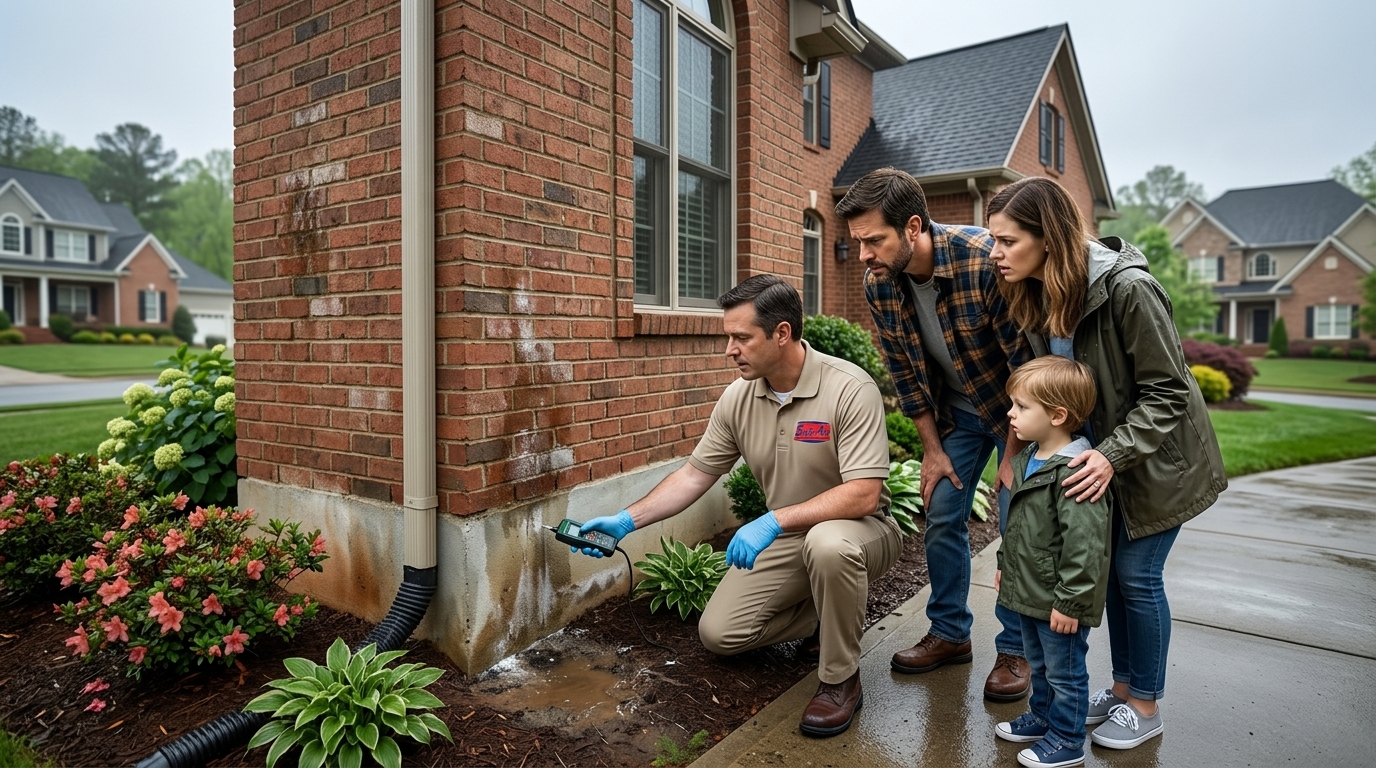
How SafeAir Inspects a Crawl Space for Mold
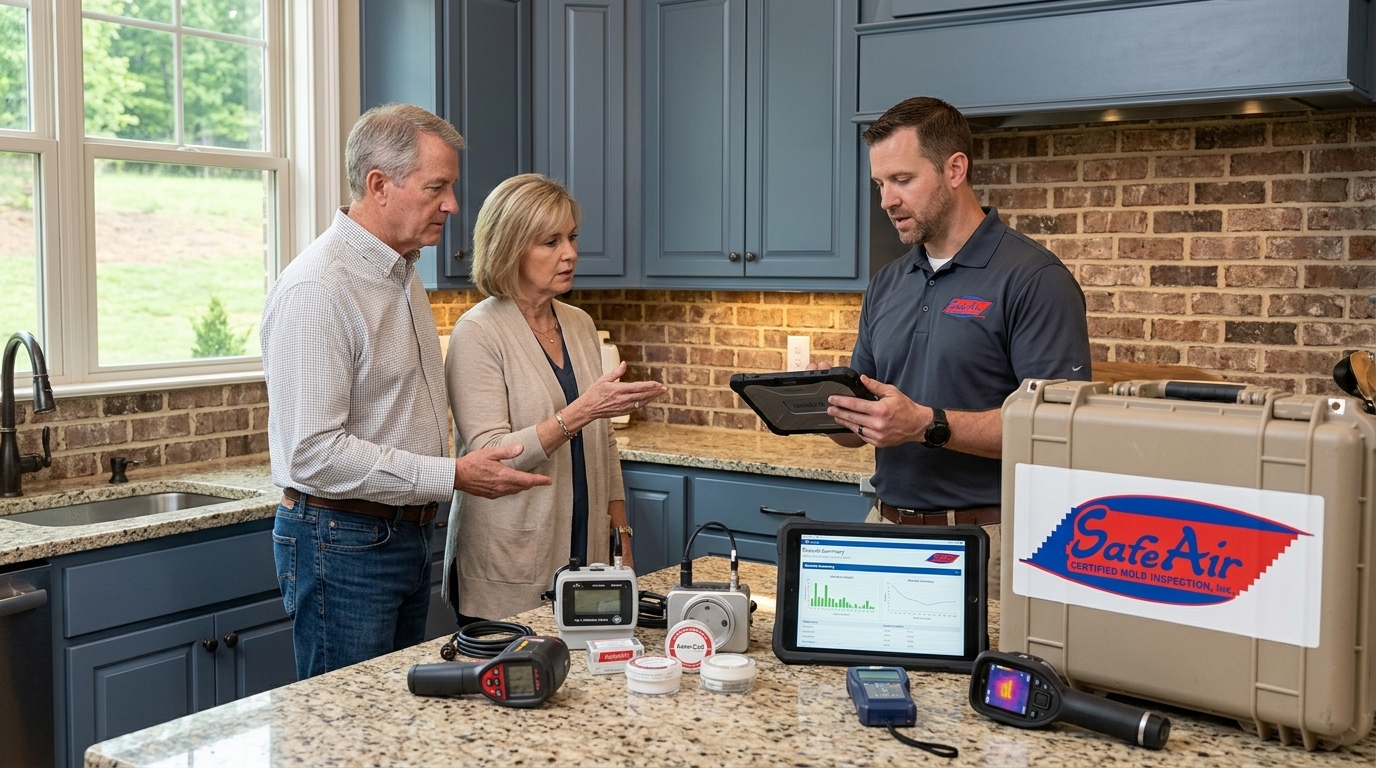
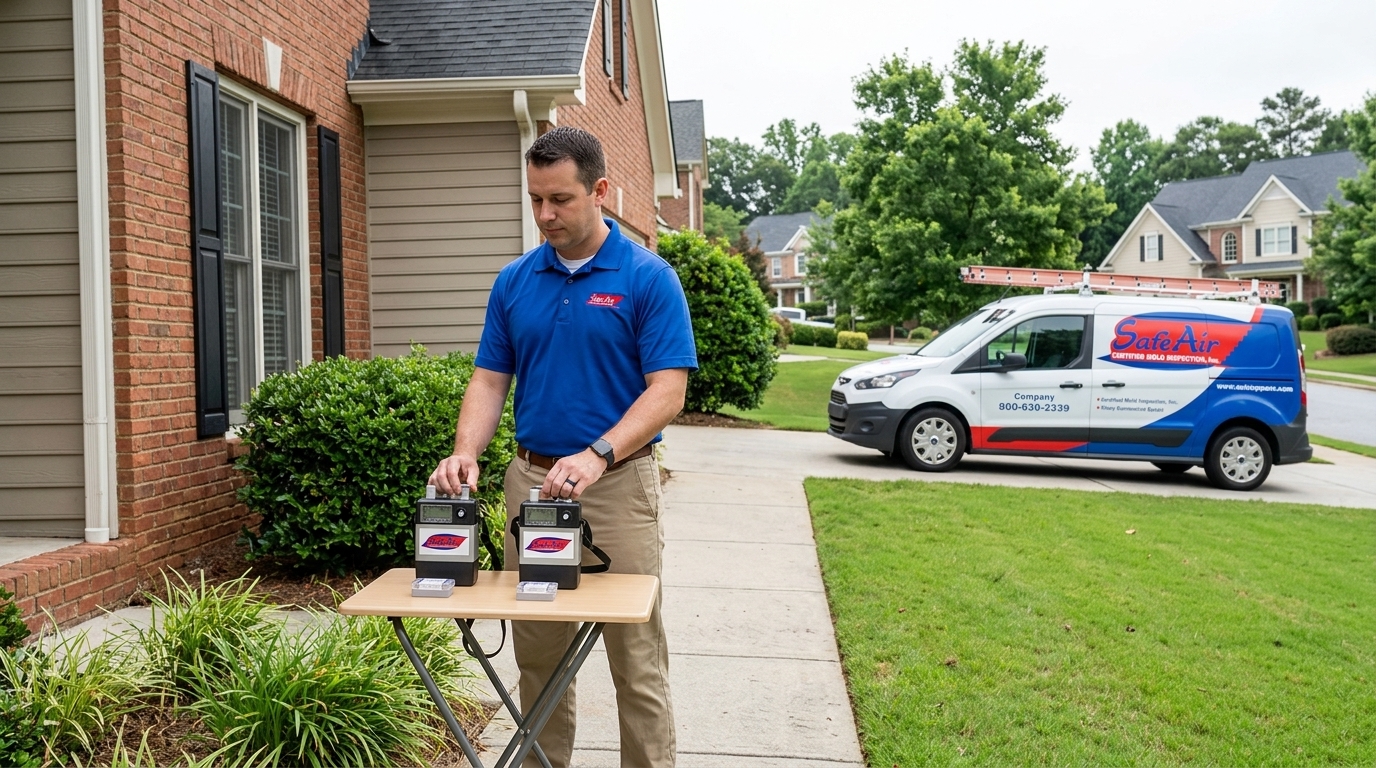
A crawl space mold inspection is not a quick peek through the access hatch. Our inspectors enter the crawl space (when safely accessible) and conduct a full assessment.
We start outside. We check the grading, gutter drainage, and foundation vent configuration. Poor exterior drainage is the number one cause of crawl space moisture problems, and fixing it sometimes solves the mold issue entirely.
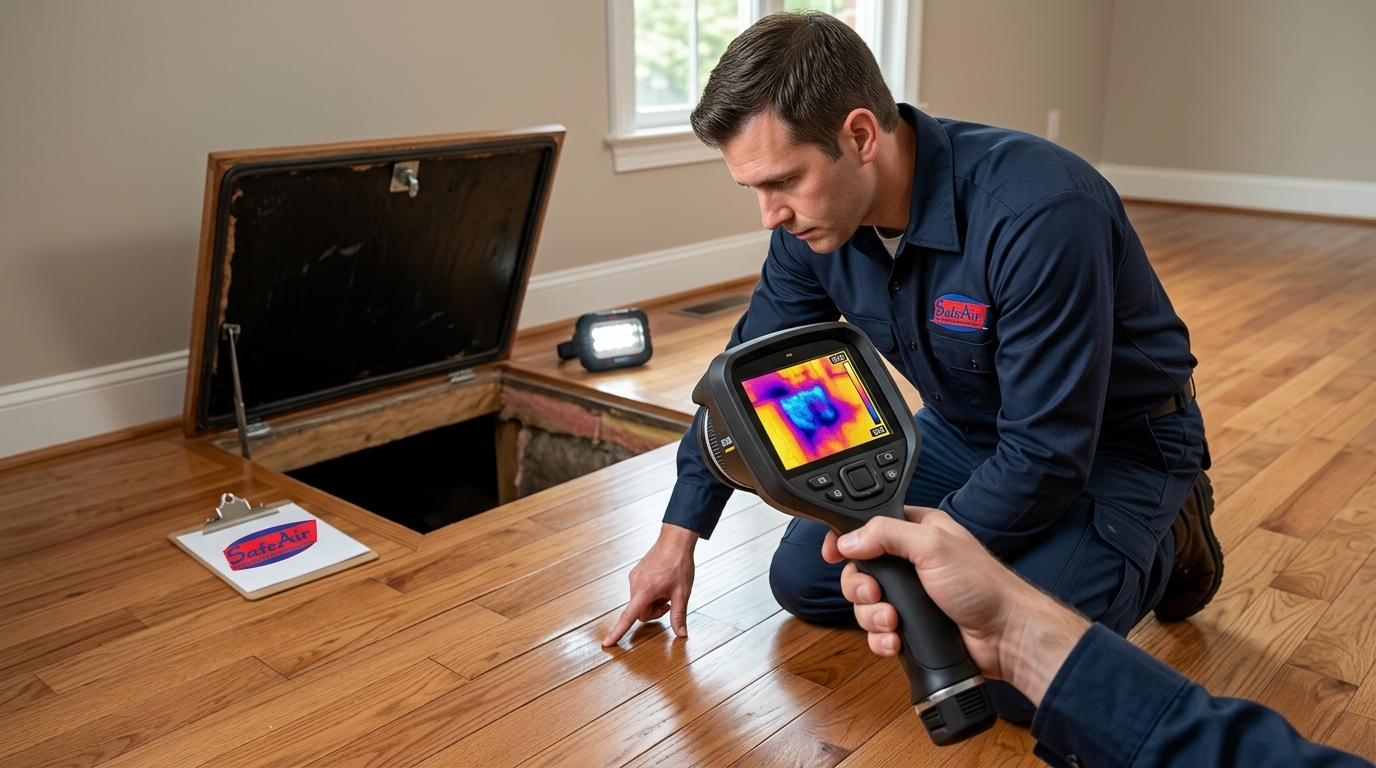
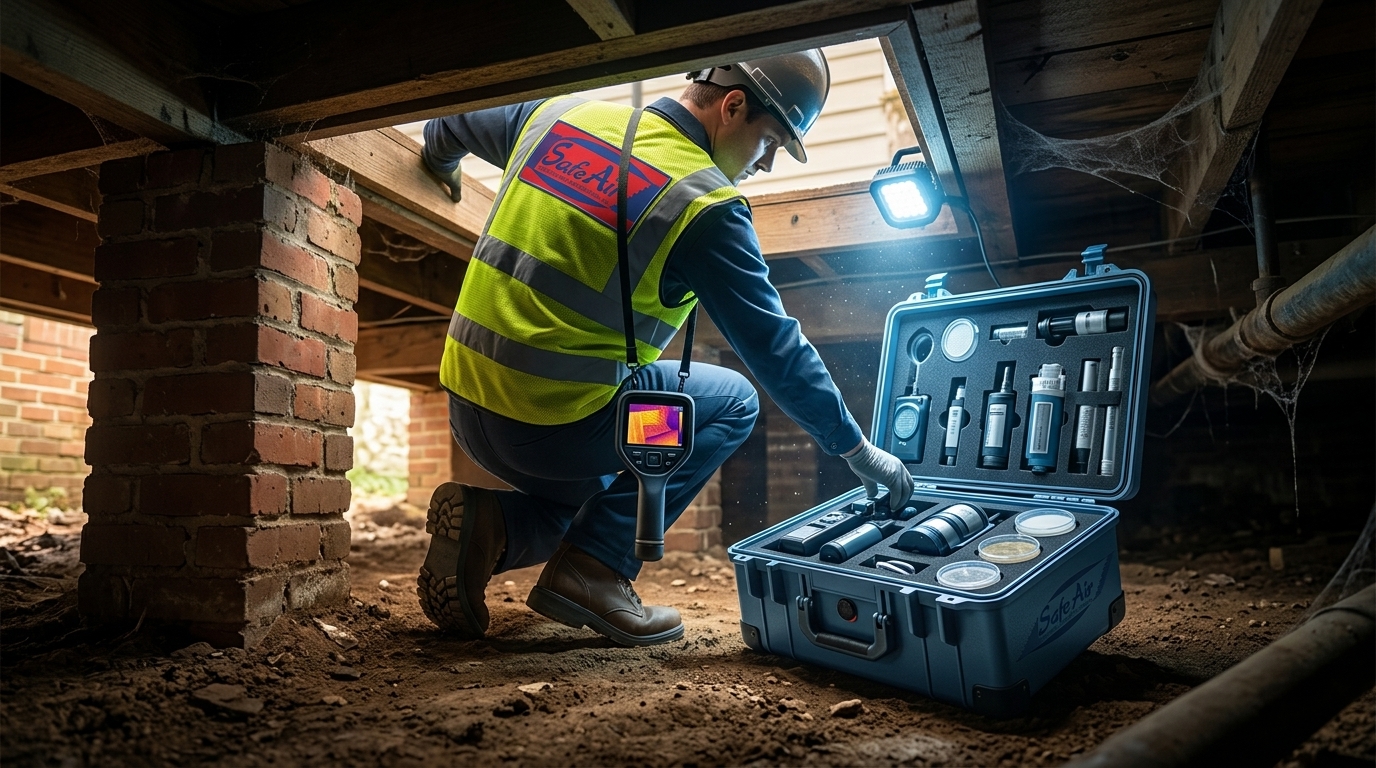
Inside the crawl space, our inspector examines every accessible surface: floor joists, sill plates, subflooring, support piers, the vapor barrier (if present), HVAC ductwork, plumbing lines, and insulation. We photograph all visible growth and damage.
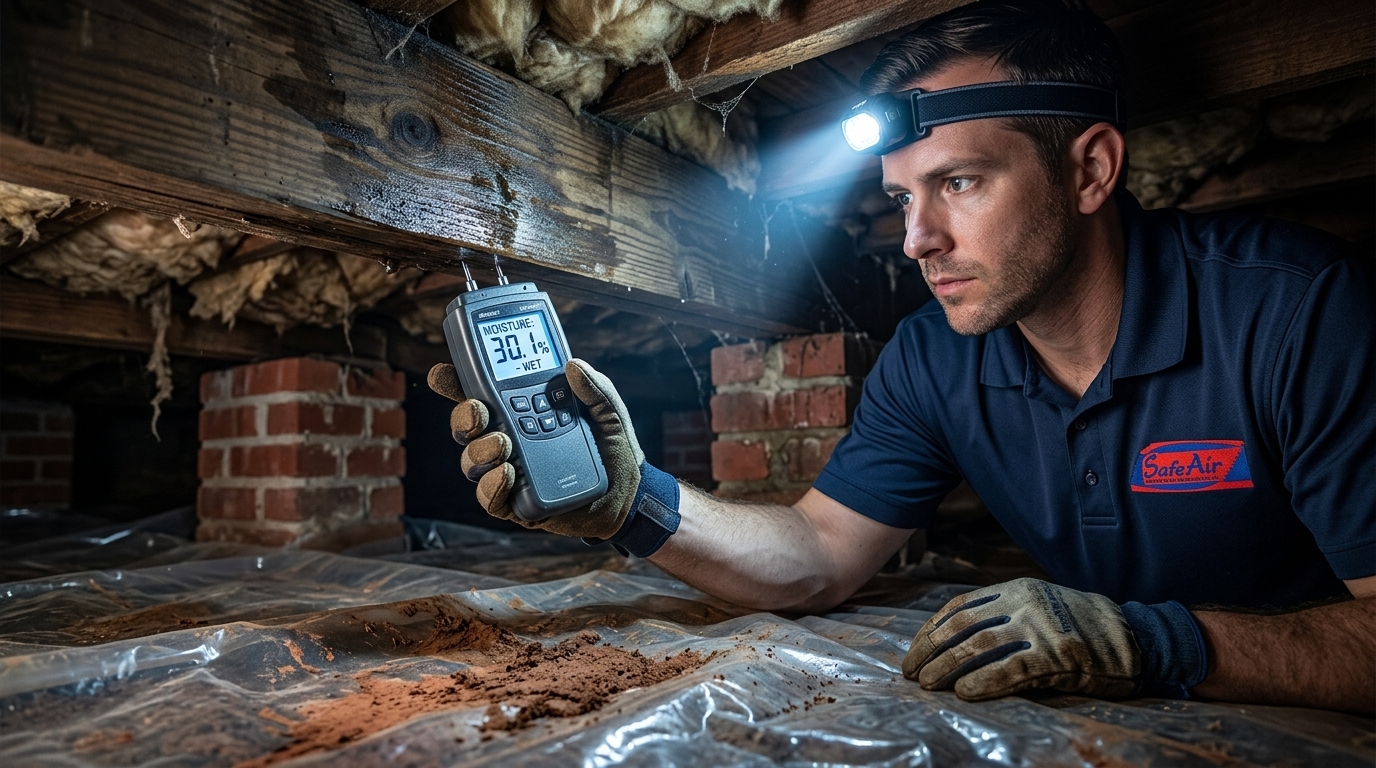
Moisture mapping is critical. We take moisture readings on wood framing at multiple locations to determine whether the moisture problem is localized (a plumbing leak, for example) or pervasive (general humidity and vapor from the soil). Moisture content above 20% on wood indicates conditions favorable for mold growth. Above 28%, the wood is wet enough to support active colonization.
For lab analysis, we typically collect:
- Air samples from inside the crawl space and from the first-floor living area for comparison
- Surface samples from any visible growth on floor joists or subflooring
- An outdoor baseline air sample
The lab identifies species and spore concentrations. This data tells us what is growing, how much of it there is, and whether crawl space spores are reaching the living area through the stack effect. Results come back in 3 to 5 business days with a detailed written report.
Jeremy’s Story: A Founder’s Experience with Crawl Space Mold
SafeAir’s founder, Jeremy Shelton, did not start this company from a business plan. He started it from personal experience. In the mid-2000s, Jeremy was living in a home in the Atlanta area with persistent health problems — fatigue, headaches, respiratory issues that his doctors could not explain. The symptoms improved when he traveled and returned when he came home.
Eventually, a building professional suggested checking the crawl space. What Jeremy found was extensive mold growth on the floor joists and subflooring — fed by Georgia’s red clay moisture, a deteriorated vapor barrier, and an unconditioned crawl space with open foundation vents. Lab testing confirmed elevated levels of Aspergillus and Penicillium in both the crawl space and the living area above.
That experience — watching his own unexplained symptoms trace back to a crawl space he had never thought to check — is why SafeAir exists. And it is why crawl space inspections are the most thorough part of what we do. We have seen the same pattern play out in hundreds of Atlanta-area homes since 2009.
Vapor Barriers, Encapsulation, and Moisture Control
Fixing crawl space mold starts with controlling moisture. The mold is a symptom. The moisture source is the cause.
Vapor Barriers
A basic vapor barrier is a polyethylene sheet (typically 6-mil to 20-mil thickness) laid over the exposed dirt floor of the crawl space. The barrier reduces vapor diffusion from the soil into the crawl space air. A 6-mil barrier is the minimum standard, but many crawl space professionals now recommend 12-mil or 20-mil barriers for durability. Thin barriers tear, shift, and degrade over the years — which is exactly what we find in many older Atlanta homes.
A vapor barrier alone, without addressing drainage and ventilation, provides only partial protection.
Full Encapsulation
Crawl space encapsulation goes beyond a ground cover. A full encapsulation system includes:
- A heavy-gauge vapor barrier (12-mil to 20-mil) covering the entire floor and running up the foundation walls
- Sealed seams where barrier sheets overlap (taped or welded)
- Barrier attached and sealed to foundation walls, piers, and penetrations
- Foundation vents sealed or closed
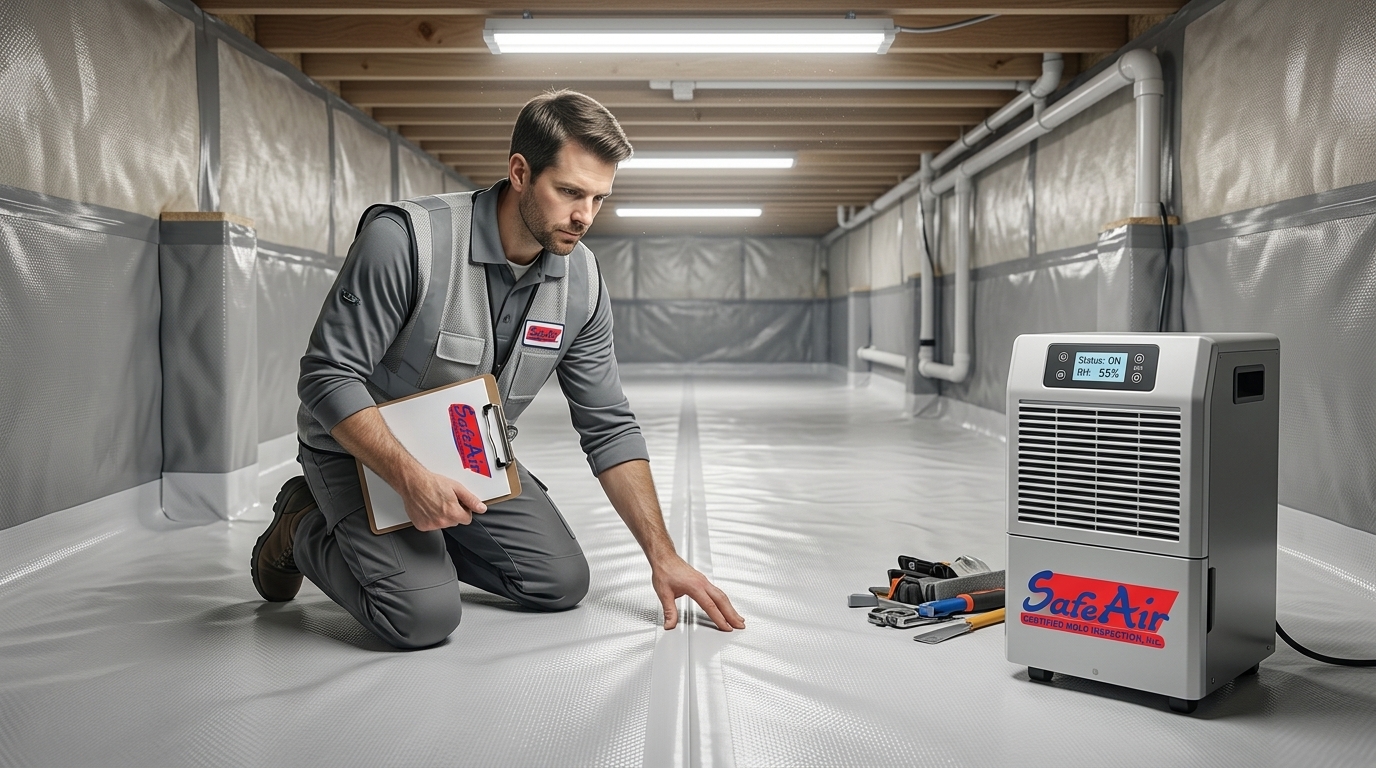
- A dehumidifier or conditioned air supply to maintain relative humidity below 55%
- Interior drainage and a sump pump if groundwater is a factor
Encapsulation converts the crawl space from an uncontrolled outdoor-air environment into a conditioned, moisture-managed space. In our experience, a properly encapsulated crawl space in the Atlanta area typically maintains relative humidity between 45% and 55% year-round — well below the 60% threshold for mold growth.
What Encapsulation Does Not Do
Encapsulation does not remove existing mold. If mold is already growing on floor joists and subflooring, remediation must happen before encapsulation. Sealing mold inside an encapsulated space does not kill it — it just makes it harder to find later. This is a mistake we see with some encapsulation contractors who skip the remediation step or tell the homeowner the mold will “die off” once the humidity drops. Some species become dormant at low humidity but do not die. They reactivate when conditions change.
Crawl Space Mold Cost Considerations
Costs vary significantly depending on the extent of the mold, the size of the crawl space, and what repairs are needed. Here is a general range based on what we see in the Metro Atlanta market in 2026:
Service | Typical Cost Range (Atlanta Area) |
|---|---|
Crawl space mold inspection with air sampling | $400 – $700 |
Crawl space mold remediation (professional) | $2,000 – $8,000+ depending on extent |
Vapor barrier replacement (6-mil to 12-mil) | $1,500 – $3,500 |
Full crawl space encapsulation | $5,000 – $15,000+ depending on size and drainage needs |
Post-remediation clearance testing | $300 – $500 |
Dehumidifier installation (commercial-grade) | $800 – $2,000 installed |
These are Atlanta-area ranges. National averages from aggregator sites often skew lower because they include quotes from markets with lower labor costs and less severe moisture conditions.
The cost of doing nothing is harder to quantify but real: structural damage to floor joists and subflooring, degraded indoor air quality affecting the entire household, HVAC efficiency losses from duct condensation, and reduced property value if mold is discovered during a future sale.